The Adventures of Elliot: The Millennium Tales is Square Enix’s attempt at applying its 2D-HD aesthetic to the Zelda-like action RPG genre in a bid to recapture the magic and nostalgia of the 90s. Featuring a gorgeous 2D open-world, you take control of a young adventurer donning a red cap as he travels across the land with his fairy companion, battling monsters and helping the common folk. It’s all stuff you’ve already seen before, but I suppose it doesn’t hurt to revisit the classics every now and then.
You step into the shoes of Elliot, a can-do adventurer with not a bad bone in his body. The story, again, is simple and nothing you don’t already know, but I think that’s kind of the point. While Elliot spends his days adventuring and helping out the citizens of the kingdom where possible, he’s forced to step up to the plate when something threatens the safety of the entire realm. Princess Heuria, whose magic has been keeping everyone safe this whole time, is weakening rapidly, and it’s up to Elliot to travel across time to find a solution. The Adventures of Elliot ends up taking its cues from games like A Link to the Past and Chrono Trigger, with the result being a fun 20-hour romp.
I won’t lie to you. The story and characters are largely one-note and bland. Most of them are archetypes you’ve seen plenty of times in other JRPGs, with the exception being the researcher Hildebrandt, who is initially presented as an antagonistic force with no regard for life as long as it suits his purposes, but is later revealed to have a lot more depth than you may have expected. Faie, your fairy companion, is also notably annoying as she’s constantly quipping in your ear about every little thing you see or do in the open world. You can turn down her chatting frequency in the game settings, but that didn’t really help much in my experience. I did eventually switch over to Japanese voices, and found the experience to be much more bearable in a language I couldn’t understand, though your mileage may vary.
Where The Adventures of Elliot falls short in story, however, it more than makes up for in gameplay. The controls are simple. You get to equip two weapons at any point in time, and two face buttons are assigned to your respective weapons. The weapon variety alone adds a lot of nuance to the combat, starting you off with a simple shield, before more possibilities open up with the boomerang, hammer, chain and sickle, and more.
The boomerang and bow are your main ranged weapons, the hammer serves as your heavy weapon, while the chain and sickle (my personal favorite) allows you to perform sweeping attacks to target multiple enemies in your vicinity at once. I found myself constantly swapping between the sword and the chain and sickle as I’m a fan of faster weapons, while using the bow to shoot enemies from a distance.
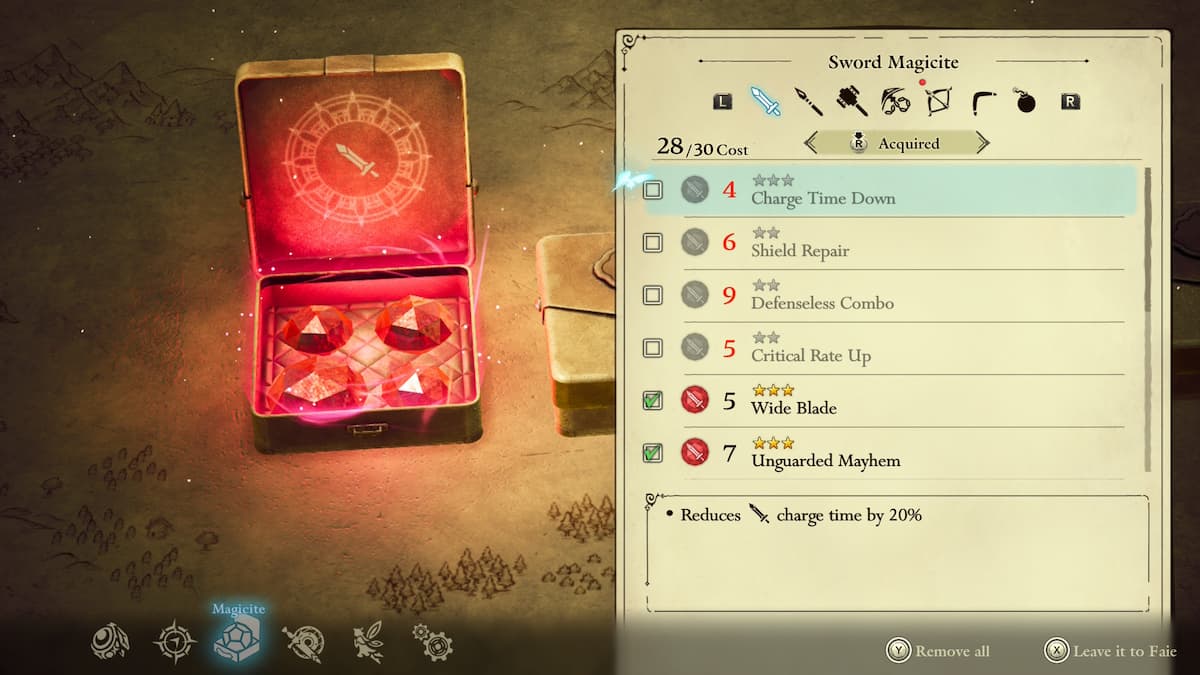
Things get even more interesting with the magicite system, which is what really brings The Adventures of Elliot to life. As you defeat enemies and bosses, you’ll have a chance of accruing magicite shards, which can then be used to form magicite. These are crystals that you can equip to enhance each weapon at your disposal. For instance, the Attack Up magicite does what it says on the tin: it increases damage dealt with that specific weapon. However, there are far more interesting ones that give you a chance of freezing enemies when you hit them, allow your arrows to ricochet between enemies, and so on and so forth.
I had the most fun in this game just tinkering with the magicite system and creating a build that felt great to play. There’s a limit to how many crystals you can equip of course, though that limit can be increased ever so slightly by paying Tul, this game’s currency. There’s no guarantee what types of magicite crystals you’ll get when you generate them too, which is how The Adventures of Elliot entices you into grinding for hours on end just to see if you can discover even more powerful and interesting ones.
Then there are Accessories, which also help to make combat and exploration more enjoyable. You can equip up to three of these, and they also do a whole variety of things like negating fall damage or allowing you to hover for a short period of time whenever you jump. These have been particularly helpful for me as someone who’s not very good at platforming. And yes, there are a fair few platforming challenges in this game, and while they’re not exactly difficult, messing up repeatedly is an easy way to get a Game Over.
The thing that really struck me about The Adventures of Elliot, though, was just how easy it was. When you die, you’re able to pay 150 Tul to have Faie revive you with all your health. You can do this multiple times, though the amount of Tul required to revive will go up exponentially. Still, given how easy it is to farm money in this game, I never really found that to be much of an issue. The Adventures of Elliot also features a drop bonus system, where you have a higher chance of finding more money and items as your kill chain increases. Being able to revive freely does take away a lot of the tension that comes with boss battles and dungeon exploration, and I do wish the game was just a tad more challenging on its default difficulty.
I’ll note that you can increase the difficulty level any time you want, though I imagine most people would start on the default setting for their first playthrough.
To the game’s credit, it does present you with quite a few innovative boss fights that require you to use different tools at your disposal. These can be pretty tough if you’re not making use of your entire arsenal, but if you are, then these fights turn into fun combat puzzles that can be very satisfying to figure out.
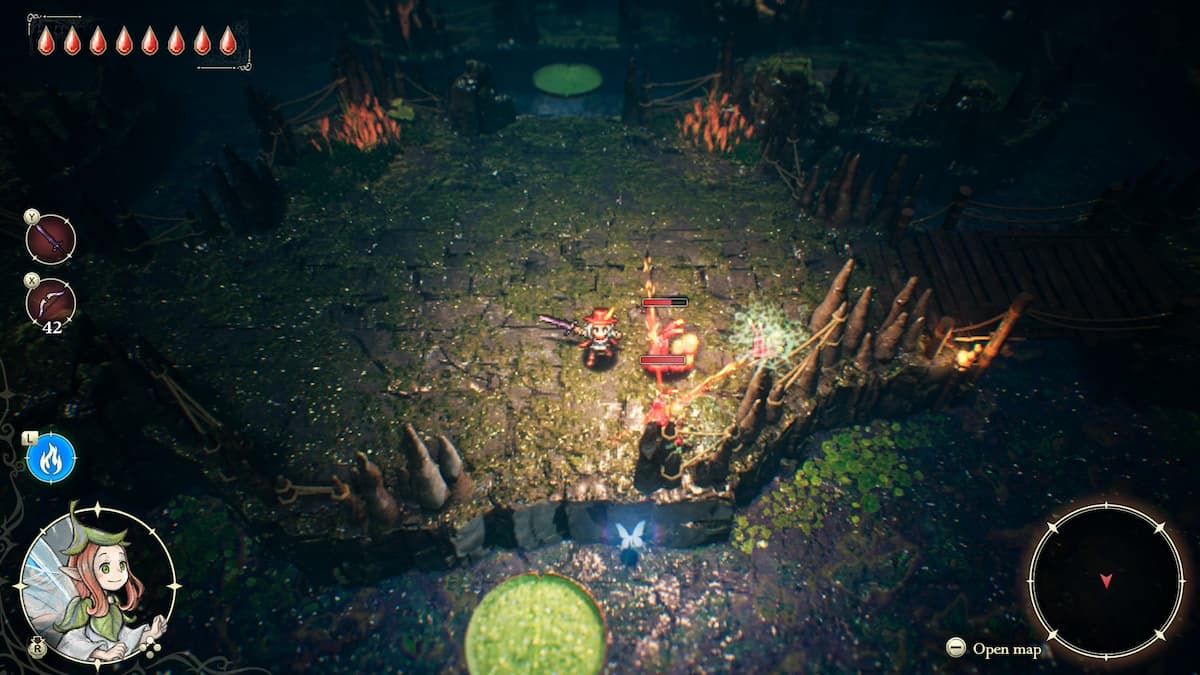
Outside of combat, the exploration aspect of The Adventures of Elliot is pretty rewarding too. There are cracks in walls that you can blow up with bombs, revealing optional dungeons and side paths. Eventually you can even learn to dive, allowing you to properly traverse water bodies to get to hard-to-reach chests and rewards. There are also stray cats scattered all over the world for you collect, unlocking even more rewards in turn.
By and large, The Adventures of Elliot is great at rewarding the player for venturing off the beaten path, though I will say that I did find the open-world to feel kinda samey even as I was exploring them in different time periods. There’s always a forested area, a snowy area, and a swampy area. While the main towns in each time period look unique and distinct from each other, I can’t quite say the same about the surrounding regions. There are some minor differences in terrain, but the enemy types remain largely the same in each time period, which was a little disappointing to me. The game definitely could’ve used a bit more enemy variety, especially given how fun the combat is.
The Adventures of Elliot: The Millennium Tales is a very solid first effort at taking on the action RPG genre. While there are clear missteps and plenty of room for improvement, the game gets a lot right on its first try and serves as a solid foundation for whatever comes next. And I, for one, will be eager to see how Square Enix takes the lessons it’s learned from The Millennium Tales and applies them to a potential sequel.
A review code for the game was provided by the publisher. You can check out our review policy here. Reviewed on Switch 2.