Final Fantasy X is a game about death. This is something that did not occur to seven year-old me when Tidus first implored me to listen to his story all those years ago. Despite its sunny, beachy facade, it hit me years later when I replayed it that Final Fantasy X is a game about the morbid obsession with death and tragedy. It doesn’t look it, but it’s the saddest game in the mainline series, and quite possibly the greatest.
For the game’s 25th anniversary, Square Enix has chosen to re-release Final Fantasy X for the Switch 2. I’ll get all the technical details out of the way first. No, it’s not worth the money if you already own the Switch 1 version. Turn on Handheld Boost mode in your Switch 2 system settings, and you’ll find that the Switch 1 build still looks just as good. What you are missing, however, is the cheats that allow you to get infinite Gil, speed up battles, or avoid them completely. These are nice, I guess? But when I play Final Fantasy X, I’m also playing it for the excellent turn-based combat, and I didn’t touch these cheats at all throughout my playthrough.
Aside from that, you’re not missing much. I had hoped that the game would come with the ability to skip cutscenes or to switch between the Japanese and English voice tracks from the settings, but those are still missing. If you want to enjoy this game’s Japanese dub, you’ll need to change your Switch system language, though that also locks you into Japanese text as well. It’s a bit silly.
Outside of all that noise, though, it amazes me that Final Fantasy X has still held up so well after all these years. As the first game in the series to feature full voice acting, Final Fantasy X continues to feel cinematic and polished. The character models look much crisper, though I should point out that that only applies to the main cast and other key characters. Basically, if you’re a random side character of no import to the story, your face is going to look either squished or muddy. This was a blemish that was present in the PS3 and PS Vita ports, and it continues to be a blemish today.
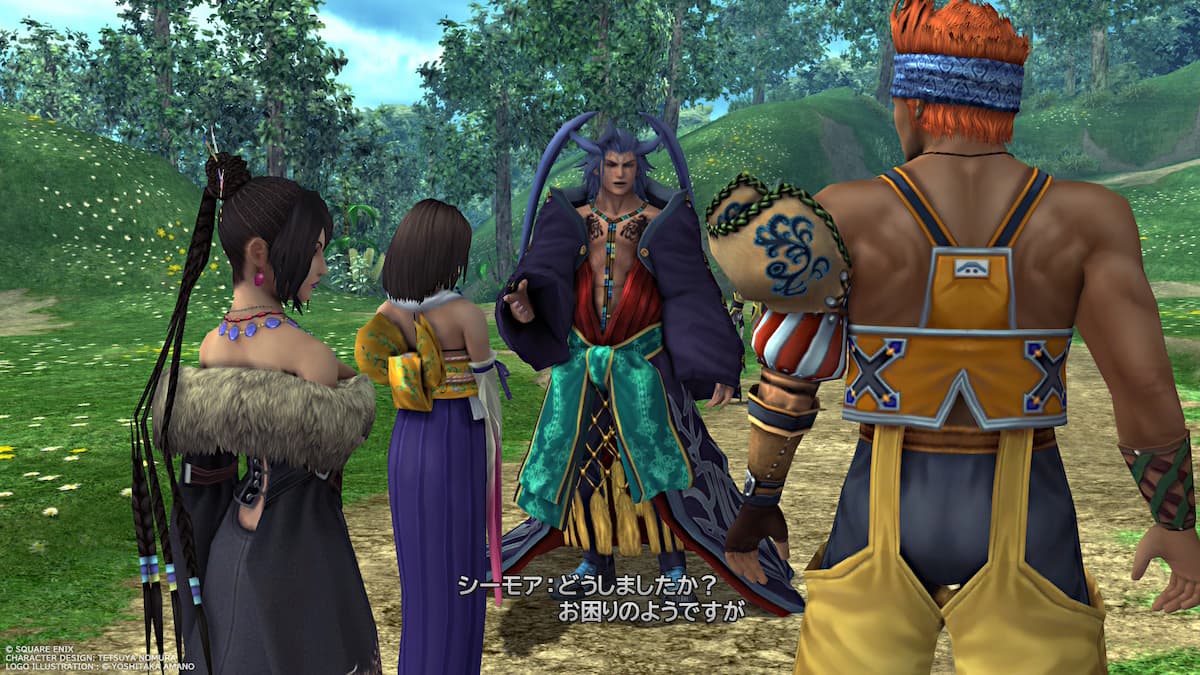
Considering that pretty much all of your time is going to be spent with the main characters, though, this isn’t something that affected me all that much. In fact, jumping back into Final Fantasy X felt extremely comforting, especially as I was reminded of just how great its turn-based combat system is.
Final Fantasy X stands out as my pick for the best game in the series, not just for its excellent story which we’ll talk about later, but also for its pacing and combat. Right from go, the game wastes no time in throwing you straight into the action and introducing you to the battle system. Known as the Conditional Turn-Based System (CTB), you can view the turn order in the right-hand side of the screen. Different actions may affect the turn order, such as Valefor’s infamous Sonic Wings move, which allows you to delay an enemy’s turn. Sometimes indefinitely, depending on the enemy type.
Being able to see the entire turn order on your screen and how your actions affect it in real-time makes this one of the most engaging turn-based combat games I’ve ever played. Turn order is determined by a character’s speed stat, and it can be affected by spells like Haste or Slow, while more powerful moves can cause a character’s next turn to be pushed back further. What makes this so fun, though, is the fact that you can freely switch out party members without losing a turn, making it easy for you to make sure that everyone gets their time to shine so they can get in on that sweet, sweet experience.
All this is held together by the wonderful Sphere Grid system, which is your main driver for powering up your characters. For every level a character gains, they can move one node on the Sphere Grid. You’re also given a variety of Spheres for activating nodes on the Grid, which do various things like offering up new abilities to learn or stat boosts. This version of Final Fantasy X comes with the Expert Sphere Grid layout, which has every character start off in the middle of the Grid, giving you a lot more freedom in building them out. I don’t recommend this for new players as it’s very easy to mess up a build if you don’t know what you’re doing, but once you’ve got one playthrough under your belt, I’d recommend experimenting with Thief Kimahri, or other more exciting combinations like moving Auron into Tidus’ part of the Grid.
As far as the story goes, yeah, it’s still great. If you haven’t already heard about the premise of Final Fantasy X, the game puts you in control of Tidus, who is one day swept away from his hometown of Zanarkand and into a foreign world known as Spira. The only connection between Zanarkand and Spira is a monster named Sin, and Tidus finds himself caught up with a summoner and her guardians on a pilgrimage to defeat Sin.
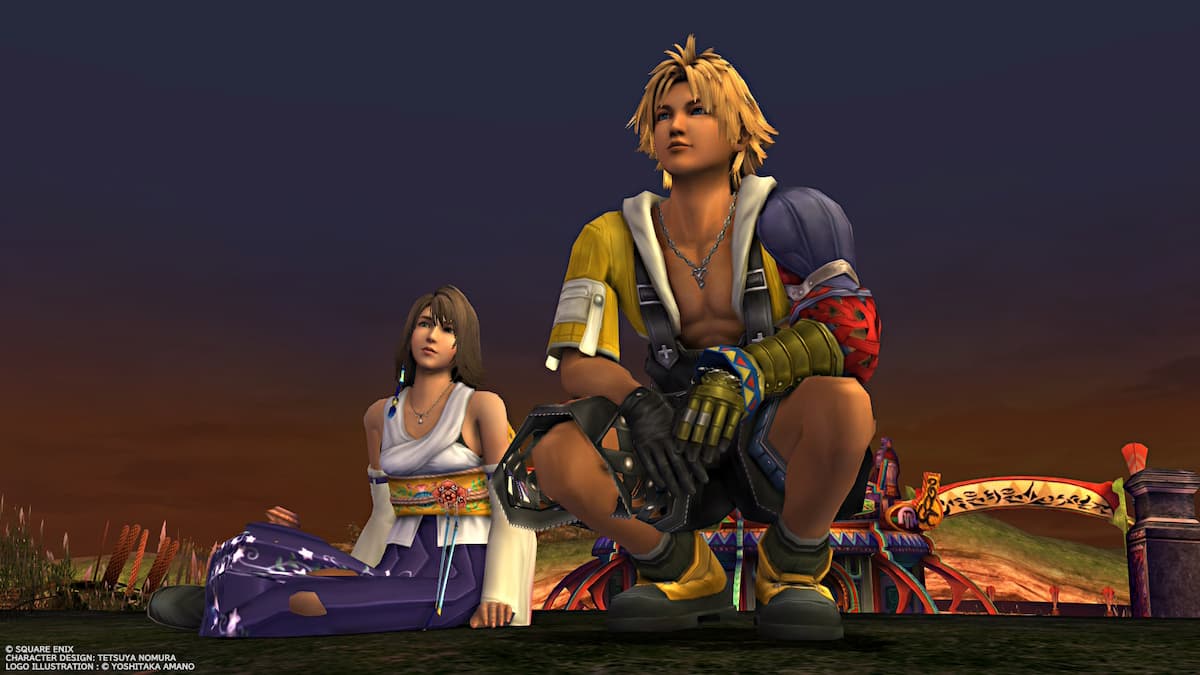
Without a doubt, Spira is one of the most thoughtfully written worlds in Final Fantasy, drawing its inspirations largely from Shinto Buddhism and its rituals, while using that as a framework to explore more mature themes like death, corruption, religion, and prejudice. Within the main cast itself, there are occasional flashes of religious tension that stem from one character’s beliefs in Yevon, the main religion, and another’s desire to seek an alternative way of life. This is echoed all throughout Spira and the interactions you have with other characters, and that’s just one small part of it.
That’s to say nothing of the brilliant details of characterization that we see in Tidus and Yuna, who slowly reveal the multitudes they contain over the course of the pilgrimage. When the idea of Sin is introduced, we’re told that it’s a manifestation of Spira’s sins and guilt, that the summoners must go on this pilgrimage to defeat it and atone. The catch is that even after defeating Sin, it’s predestined to come back again in 10 years, perpetuating an endless cycle of death and revenge. And what are the people of Spira supposed to do? They simply throw summoners at Sin over and over again, blindly hoping that the cycle will be broken one of these times.
Even without the backdrop of Sin, the main cast offers up so much to chew on. There are themes of family and loss that come through with Tidus and Yuna, and their relationships with their fathers, and with Wakka and Lulu, who are still dealing with the loss of Wakka’s younger brother Chappu, who died fighting Sin. Playing through Final Fantasy X again as an adult, and as someone who’s better able to understand the gravity of these themes, I’m struck by just how masterfully written the story is.
This isn’t a perfect game, of course, because nothing’s perfect, and I’ll forever dread the moments I have to walk into a temple and solve a ridiculous sphere puzzle, but Final Fantasy X more than makes up for that with excellent writing and gameplay. 25 years on, Final Fantasy X still stands out as one of the darkest, yet most optimistic games in the series, and it continues to be a dream worth fighting for.
A review code for the game was provided by the publisher. You can check out our review policy here. Reviewed on Switch 2.