When I first got early hands-on time with Shards of Order, I assumed – like many others – that it was a roguelike game in the same vein as Darkest Dungeon. The devs even created a whole news post on the Steam store page titled “NOT a Roguelike” to get the message across. To my surprise and excitement, Shards of Order is a card combat RPG with permanent progression from beginning to end. Its unique deckbuilding and dark fantasy vibes kept me engaged throughout my entire playthrough.
Shards of Order begins as you fall into a dark pit where a huge beast makes its home. You have no idea where you are, why you’re there, or even who you are. What you do know is that you’re a soldier surrounded by monstrous creatures and undead. So, of course, your goal is to find answers to pressing questions while fighting your way through the dangers of this lawless world.
The world is literally lawless because the physical Laws that govern it have been lost. The Laws’ disappearance means death isn’t permanent, light doesn’t shine, and minds are warped. There’s no order, so you need to restore it.
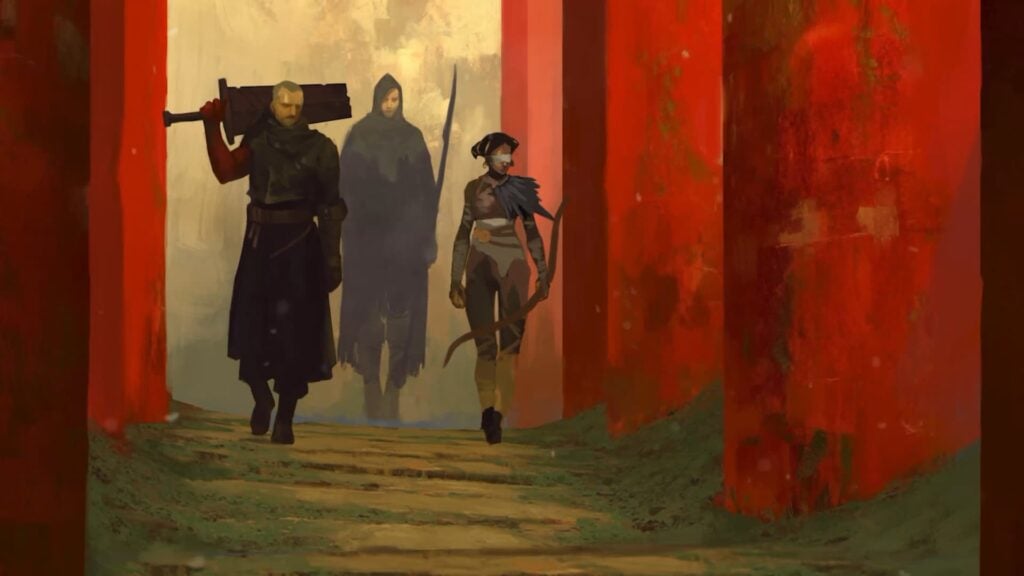
It’s a lonely journey at first, but you soon meet two companions who fill different roles – an exile and a scholar. The exile is the rogue of the party, and the scholar is a mage. Together with the protagonist soldier, you have a well-rounded and familiar RPG party. Along with their unique playstyles, each character has a distinct personality and personal motivations for joining you on this quest. The exile seems to still value empathy in this grim situation, while the scholar is much colder, with rare flashes of emotion.
There are several intriguing NPCs scattered throughout the world as well, but they don’t get nearly enough shine. According to the main trio, there’s just no time for getting to know these people better. No time for pleasantries, offhand conversations, or anything that doesn’t directly relate to the end goal. I understand the plot-related urgency, but it’s a bit frustrating at times.
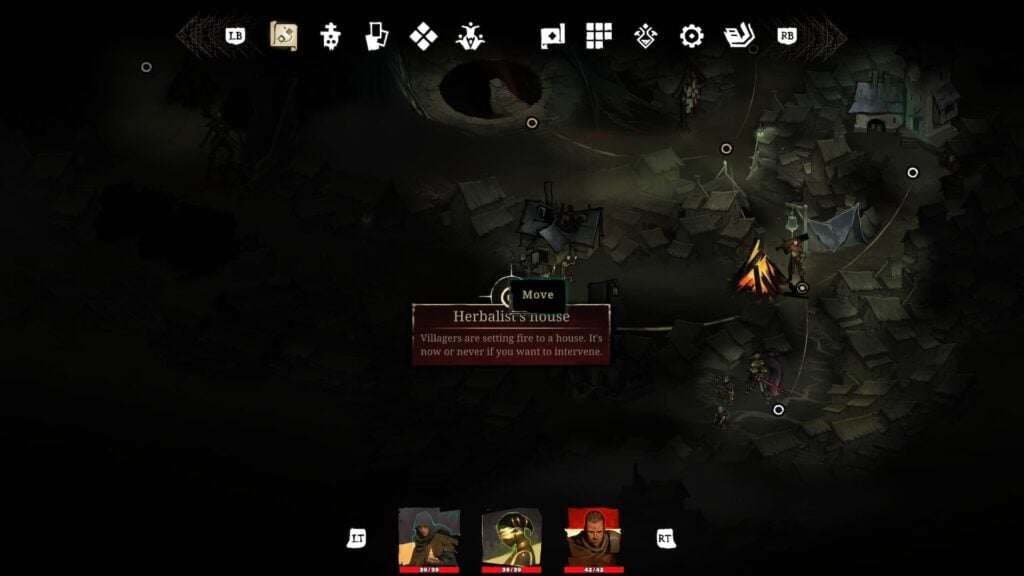
Together, you travel across the world on a boardgame-style map. Learn secrets, find hidden treasures, and even discover unique new cards by exploring every node possible on the world board. Exploration provides more opportunities for your companions to show you who they are, and there are plenty of practical reasons for it, too. You can find journal entries that detail upcoming boss abilities, or even alternate methods for winning tough fights.
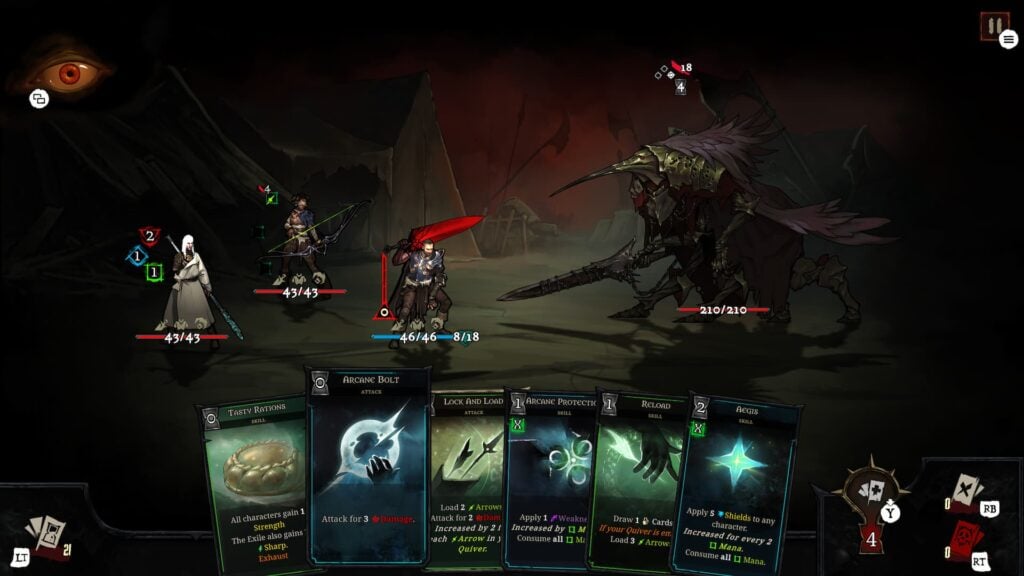
The initial setup reeled me in, but the deckbuilding and card combat are where Shards of Order fully grabbed me, especially when the plot started to lose me a bit. Combat is turn-based, but cards cost time instead of a meter or other resource. Enemies only attack when the timer above their heads reaches zero. Almost every card you play lowers the timer above the head of every enemy on the battlefield, so you need to constantly weigh the pros and cons of each action you take.
If you’re ever stuck with an unfavorable hand, you can redraw your entire hand at the cost of four Time, but the cost goes down with every card you play. The cost of the card you play is subtracted from the redraw cost. You likely won’t be stuck with bad hands too often, though.
When characters level up, skill points are spent on unlocking new cards or improving existing ones. Each hero has their own section of the skill tree that you can upgrade in ways that build the playstyle you like most.
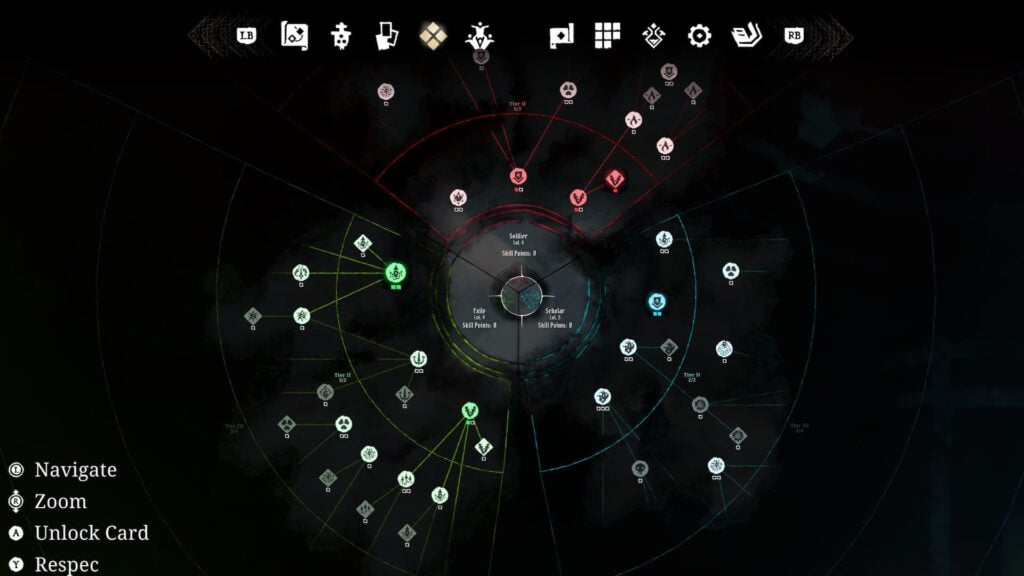
Do you want to play the high-cost, high-power cards knowing you’ll get hit afterward? Or will you stack your deck with lower-cost cards with trickier effects? The choice is yours, and the skill trees for each character are large enough to facilitate plenty of experimentation.
Personally, I had each party member use completely different tactics. My soldier tanked while occasionally dealing massive damage with high-cost cards, giving my exile time to ramp up buffs to eliminate high-priority targets. My scholar worked on dealing damage over time and messing with enemy time limits. There are a decent number of options to explore that all seem valid, from discard decks to decks that focus on reducing card costs.
No matter what strategy you choose, foes will keep you on your toes. I appreciate that enemies have several abilities to shake things up for combat. Some take no damage depending on whether their timer is even or odd, while others change your card costs or even steal cards outright. New gimmicks are introduced at a steady pace, preventing combat from getting stale.
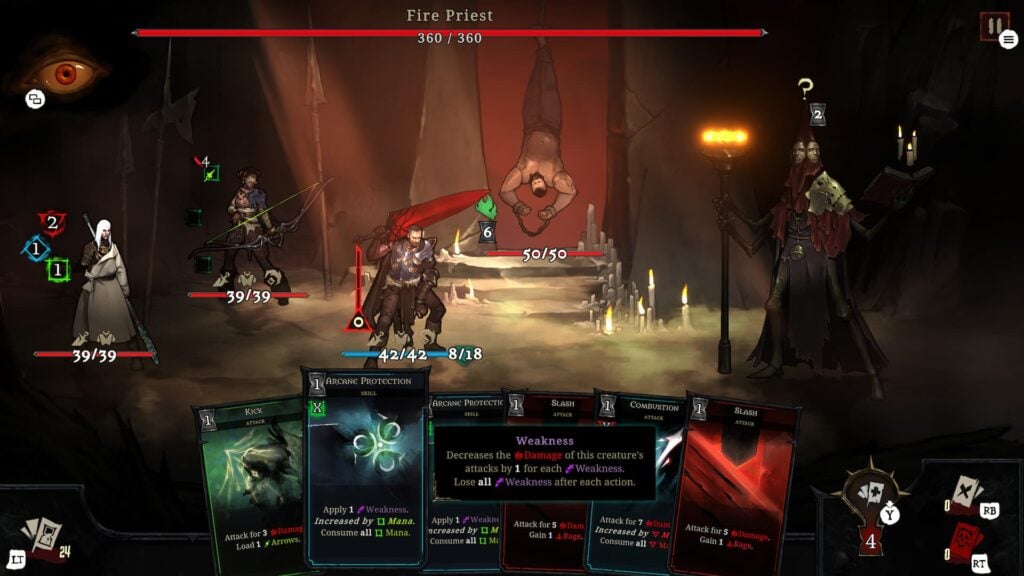
The cards in your deck still matter outside of combat, which makes the deckbuilding even more important than you’d expect. They can be used for skill checks that lead to gaining new cards or equipment. The checks are usually fun or interesting, too, which is a nice touch. For example, I gained the Cheater card by attacking a man during a staring contest. I swear it was an accident, but the result was well worth the blunder. I later used that Cheater card to ignore given rules and open a chest I shouldn’t have been able to open.
Shards of Order plays with your expectations like that often, keeping the experience fresh. In another instance, a multi-armed boss used one of its many hands to cover the Redraw option in the UI, locking the option away. Similar moments force you to adapt and consider the best course of action on the fly. It’s a great feeling when you manoeuvre out of a tricky situation to come out on top thanks to cards you unlocked or earned.
You’re also forced to make a few decisions that can end in freedom for some, but death for others. Most of the time, you’ll be able to see the consequence of your choice before it happens, which can be a bit of a letdown. It’s nice to know what a reward will be before a choice is made, but the element of risky curiosity is lost when you can literally see what item you’ll earn for choosing one life over another.
Shards of Order packs a lot into its short, approximately 10-hour experience, and it did more than enough to keep my attention throughout. Both gameplay and story were highlights in the early game. But it does feel like a bit too much story is trying to fit in too small a package by the late game, with major story beats flying by on the mad dash for the end goal.
With that said, I’d do that dash again – and I will. The card battling remains consistently solid, and I’m already looking forward to playing a second time to try out different strategies and deck builds.
A review code for the game was provided by the publisher. You can check out our review policy here. Reviewed on PC.