With the rise of AI in all aspects of our lives, Virtue and a Sledgehammer feels like a timely, narrative-focused game with impassioned messaging on several issues surrounding artificial intelligence, death, and what it means to have a soul. It poses questions about how well machines can imitate the human psyche, and how much of a person is necessary to be recognizable as human. How many parts of yourself can you lose and still remain you?
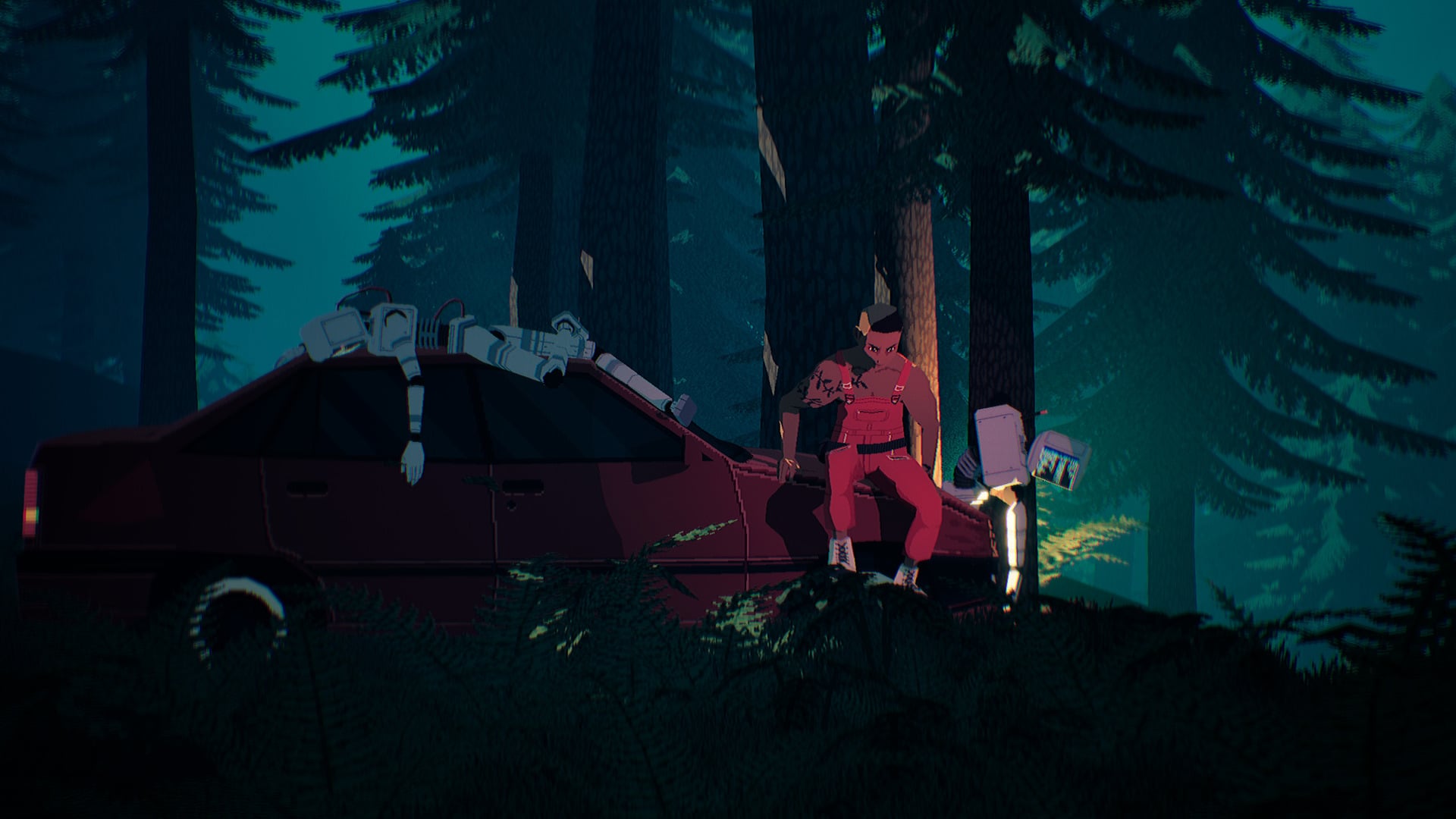
Thought-provoking sentiments about souls are tackled alongside complicated familial relationships through a protagonist who deals with a lack of acceptance, clashing ideologies, and her mother’s mental degradation. Love and rage exist simultaneously in our protagonist, Pratelle, as she embarks on a beautifully tragic mission.
Virtue and a Sledgehammer begins in the middle of a story, as you’re asked what lengths you’d go to in order to stop a loved one from making a terrible mistake. You’re forced to put your words into practice as Pratelle aims to confront her sister, Nina, to prevent her from digitizing humans in a mountain community.
This mountainous area is where Pratelle and Nina grew up with their mother, Merche. Nina’s research on the human mind leads to digitization – the process of uploading a person’s consciousness into a robot so that they can live forever in perfect health. Everyone that Pratelle knew and loved has become a machine version of themselves as a way to perpetuate their lives. This is a procedure that Pratelle vehemently rejects, which is why she needs to confront Nina before she goes too far.
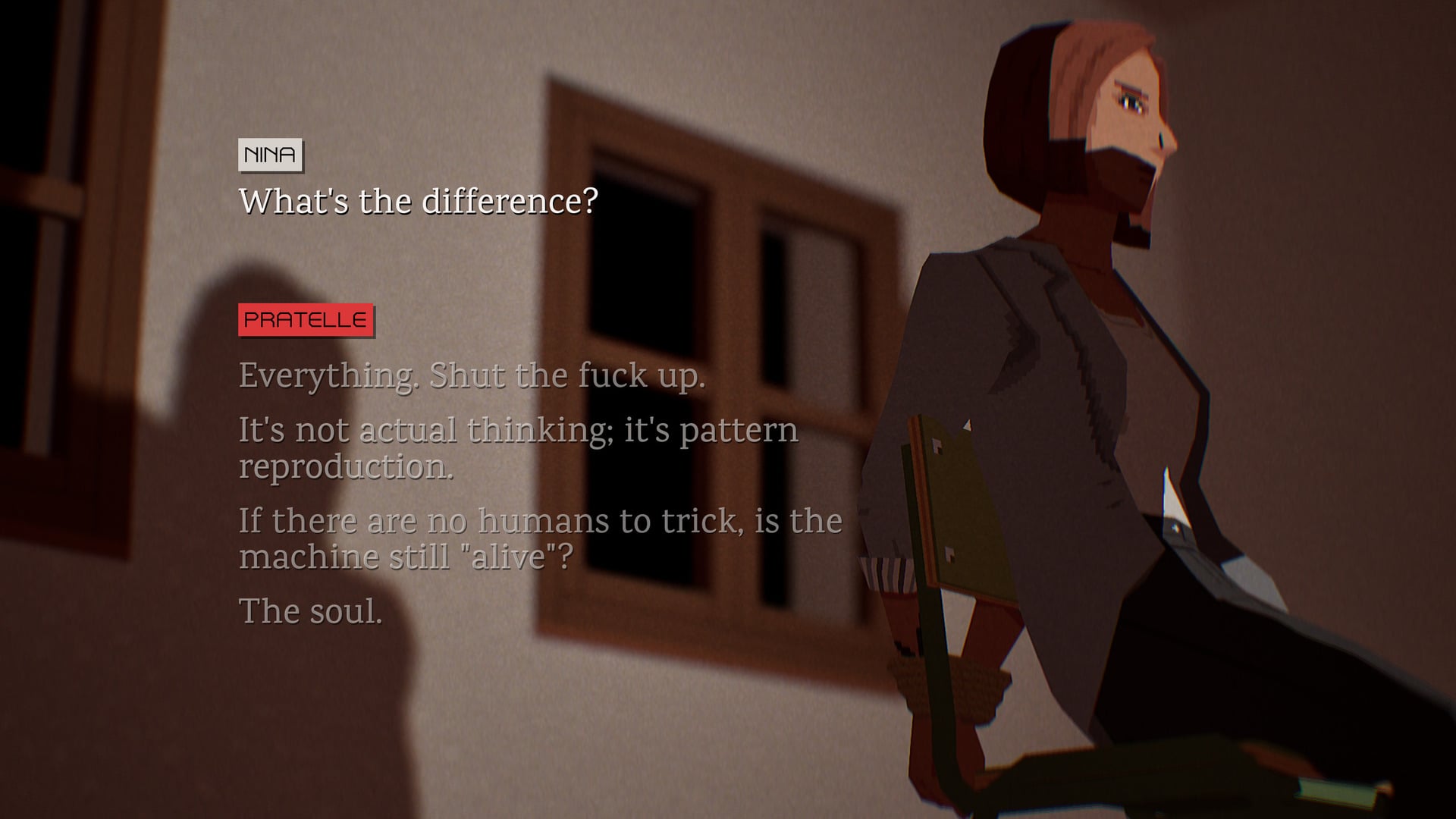
The digitization makes me think of how AI is used today to replicate or copy people in a way that doesn’t feel sincere or authentic, especially when it comes to art. I love the way that Pratelle goes back and forth with Nina about what it truly means to be human. The robots are, essentially, shells that house the tendencies and thoughts of the humans they claim to be. But they’re missing a certain something that gets brought up several times: soul. And yes, that may sound corny, but is a robot that acts like you and thinks like you actually you?
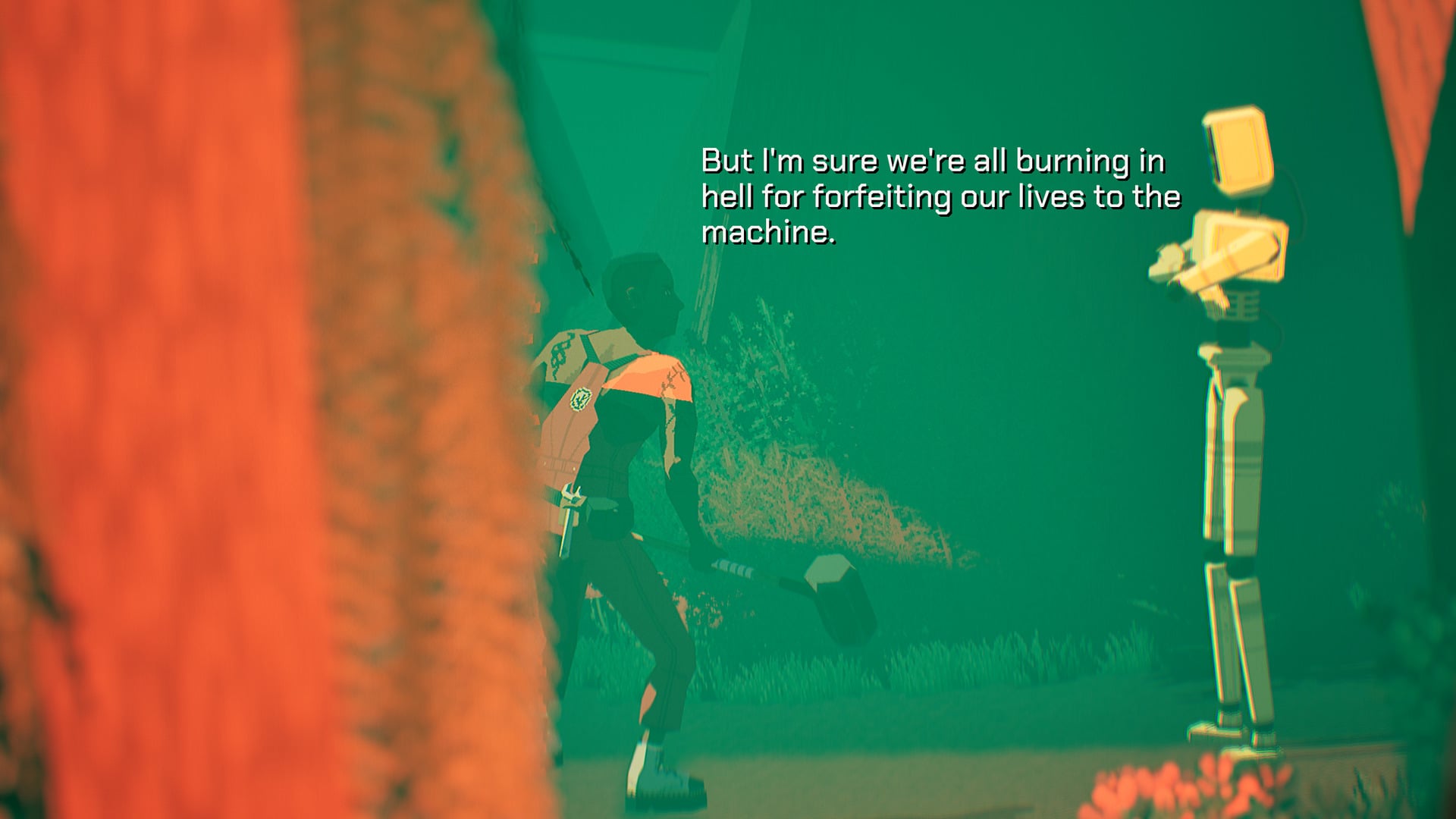
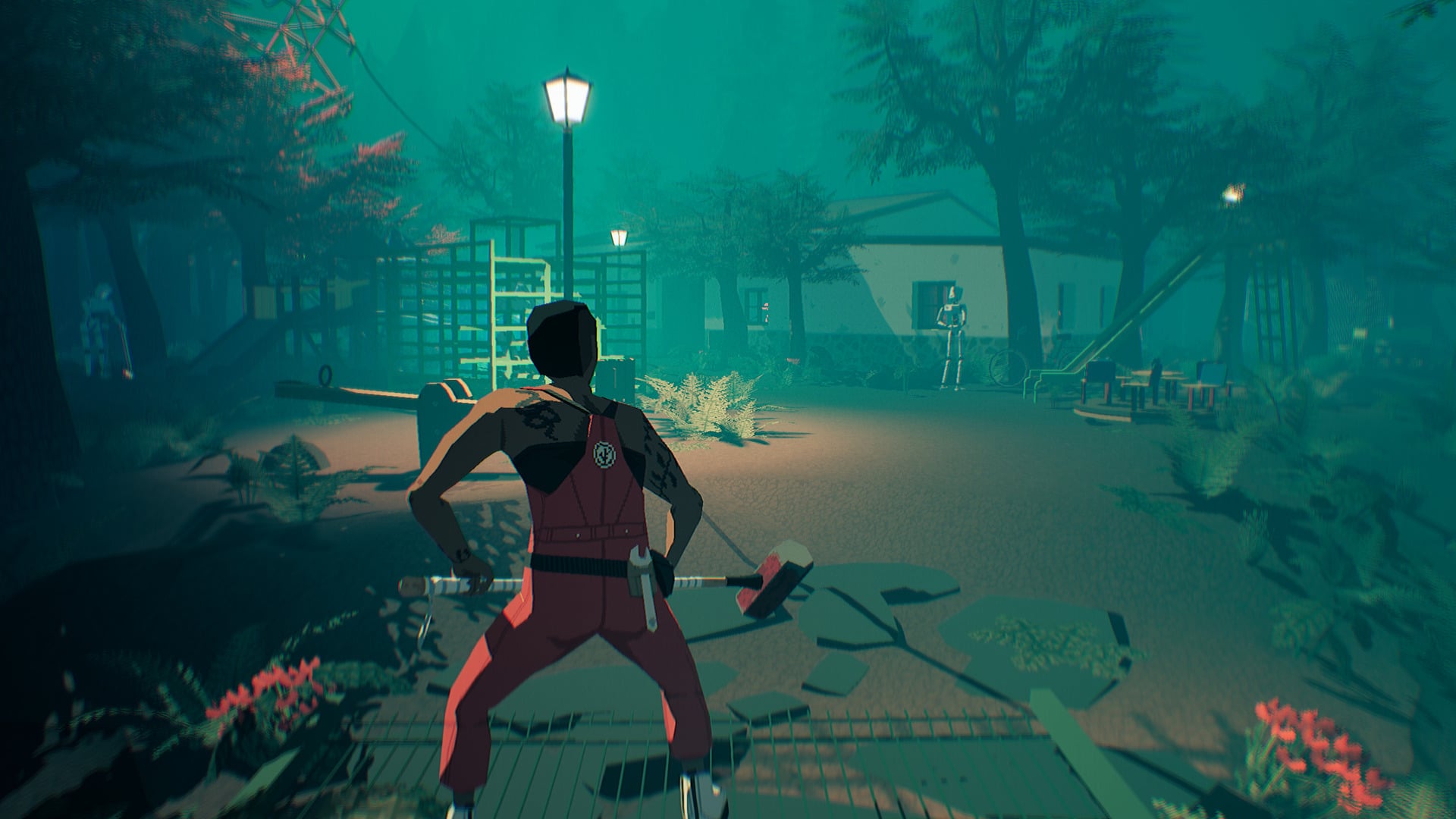
Pratelle’s rejection of Nina’s technological advancements leads to the sledgehammer solution. The core gameplay here has you treat the sisters’ hometown like a huge rage room where you can hammer to your heart’s content.
You can destroy nearly everything in the environment to get to where you need to go, including walls, desks, tables, and anything not rooted or tied down. Often, the only way to progress or get a collectible is to use the sledgehammer. You can’t open doors, jump over obstacles, or even walk around them in some instances. You need to go through them.
You also destroy red and blue holograms that provide glimpses into Pratelle’s past. You see her love and disdain for her mother and sister in equal measure if you decide to find every hologram. It’s worth doing, as those scenes paint a fuller picture of the troubled family dynamic.
Pratelle is full of anger, which she unleashes by obliterating any robots (hostile or otherwise) or buildings that stand between her and Nina. You can press the attack button for a shove, or hold it for two different sledgehammer swings. The longer you hold, the more powerful the swing. The gameplay doesn’t match the narrative in its complexity – which is mostly fine – but simply destroying everything around you with little to no variation in your actions does feel a bit tedious toward the end of the game.
I respect the idea of using this medium and art to tell a focused story, but I became less entertained as the game progressed toward later segments with more durable robots and crawling enemies that were more annoying than challenging. Near the end, I just wanted to run past robot attackers to see more of the main story.
The rest of the gameplay revolves around dialogue choices that try to ask moral or introspective questions. Much of the dialogue makes you think and measure your words carefully. This is especially true when asked whether or not you feel for these robots you’re destroying.
One robot actually asks you to kill him and his whole family, saying that they’re all dead anyway and this is not God’s way. Conversely, other robots love their new bodies that no longer experience pain, hunger, or bodily functions. One that stuck with me was a robot who was sad but could no longer cry. The solution was to either remove sadness from their system or invent a way to allow robots to cry to copy that aspect of their lost humanity.
I truly didn’t think much about whacking these machines with a sledgehammer before reaching a few gameplay segments that left a big impression on me. In an attempt to avoid spoilers as much as possible, I’ll just say that the game makes an effort to give weight to destroying these robots who have replaced real people. At first, it doesn’t feel that way. But by the end, it‘s as if you’re really putting people to rest with every robot that gets dismantled.
Virtue and a Sledgehammer is a story about accepting loss, in a sense. One sister is unable to accept the loss of life as inevitable, while the other believes that perpetuating life through machines is worse than death. What is life, and can AI or robots replicate those living pieces of a person? I’d say no; it can’t. You don’t have to destroy absolutely everything if you feel differently.
The destruction serves a purpose, but the constant smashing does wear thin by the time you get near your final destination. The game takes only around five hours or less to complete, but it could’ve done with a slight changeup toward the end.
The main messaging remains strong regardless. It may sound obvious, but all of the experiences a person goes through – the unpredictable ups and downs of life – make up who they are. You’re no longer yourself if you become lines of code inside a robotic shell in a village full of identical metal ghosts.
A review code for the game was provided by the publisher. You can check out our review policy here. Reviewed on PC.