There’s a young girl in Phantom Blade Zero who trains under Soul, our main protagonist, with wooden swords, trying hard to prove that she’s internalized everything she’s learned. She doesn’t want Soul to hold back, because how else will she get better? She loses most of their sparring sessions of course, but that doesn’t faze her. The girl simply loves martial arts, as do all of the characters we meet in this game.
So do I, for that matter. There were multiple times over the course of my playthrough where I was reminded of my wushu days back when I was still elementary school age. Having grown up in a Chinese family that also loved wuxia movies, it was only natural that I would gravitate towards wushu as my extracurricular activity. I didn’t stick with it for very long, but for the time that I did, I found myself enamored with the moves, and more importantly, the strength and spirit required to master the art. Right from go, it’s abundantly clear that Phantom Blade Zero loves and respects Chinese martial arts and the stories and lore surrounding it. That passion comes through in every aspect of the game.
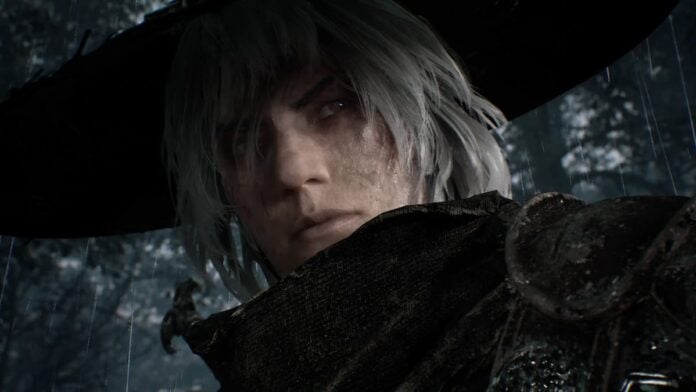
In true wuxia fashion, Phantom Blade Zero‘s story kicks off with a brutal showdown between Soul and Zuo Shang, his sworn brother in his wulin sect. The rain beats down on them as they fight, with thunder and lightning to help set the scene. They fight to the death, dealing killing blows to each other, but a mysterious being called the Flesh Sculptor saves them both. There’s a catch for Soul, however. He’s brought back to life, but his heart is tainted with venom, giving him only 66 days to live. If Soul is able to acquire another heart deep in the now corrupted city of Pangzhen, he may be able to save himself.
There’s been a lot of hype and even a little bit of misinformation surrounding the combat and exploration of Phantom Blade Zero, so I’ll just get right into it, shall I?
The best way I can think of to describe Phantom Blade Zero is by likening it to Sekiro: Shadows Die Twice. While the combat isn’t exactly stamina-based, you do have a Sha-Chi meter that kinda serves a similar role. Holding down L1 lets you automatically block all attacks, but that slowly drains your Sha-Chi. As attacks get blocked and deflected, your Sha-Chi drains even more. You can press square for basic attacks, and triangle for more powerful attacks, which also drain Sha-Chi. On the other hand, hitting R1 to dodge does not consume any Sha-Chi.
You’ll soon notice that the enemies in this game are extremely aggressive, which means that you’ll likely spend most of your time blocking attacks, with your finger hovering over the L1 button even when you’re just running around. Sha-Chi management ends up being a very big part of the game, as you’re often trying to deflect attacks while looking for openings to pull off power attacks. This does mean that Phantom Blade Zero ends up falling into a similar trap as Sekiro, in that you end up blocking and waiting more than you’re attacking, even on the default difficulty.
Similarly, enemies also have Sha-Chi meters that, once broken, will leave them vulnerable to attacks. Power attacks will break their guard faster, so you can start to see how important it is to manage your Sha-Chi for both offense and defense. There are accessories you can equip to increase the amount of Sha-Chi you have, and there are upgrades to discover in the world that will help with this as well. But my favorite Sha-Chi-related mechanic is the weapon swap, where you instantly refill your entire meter when you switch a weapon.
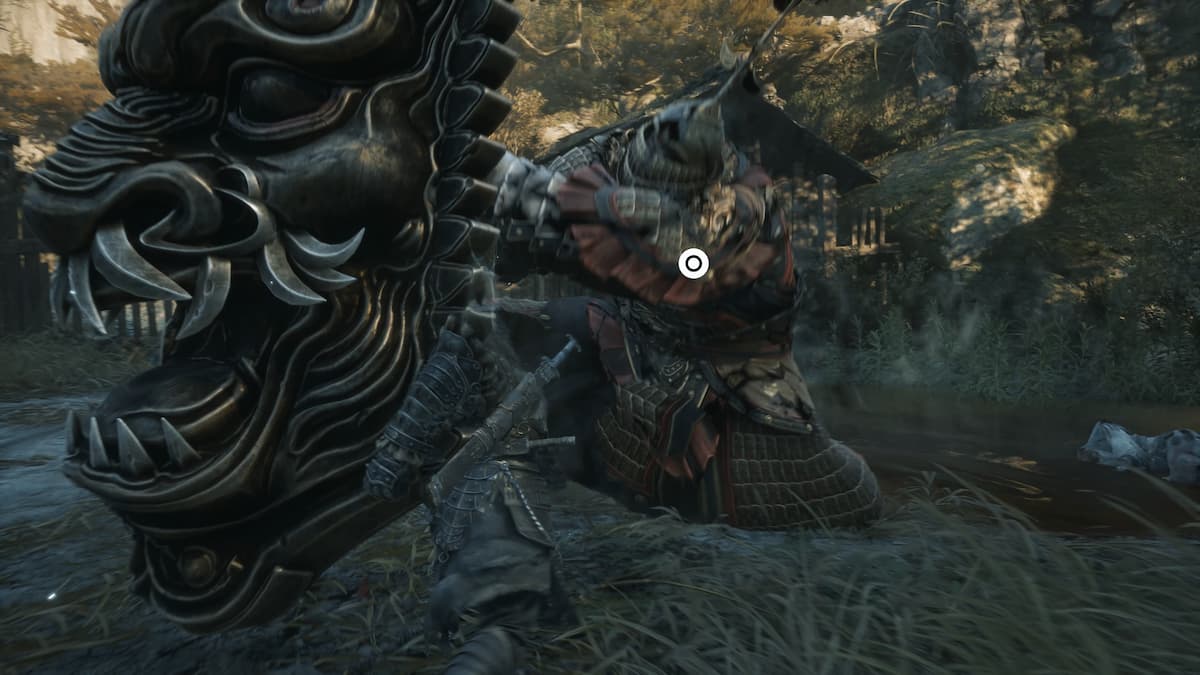
Soul can equip up to two main weapons at a time, and you switch between them just by pressing left on the d-pad. Each time you do this, your Sha-Chi meter refills completely. The catch, of course, is that there’s a cooldown for weapon swaps, so you do have to be careful about when you do this too. Do you swap it only when your meter’s about to be depleted, or do you do it early so you can use a weapon more suitable for dealing damage or breaking an enemy’s guard?
Then there are the Phantom Edges, which are powerful weapons that can only be used a limited number of times. These are mostly useful for breaking enemies’ shields, though there are some ranged options you get later on that open up plenty of other combat strategies. Because you only have a limited number of uses between each rest spot, you also need to think about when and how to use them. Do you save them all for a boss fight, or use them up on regular enemies to clear them out quickly?
Phantom Blade Zero is constantly asking you to make little decisions like these that, and that’s what makes the combat so engaging. And that’s to say nothing of the weapon types available in the game, of which there are many. Soul starts off with a regular straight sword and a pair of dual swords, but I was not prepared for just how many weapon types this game was going to throw at me.
With one or two exceptions, pretty much all other weapons are obtained by defeating bosses, of which there are also many. I don’t want to spoil too much because a large part of the fun of the game was simply encountering new bosses and seeing what new weapon I would get from them, so I’ll just talk about a couple of my favorites that have already been revealed.
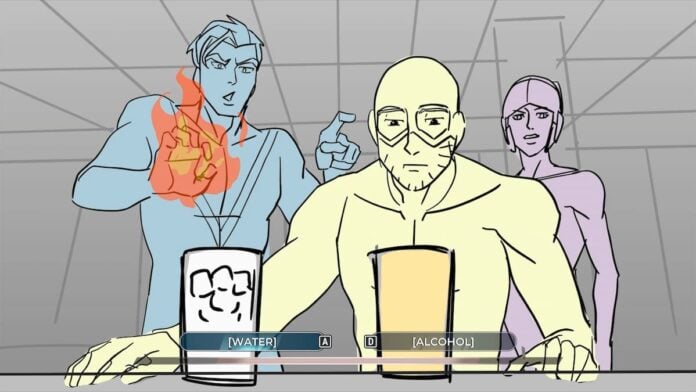
The drunken master’s sword was a very early favorite that pretty much stayed in my equipment slot for more than half the game. I’ve always been a fan of drunken-style fighting in Chinese martial arts, and even the boss fight tied to the weapon proved to be quite the spectacle. While drunken fighting is sometimes depicted as comical in media, it’s really meant to be deceptive and unpredictable. Similarly, the drunken swordsman moved in strange ways that were initially impossible for me to read, and I often found myself surprised by his attack windows.
Once I had his sword, I was pleasantly surprised that I, too, could adopt some of that deception into my play style. It largely performs as a regular straight sword, though it comes with some unique moves that allow Soul to take a swig of his gourd before pulling off fancy swings and sways. When “drunk”, the sword becomes a long range weapon, making it an incredibly versatile combat option. There’s a catch, though; the “drunken” state only lasts for a while, and Soul needs a second or two to recover, leaving him open to attacks. There are ways to circumvent this, but I’ll leave that for you to discover in-game.
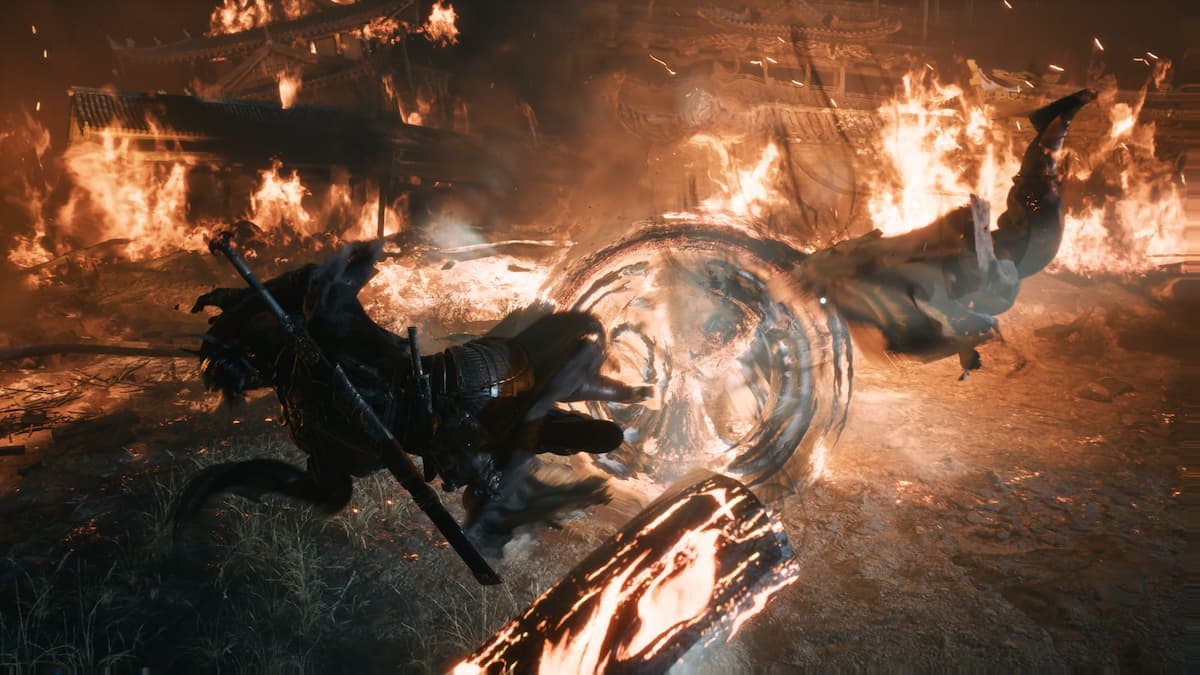
There’s also a pair of unique dual swords that I’m also a big fan of, though I won’t go into too much detail about this one as it’s tied to one of the more iconic bosses in the game. Suffice to say that it also comes with a pretty insane unique skill that surprised me as I genuinely wasn’t prepared for just how much power Phantom Blade Zero wants you to have.
And that, I think, is what makes Phantom Blade Zero feel so good to play. The game wants you to feel like a kung fu master, and it’s not afraid to give you all the tools and cool abilities you need to feel that way.
Of course, the combat wouldn’t matter at all if the world itself wasn’t fun to explore, and you’ll be glad to hear that S-GAME nails that too. Phantom Blade Zero‘s world is split into multiple regions, with clear segments in each one. The main critical path is always obvious, but the level design feels so sprawling as well, with a ton of optional paths you can explore if you so choose. Even if you stick with the main path, as I did for a couple of chapters, you’ll find that the level design is delightfully recursive, with shortcuts unlocking quick paths back to where you started. It’s hard not to draw the Dark Souls comparisons here, but it’s clear that S-GAME was heavily inspired by FromSoftware’s level design, and who could blame them? FromSoft is the master of level design after all.
It’s clear in the way that item and enemy placements are scattered throughout the level. Shiny pickups do more than just tempt you; they’re also there to guide your attention to secrets or optional paths that you may have missed otherwise. I found exploration to be an utter delight in Phantom Blade Zero, and the Metroidvania-style elements that S-GAME incorporates here also help to facilitate that. As you beat more bosses, you unlock more Phantom Edges, some of which can be used to remove obstacles in a level, unlocking entirely new areas for you to explore. This encourages players to return to early-game regions, and I highly recommend you do, as Phantom Blade Zero really rewards exploration in the form of new upgrade materials, bosses, or lore and story tidbits that help to flesh out the world further.
S-GAME has also boldly opted to not have enemies respawn in Phantom Blade Zero. Once you kill an enemy, they’re dead. On one hand, this does make the game easier in the sense that there’s a lot less tension when exploring. On the other hand, it also means that you can’t simply farm enemies for Remnant Dust to level up. If you want to get stronger, you need to keep exploring the world and be willing to push into new areas to see what’s waiting for you.
I could see this rubbing some players the wrong way, especially if you enjoy the risk-reward tension that the Souls games are so known for. Do you take the risk in going down the scary new path, or rest at the bonfire to bank in your Souls and level up, but have all the enemies respawn? Phantom Blade Zero takes that away completely, favoring aggressive exploration instead. This took some getting used to, but once I saw how much the game rewards exploration, I understood the designers’ intentions immediately.
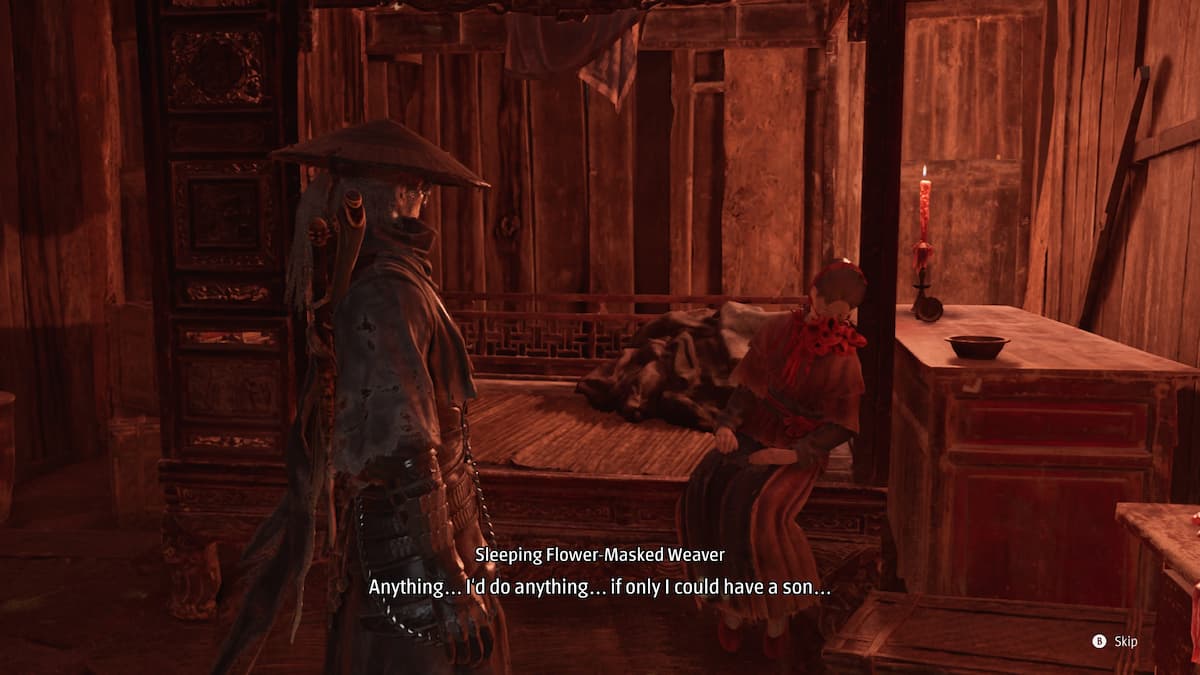
As far as the story and characters go, I’ll say right now that if you’re even remotely a fan of wuxia movies, you’ll feel right at home with Phantom Blade Zero. The story is fairly basic as they come, but it’s the characters who really sell the emotional stakes. Wuxia movies are often tales of brotherhood, loyalty, revenge, pride, power of will, and the desire to prove oneself, and Phantom Blade Zero hits all of these themes while showing restraint in how it tells its story.
There’s one character in particular who barely gets any screentime, and much of their story is doled out through optional item descriptions that you have to seek out yourself in a level. If you read them all, though, they give you a strong sense of what this character is like so that by the time you’re ready to face off against them, the stakes are already high.
It’s clear that S-GAME had a strong, singular vision for this project. The team set out to make the best wuxia game we’ve ever seen, and while there are some design decisions that may not necessarily land for everyone, Phantom Blade Zero is a thrilling action ride you won’t soon forget.
A review code for the game was provided by the publisher. You can check out our review policy here. Reviewed on PC.