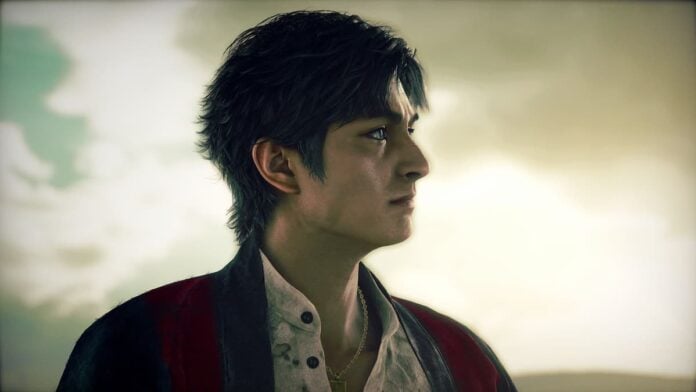
If you took one look at Final Fantasy Resonance and dismissed it as Square Enix’s play for nostalgia with shallow characters, I guess I could probably forgive you for that. Take a closer look, though, and while you’d still be correct in assuming that Square Enix is very much going for the nostalgia route here, it’s instantly clear that Resonance understands what made old-school Final Fantasy so charming, and it capitalizes on that with aplomb.
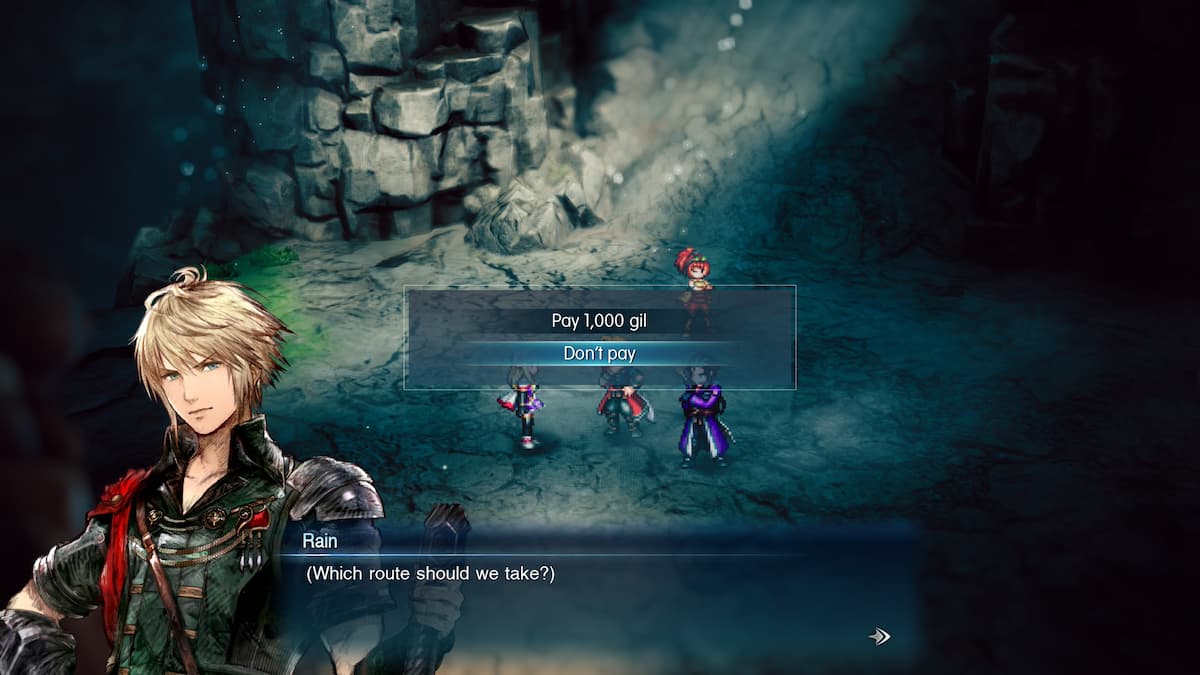
Much like last year’s Octopath Traveler 0, Final Fantasy Resonance is an adaptation of another Square Enix mobile game titled Brave Exvius. In this one, we’re introduced to new faces like Rain, Lasswell, and Fina — all young, bright-eyed, and ready for adventure. Rain is annoyingly good, always telling us that he never has to choose between saving one life or a hundred. He’ll save them all! Lasswell is the tsundere foil to Rain, always reining him back in when he goes too far. Fina serves as the plucky pretty girl who’s curious about the world around her and just wants to do right by everyone.
Final Fantasy Resonance‘s story kicks off when the kingdom of Grandshelt comes under attack by a sinister group called the Sworn Six. In true classic Final Fantasy fashion, these evil villains are after the six Crystals of the world. If they destroy the Crystals, bad things happen, such as the world coming to a calamitous end. In order to prevent the world from ending, Rain and gang leave home to hunt down the Sworn Six.
I had previously described Resonance as JRPG comfort food, and my stance hasn’t changed at all. Especially in its opening hours, everything feels very by-the-book. From the protagonist’s hometown getting burned down (wait, didn’t this happen in Octopath Traveler 0 too?), kicking off the start of the hero’s journey, to the collection of like-minded comrades as you travel from town to town, everything about Final Fantasy Resonance feels overly familiar, yet comforting.
It’s not difficult to see where Resonance is drawing its inspirations from. The reach of Final Fantasy VI is visible in the sibling dynamic between Lid and Evan (and elsewhere too, though I won’t spoil the details here), though Resonance is careful not to lift that sub-plot wholesale. Lid and Evan may not be royalty trying to decide who should take the throne of Figaro, but they’re dealing with similar themes like diverging paths in life and learning how to navigate that. The charm of the older Final Fantasy games is also present in the writing, which is largely kept simple, and never afraid to get a little bit silly at times. Particularly, I’m a fan of Mechabo, a mechanical chocobo Lid built as her trusty companion, who makes all the sounds a chocobo makes but can also be upgraded extensively through a side quest that makes it increasingly ridiculous and less chocobo-like.
The rest of Resonance‘s cast is strikingly endearing too, with Nichol taking on the role of the calm, logical strategist who only operates on reason and rationale, but is soon convinced by Rain that there are other ways of looking at life, and Jake being the charming, roguish rebel who acts like a silly flirt but is governed by a strong moral compass.
It’s Rain and Lasswell who make up the backbone of the story and the party though, as much of Resonance‘s narrative is more interested in exploring their pseudo-sibling dynamic and how much you connect with the story will live and die by how invested you are in Rain and Lasswell as characters. These characters worked for me personally, as I appreciated that the game took the time to explore their familial love for each other, while also diving into Lasswell’s inherent insecurity about not being of royal blood and the pressures heaped onto Rain as the heir to Grandshelt.
That’s to say nothing of Fina, who plays the role of the typical amnesiac protagonist who clearly has a much darker past than the game lets on. Fina rounds out this main trio pretty nicely, offering a sense of comedy and levity where appropriate. I generally enjoyed seeing these characters interact with each other, even if there were a handful of plot beats telegraphed so far in advance you’d have to be blind to miss them. By and large, Final Fantasy Resonance does a great job with how it doles out its story. Over the course of my 30-hour journey, I grew attached to every single party member, and that’s more than I can say for a lot of other Final Fantasy side games.
I’m not immune to the charms of nostalgia either, and that mostly comes through the Visions that you can collect as you explore the world. But first, let’s talk about combat.
Final Fantasy Resonance‘s combat is a turn-based affair, but with little flairs and twists from the rest of the series. Every enemy has a Stagger bar, not unlike the one we see in Final Fantasy XIII. By striking an enemy with an attack they’re weak to, you can deplete their Stagger bar. Once it’s empty, they’re stunned for a turn. In addition to that, the character who Staggered them gets an additional turn. And if you manage to Stagger every enemy in a single turn, you trigger a Stagger Sweep, in which every character gets an additional turn, and you get to use a special Vision attack.
The Vision attacks are a sight to behold, too, as you’re treated to these gorgeous CGI cinematics of the Vision character performing an iconic attack from their respective game and dealing tons of damage to your enemies while applying buffs and debuffs. Well, except for CGI Tidus. Yeah if I have one complaint, it’s that CGI Tidus looks kinda weird. Why’d they do my boy like that?
Anyway, the turn order is neatly displayed at the top of the screen, and you can affect the order with spells like Haste or Slow as you might expect. While it may look old-school on the surface, Resonance‘s combat system also features some modern flourishes like the ability to increase battle speed, and multi-casting spells, which is a game-changer. Basically, you could cast Fire once and have it target the entire group of enemies, though your damage dealt will be lower. This is helpful for hitting multiple enemies’ weaknesses at once, especially if you’re close to Staggering the entire group. Multi-casting works for some healing spells too, so it is easier to keep your party alive in most regular encounters.
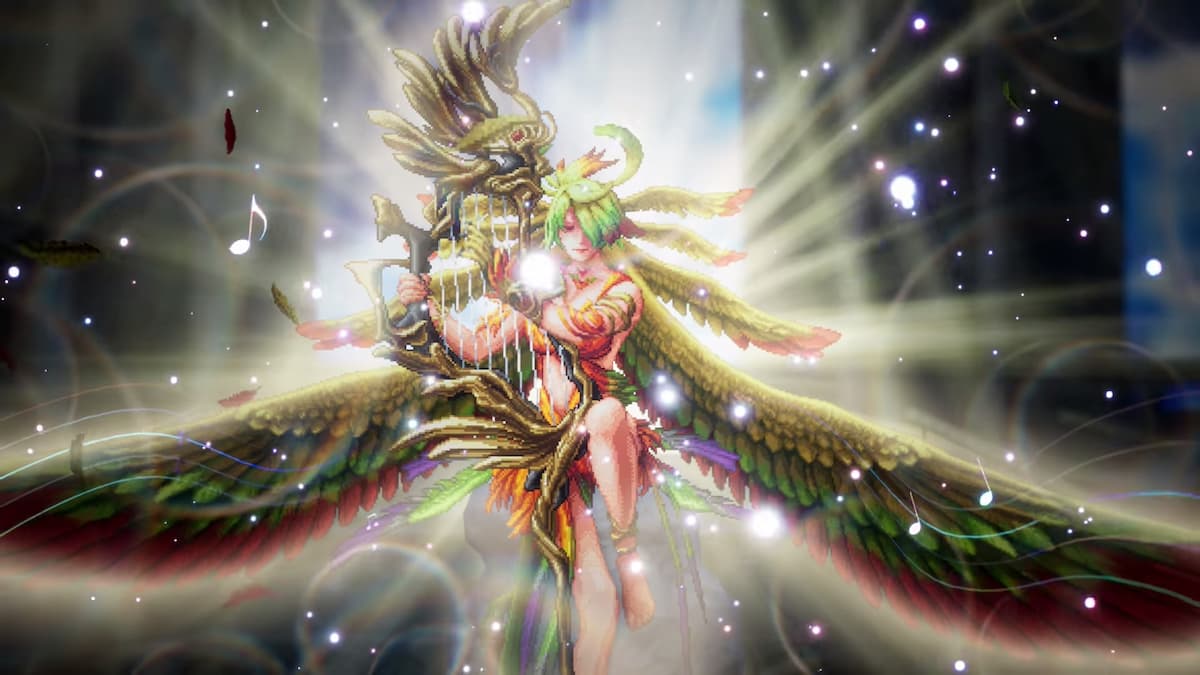
Then there are Espers and Limit Breaks to round out the combat system. The former can only be utilized by Fina, who expends a large amount of MP to summon an Esper that acts on its own during battle. Early on, you’ll gain access to Ramuh, who specializes in lightning attacks, but later on you’ll get more support-oriented Espers like Carbuncle, who can cast things like Reflect and Regen on your entire party. Espers only stick around for a few turns, and while you can resummon them in the same battle, you do need to be mindful of your MP management.
Limit Breaks, on the other hand, can be used by all characters once their Limit bars fill up. If you’ve played any Final Fantasy game before, you’ll know how these work. They’re basically unique ultimate attacks for each character that deal massive amounts of damage. Weirdly enough, I found that Limit Breaks didn’t feel quite as powerful as I was used to in other Final Fantasy games. They don’t hold a candle to any of the Overdrives in Final Fantasy X, for instance, and I found myself relying on regular spells and abilities instead.
Resonance does do a good job of giving every character unique skills too, with Nichol being a particular favorite of mine. As the team strategist, he comes with a bunch of cool buffs like increasing the entire party’s Stagger rate, damage, and more. He feels a lot like the Synergy role from FFXIII, which happens to have my favorite active-time job/combat system in the series, so that’s a plus in my book. Jake, on the flip side, comes with a kit that’s almost entirely luck-based. You have attacks that raise his luck (or drop it!), and other abilities that scale with his luck stat, making him a fun character to use because his patterns are never exactly the same.
I was astounded by just how fresh the turn-based combat felt in Resonance, and how the team was able to pull from a variety of beloved Final Fantasy games without making combat feel bloated. It’s an impressive feat and Resonance‘s biggest achievement.
It’s easy to look at a game like Final Fantasy Resonance and dismiss it as a low-effort spinoff game no one’s going to remember in a year. And I wouldn’t fault you for that. I can’t get over the fact that Square Enix opted to go with those ugly mobile game-ass fonts either. They make the game look cheap. But then I’d urge you to give Resonance a chance, because if you take the time to see what it has to offer, you’ll find a brilliant tapestry woven with tasteful nostalgia and a lot of heart.
A review code for the game was provided by the publisher. You can check out our review policy here. Reviewed on Switch 2.