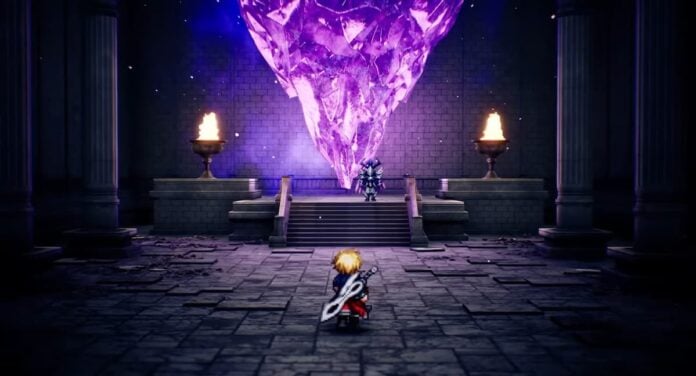
I’ve always enjoyed a good card-based battle system, especially in RPGs. Sometimes, a turn-based RPG will have you pick cards to perform actions, and it’s always fun figuring out a game’s unique take on using cards for combat. Shards of Order is a new example of this, developed by Fardust and published by Awaken Realms. It has a more dynamic take on card combat that forced me to think ahead at all times.
Shards of Order also has a bit of a Darkest Dungeon vibe in its tone and environment, which is what first caught my attention. I played the game for about 20 minutes at PAX East last month and left the demo wanting to see more, especially after a quick chat with Awaken Realms’ Marketing Specialist Kacper Kulpa about how the game looks beyond the section I experienced.
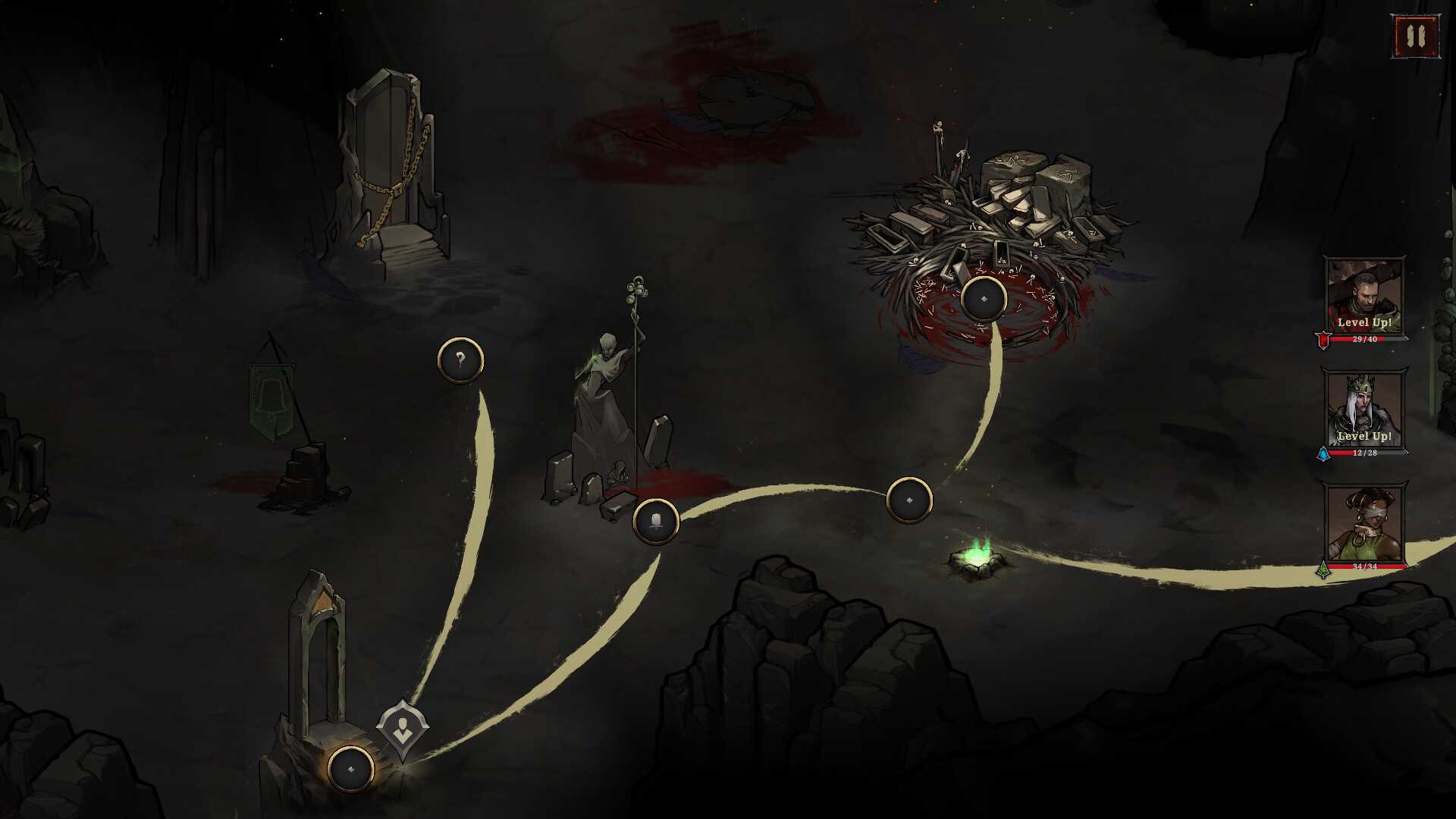
The game’s dark fantasy theme, bleak-looking environments, and horror-adjacent creatures are what drew me in before I even touched the demo. My mind immediately made a connection to Darkest Dungeon, which is one of the reasons why I incorrectly assumed that Shards of Order is also a roguelike. Nothing against that genre, but I was happy to find out it isn’t. Deckbuilding is a big part of customizing your combat experience here, and I didn’t like the thought of potentially having to remake a deck over and over again after every death.
“People tend to think that it’s a roguelike because, you know, cards and stuff,” Kulpa said. “But no, this is like a proper RPG. You gather equipment, you develop your characters, and you actually unlock cards on your skill trees. You do skill-based dialog checks – stuff like [that]. You have a story to finish from [point] A to B.”
I didn’t get to reach any “point B” in the demo, but I did get to wander around “point A”: a large monster’s nest deep within a cave. My main objective was to get away from the nest by finding a way out of the cave. To do this, I needed to speak to mysterious and odd NPCs, investigate several points of interest, and learn how to win combat encounters by playing the right cards.
Cards Cost Time
From what I’ve experienced, many RPGs with card-based combat allow you to play cards by spending a resource. Either that, or you’re limited by some sort of turn order. Shards of Order uses time as its resource. Each card in your hand has a number on its top-left corner indicating how much time it costs. This time affects a number shown above the enemies’ heads or near their health bar. As you spend time, the enemies’ corresponding number decreases to bring them closer to their turn. Enemies can act whenever you spend too much time, which creates a more dynamic take on turn-based combat.
You can use every single card in your hand on your turn, but then your opponent might be able to act several times as well. You can even spend time to redraw your hand if you don’t like it – the cost to redraw lowers after every card you use. You’re incentivized to use time in different ways, but you always have to be careful about how enemies may react.
“[The developers] wanted to do a twist, which is not having mana but time instead,” Kulpa explained. “You have to plan strategically. I think there’s a lot more player agency in this than in usual card games.”
The interesting thing about that is mana still exists in the combat system, but it’s only used to activate additional effects for the Scholar – not to play cards. Each party member generates a different color of mana that the Scholar can use specifically for his own abilities.
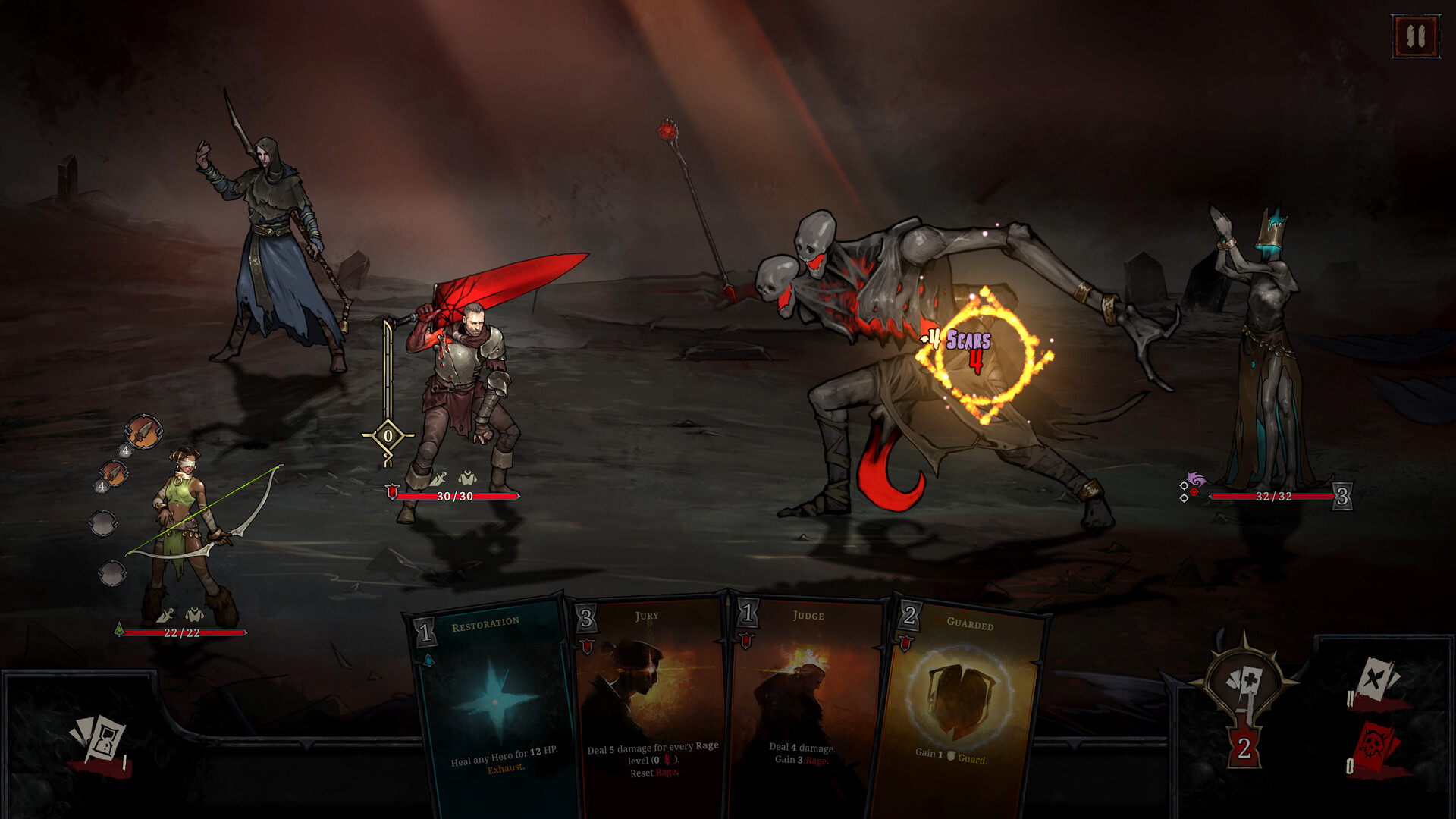
There are five distinct party members, each with their own playstyle. I only got to use the Soldier and the Exile during my limited experience, but five will be available in the full game. The Soldier fills a fighter/warrior archetype, and the Exile is a rogue. The former uses rage as a mechanic to increase his attack power, while the latter loads and fires different kinds of arrows that have unique effects.
“Your party will always be three, but there will be five classes to choose from,” Kulpa said. “Over the course of the game, you will find new people [who] would like to join your crew – five in total –, but you can only [use] three at once.”
You can switch the five party members in and out as you please along the journey, just like in most RPGs. But only three can enter combat at a time.
Cards Beyond Combat
The cave map was laid out like a board, with several points that I could choose to interact with in any order I pleased. Every point felt unique. I met a new party member, completed a task for an eccentric stranger, and solved a puzzle using info from other areas I visited. I enjoyed my time in the cave, but it was just a preview of a bigger world to come.
“You haven’t reached the open world part of the game yet,” revealed Kulpa, speaking about what’s beyond this cavernous demo section. “There is an option to freely explore the maps on your own. No hand holding. You can mess up sometimes, but that’s a risk we’re willing to take. We’re giving you free will – you can do what you want.”
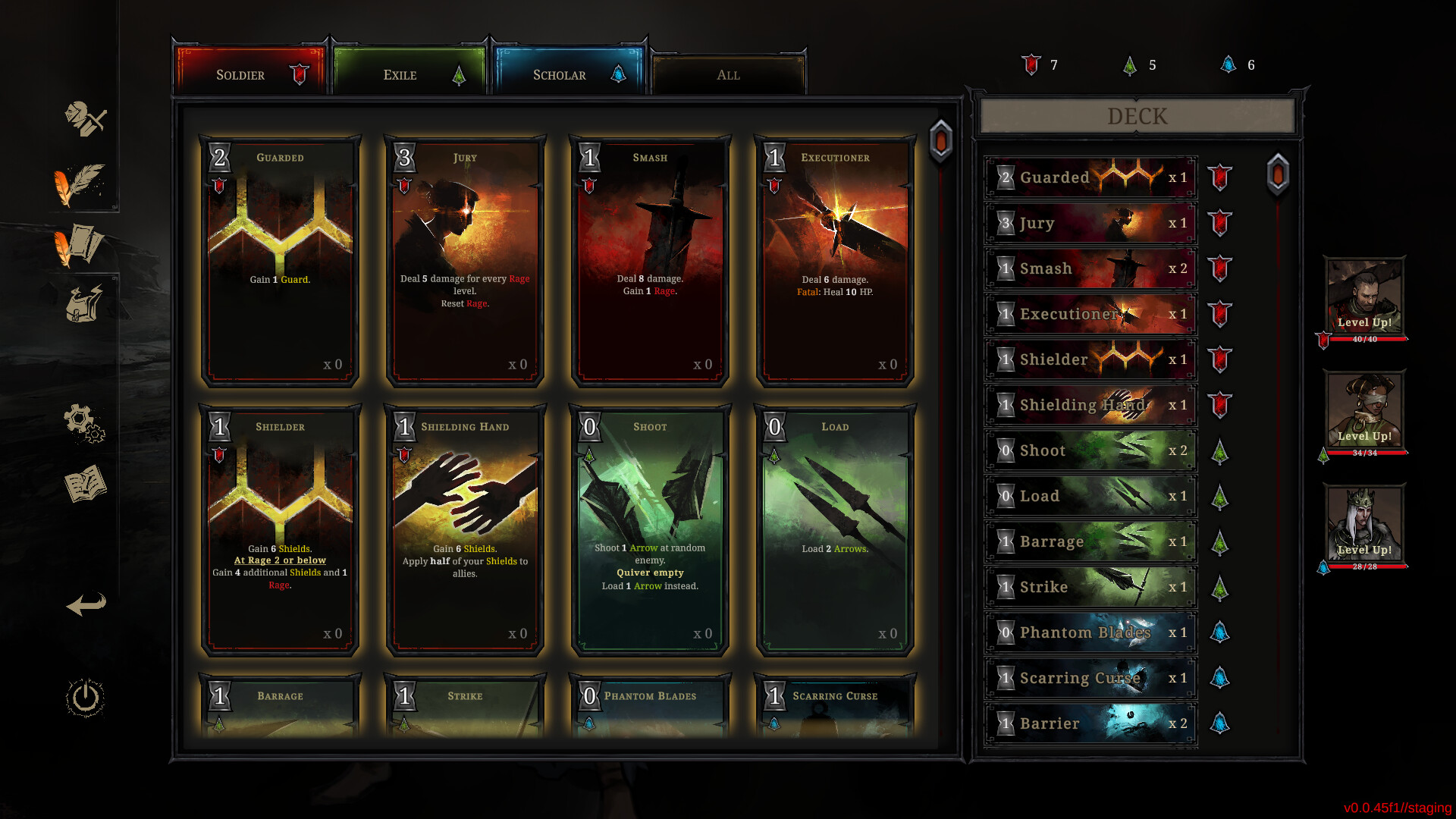
Through exploration, I learned that the cards you collect are used for more than just combat. They can be used to pass dialogue checks and access new progression options in non-combat scenarios.
The cards in each character’s deck are the ones that appear in combat, but you don’t need to have a card in your deck to use it in situations outside of battle. Shards of Order allows you to use any and all cards you’ve collected for those non-combat events.
“You can find [cards] in the world during some scripted events,” Kulpa said. “But you also have this skill tree where you spend points to actually unlock new cards, and then you can add them to your pool.”
Eventually, I made my way back to the monster’s nest to face it because, of course, that’s what would happen. I managed to take a huge chunk out of the boss’s health bar by dealing big damage with the Soldier while using the Exile as mostly a support.
I liked the fact that I was able to build her as more of a healer through new cards unlocked in her skill tree. The trees branch, unlocking and upgrading different cards depending on how you choose to spend your skill points. I’m interested to see what kinds of decks I can build with new cards found throughout the story.
I lost the boss fight, but I was close enough to want the immediate rematch. Trust me when I say I’ll be there for the runback when Shards of Order launches later this year.