You’d think, after decades of EA and Maxis sitting on top as the reigning champs with The Sims, someone would’ve made a comparable life sim to really give them a run for their money by this point. The answer, sadly, is no. Making a life sim game isn’t as simple as it may sound. There have been attempts, but none have come closer than Paralives.
While still in early access, Paralives already has the bones of what could end up being a very strong competitor to The Sims. When you jump into the game, the tutorial begins on a train where you learn the basics of moving your Parafolks around, feeding them, and having them interact with each other. You’re then prompted to start your journey as one of the pre-made families and groups, each of them coming with their own unique backstories.
It’s here that I realized that Paralives was going to be able to offer a much more guided narrative experience than The Sims ever had. I chose to start off with a group of three young women who would go on to become roommates, and I adored watching their personalities play off each other. There are plenty of other options, including a lone bachelor, a couple, or even a family complete with children. You can, of course, create your own custom characters and household too, which is what I opted to do after spending a while messing about with the roomies.
At the time of writing, the customization options feel very limited, though I guess that’s to be expected, considering Paralives is still in early access. Still, the striking art style more than makes up for those limitations. The comic book look of Paralives is adorable, and I loved that there were plenty of sliders to drag around for more precision in your creations. The Personality section does leave a lot to be desired, and I do wish there were more options to choose from even at this early stage, but I imagine that’s something that will be improved with time.
After choosing your preset family or creating a household, you’ll then be able to choose a Storyteller, a wholly new mechanic in Paralives. There are three narrators to choose from at the start of the game, and each one affects the game’s difficulty in interesting ways. The settings are all adjustable though — which I appreciated — and you can determine how much money you start with, how fast your characters age, and the chances of birthing twins, and so on and so forth.
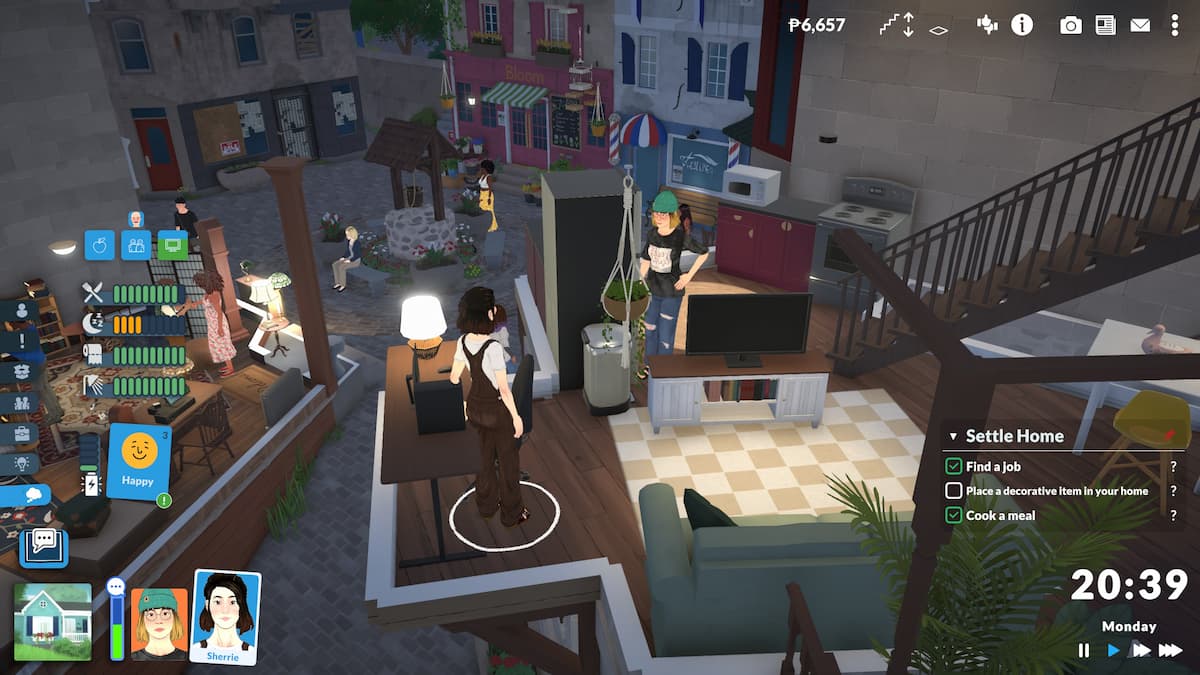
Beyond that, Paralives plays out like what you’d expect from a life sim game. Your characters will level up various skills by interacting with objects around the world, interact with other characters, work a job, fall in love. You know the drill. You can also build your own house from scratch on a plot of land, though I’d recommend buying a pre-built while you’re starting out, just so you don’t get overwhelmed by all of the things being thrown at you. There’s a quest board that you can check daily, which tasks you with doing simple things like cooking a meal and bringing it to the relevant NPC. These are all designed to get you to interact with the game’s townies and get to know the neighborhood. I appreciated the guided experience, and it helped to make the game feel a little less overwhelming.
Where Paralives excels is in its conversation system. While talking with other Parafolks, a conversation meter will fill up, allowing you to choose from a variety of different options to keep the conversation going. Some of these options are based on your character’s personality traits and aspirations, offering unique paths to friendship and romance. As a conversation progresses, your character’s mood may change, affecting your dialogue options and short-term goals, which means there are always different little things to take note of and work towards. I appreciated Paralives‘ more hands-on approach with character interaction, and I definitely enjoyed it a lot more than simply waiting for another bar to fill up before I could finally become best friends or lovers with whoever I was talking to.
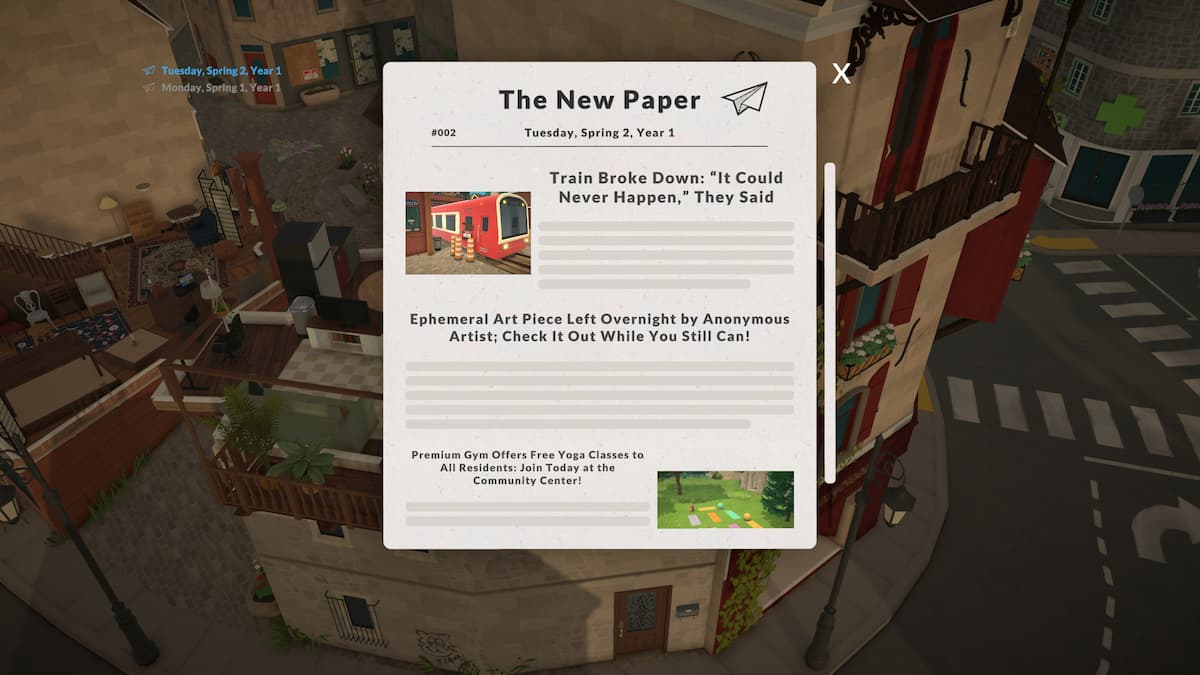
That isn’t to say that I don’t find the process of watching bars fill up to be extremely satisfying. Paralives offers that same gameplay loop of having your characters work a job for a set number of hours, get better at said job, get promoted, and become an increasingly skilled all-rounder as the game progresses. I do wish there were more things to interact with; as it stands, the town in Paralives may be fairly big, but it does also feel a little bit sparse once you’ve gotten to know all its denizens and checked out every shop and facility. More events or interactable objects would definitely go a long way here, which is something that inZOI did decently well, even if that game could feel soulless in different ways.
I will also note that Paralives is plagued with quite a few bugs, including characters glitching into furniture, the occasional T-posing, and I also ran into an issue where I was unable to purchase anything in a shop without exiting the game completely and reloading it. I haven’t run into anything game-breaking thankfully, but I would recommend saving your game regularly, just in case.
As it stands, there’s still a lot of work to be done with Paralives, but it’s clear from the outset that this has the potential to be a proper Sims rival. A lot of love has gone into the game design and art, and with time, I’m confident this could transform into the genre shakeup we’ve been waiting for.
A review code for the game was provided by the publisher. You can check out our review policy here.