When a review code offer for Veritas Tales: Witch of the Dark Castle appeared in my inbox, it didn’t take long for me to be convinced that I had to at least check it out. Handcrafted by Yoshio Nishimura, this is a classic pen-and-paper RPG that draws inspiration from the likes of Dungeons & Dragons and Wizardry, complete with stunning live 2D art that brings the game to life.
It’s worth pointing out that Nishimura is a Vanillaware alum, and with that in mind, it’s easy to see where his inspirations come from. Even looking past the obvious D&D references, Veritas Tales looks and feels like a Vanillaware game, and I mean that as the highest order of compliment. The game begins with a Merlin-looking wizard narrator who invites you to read a fantasy storybook. You get to play as one of two characters: a warrior named Havelock, or a mage named Paneri.
Both characters have arrived at the capital city of Erishing for markedly different reasons, only to find that it’s been overrun by the living dead. Alright, hold on a second. Is Veritas Tales: Witch of the Dark Castle actually a fantasy RPG version of Resident Evil 2? It is, isn’t it? Nishimura had also previously worked at Capcom, so it tracks. Now that I’m thinking about it, Veritas Tales does feature a couple of systems that feel very similar to Resident Evil 2, and that’s just making me love this game even more by the minute. We’ll get into all that shortly.
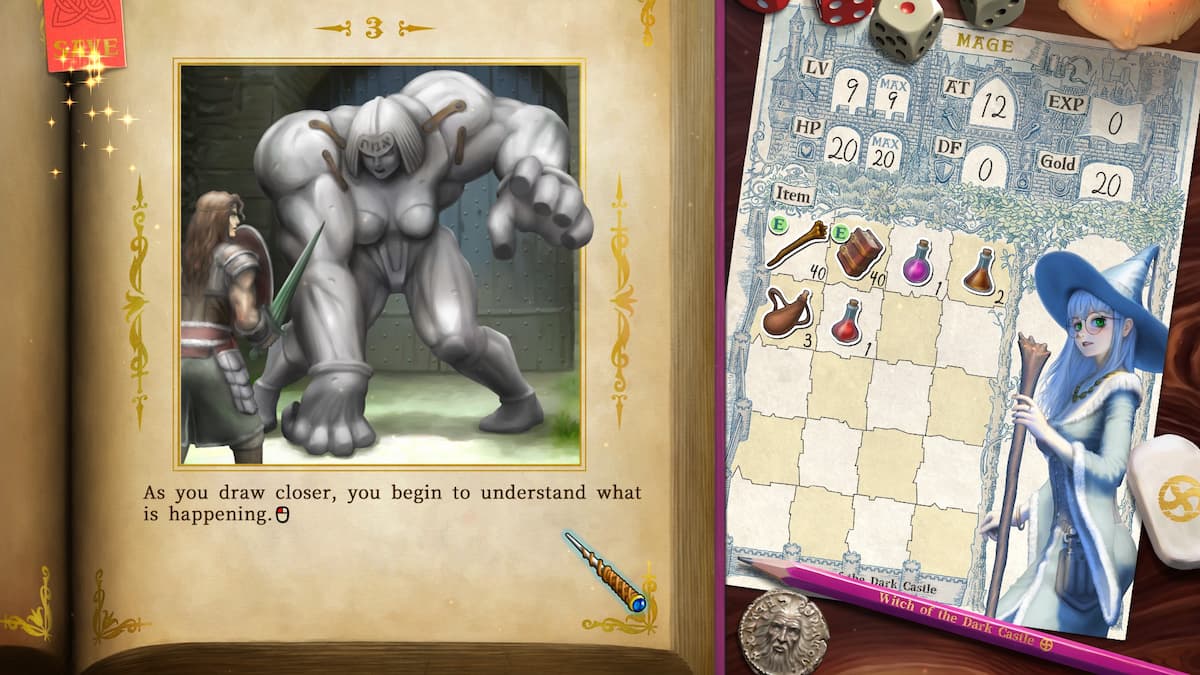
The entire game takes place within a storybook, and I mean that literally. A book flips open, with the left page offering up detailed descriptions and hand-drawn art of the characters and what’s going on in the story, while the right page is often reserved for character stats and equipment. I found this presentation to be particularly charming, especially as a virtual pencil and eraser pop up to make modification to the numbers as a fight progresses.
During combat, you’ll roll virtual dice to calculate your action value, which determines whether you get to actually attack your foe. If your action value is high enough, you subtract your foe’s defense stat from your attack stat, which then determines the amount of damage dealt. Weapons and items have limited uses too, so you’ll need to be careful with inventory management. I chose to play as Paneri for my first playthrough, which meant that I had access to various spells that made combat feel more varied and dynamic.
In contrast, when starting a second playthrough with Havelock, I found his combat mechanics to feel much more basic as he was often limited to physical attacks, especially early on. I suspect I was meant to start my first run with Havelock, but it is what it is.
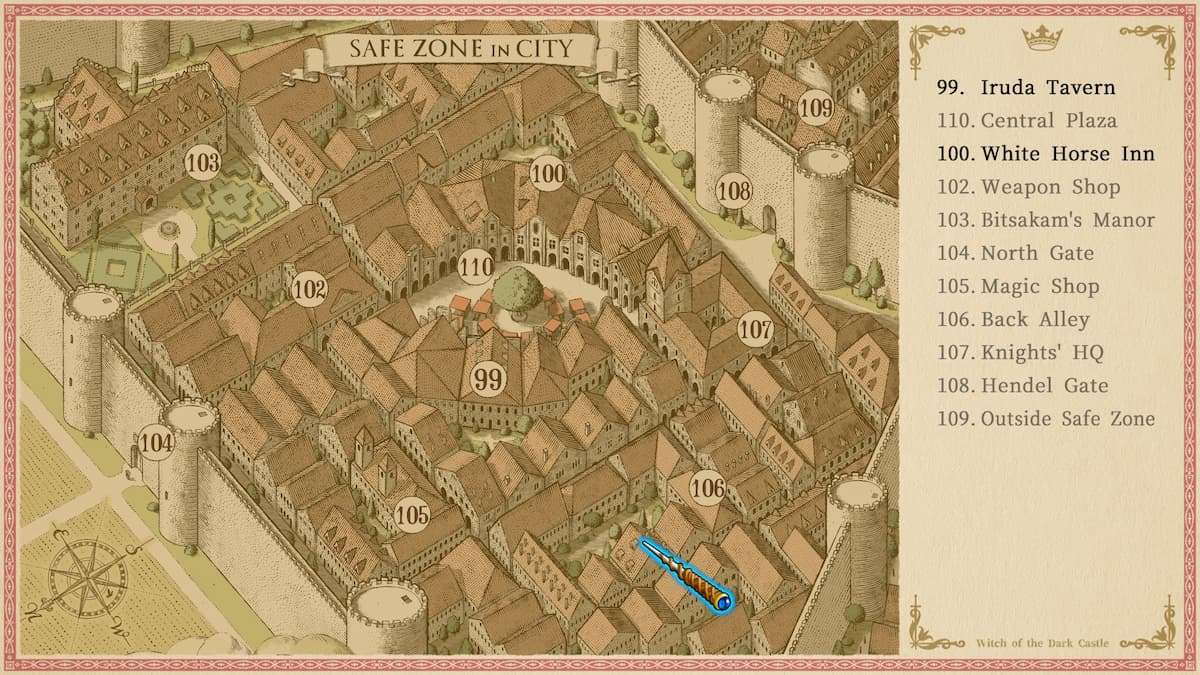
Outside of combat, you’ll largely be reading through pages upon pages of text, though you do have a lot of input on what to do next, which determines how the story unfolds. To make things interesting, Veritas Tales introduces a three-minute timer during key moments of the story to create a sense of urgency. For instance, during the game’s prologue, I was tasked with getting a bunch of injured civilians to a nearby safe zone, and the narrator implemented this three-minute time limit to force me to make my decisions more swiftly.
It’s a fantastic twist that really makes you think about what you need to do next, while also forcing you not to take too much time during the thinking bit. During this sequence, I mistakenly chose the option to read a whole ass storybook that was sitting on the table while the undead were pounding on my door, trying to get at me and the civilians, and that took up almost an entire minute even as I tried to mash through it as quickly as possible. Veritas Tales is unwittingly funny at times, deliberately wasting your precious minutes during these intense moments, and I appreciated the game’s efforts to break up the monotony of simply reading and clicking.
A huge shoutout has to be given to the voice acting and the music as well, which really help to make Erishing feel immersive. All of the key story moments are voice acted, though I do wish we could’ve gotten voice acting for the rest of the content as well. The soundtrack is wonderfully varied, with tense beats kicking in during moments of danger, and lighter strings playing in the background when you’re hanging out at the tavern, getting to know the townspeople. I will say that the art, while beautiful, could probably stand to be a bit more polished, but given that this was created by literally a single developer, I think I can let that slide. Veritas Tales is truly an impressive work of art.
At the end of your first playthrough with whichever character you picked, you’ll be immediately sent to your second playthrough with the other character. Here’s where things get interesting, as items that you picked up during your first run will no longer be available in the second run. Once again, this is really just Resident Evil 2 but as a fantasy RPG, and I’m here for it. This made my second run just a bit more challenging, but it was fascinating to go through the story again to see things from a wholly new perspective.
As far as the story goes, it’s pretty simple. A mysterious illness has taken over the city of Erishing, and a witch who was suspected of unleashing this sickness on the people has been imprisoned. It’s chaos in Erishing, as the city is currently without a ruler, and everyone’s just trying to make sense of it all. Havelock and Paneri feel a little basic as characters, but the real selling point of Veritas Tales is its immersive environment. Despite the fact that everything is told through a literal storybook, I found myself completely engaged with the world-building of Erishing, and I was eager to find out more about its history and how the undead illness came to be. I do wish the characters had a bit more depth to them, but even that slight detraction wasn’t enough to stop me from enjoying this game.
Veritas Tales: Witch of the Dark Castle is a fantastic RPG that calls back to the genre’s roots of pen-and-paper, choose your adventure-style stories that gripped me as a child. While it can be a little rough around the edges in certain aspects, I admire the heart and passion that’s gone into this project, and my only fear is that it’ll become a forgotten cult classic that ends up flying under the radar for most genre fans.
A review code for the game was provided by the publisher. You can check out our review policy here. Reviewed on PC.