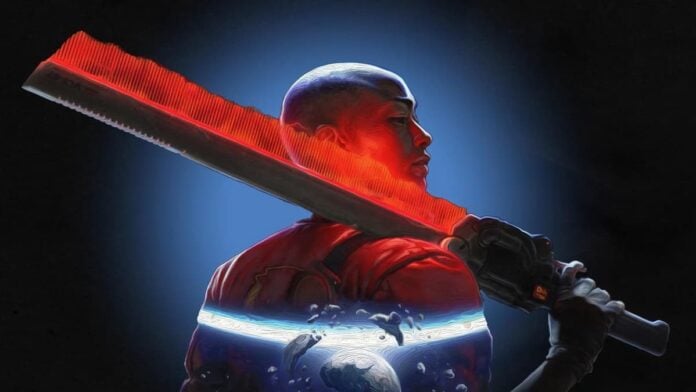
For the development team at Ubisoft Singapore, you could say that Assassin’s Creed Black Flag Resynced felt like a project that was made for them. Founded in 2008, Ubisoft Singapore has had a hand in helping to develop some of the French company’s most successful titles. These include Assassin’s Creed Brotherhood, Revelations, all the way up to even the most recent titles like Shadows and Valhalla.
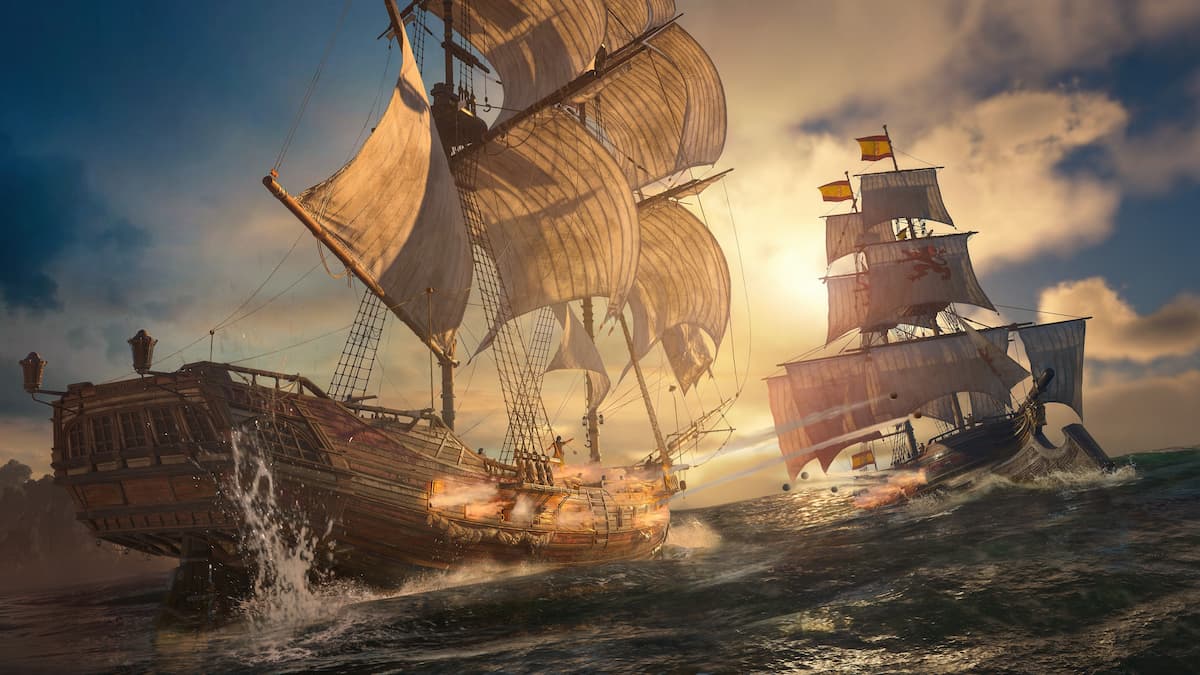
After speaking with the Singapore team at a Black Flag Resynced launch event, however, it became clear to me that Assassin’s Creed III was really where everything properly began for them. About partway through Assassin’s Creed III, Connor takes command of the Aquila, and this is where players got their first taste of naval combat in the series. The Aquila segments were so engaging and immersive that they quickly became lauded as some of the best bits III had to offer in an otherwise somewhat muted game, and went on to serve as the basis for what would become 2013’s Assassin’s Creed IV: Black Flag.
During the event, I caught a glimpse of Ubisoft Singapore’s naval combat prototype from nearly two decades ago — irrefutable proof that ship command and combat were possible, and even fun, in Assassin’s Creed. Speaking with Resynced‘s Creative Director Paul Fu and Lead Producer Justin Ng, I was struck by how confident and proud the team was with what they had achieved here.
The Initial Pitch
Talking about the pitch process for Assassin’s Creed Black Flag Resynced, I asked Fu and Ng what the core idea was that they needed to sell in order to get the project approved. Before I could even get the entire question out, Ng answered confidently: “We were the right team for the job.”
“We did the E3 demo,” Fu added, “We’re close with Ubisoft Montreal, the original team. We have a lot of experience in naval [gameplay]. A lot of us here love Edward Kenway, including myself, so it was just a natural fit.”
While working on Resynced, Fu knew right off the bat what the team needed to achieve with this remake. To him, it was clear that Resynced had to be a faithful remake, particularly for a game that was so beloved by fans. That being said, a remake also needs to justify its existence, especially when you’re talking about a game like Black Flag that, despite being released in 2013, still does hold up really well today.
Fu understood that fans would want to see new content and systems, so the team expanded on both of those aspects “without disturbing the spirit of the original game”, and this resulted in a rulebook of sorts that was essentially a 100-page document with guidelines on what they could or could not do in Resynced.
When I asked for examples of these rules, Fu told me, “No dialogue choices is one of them. This is a very obvious one, but it needed to be put somewhere.” Fu also went on to talk about the challenges the team faced in expanding the game while also making sure their additions were intentional: “We also had to figure out how much of the world we wanted to change, because back then we had a prop limit in a certain radius in a certain grid of the world, where every grid had a prop limit. Now, the limit is much greater, but it doesn’t mean we can go crazy, right?
So, there are a lot of rules in explaining how level design works. In the old days, we had this thing called Free Run Highways. If you see a starter crate — we called them starter crates — with a white cloth, you’ll know that if you run up the crate, you’ll go up a highway, and parkour ingredients will be placed all the way for you to run about the city, and there are now easily 30 or 40 of them in Havana, and these are all planned. It’s an old-school way of looking at Assassin’s Creed titles, and that’s one of the rules for example. And there are many, many, many, many other rules.”
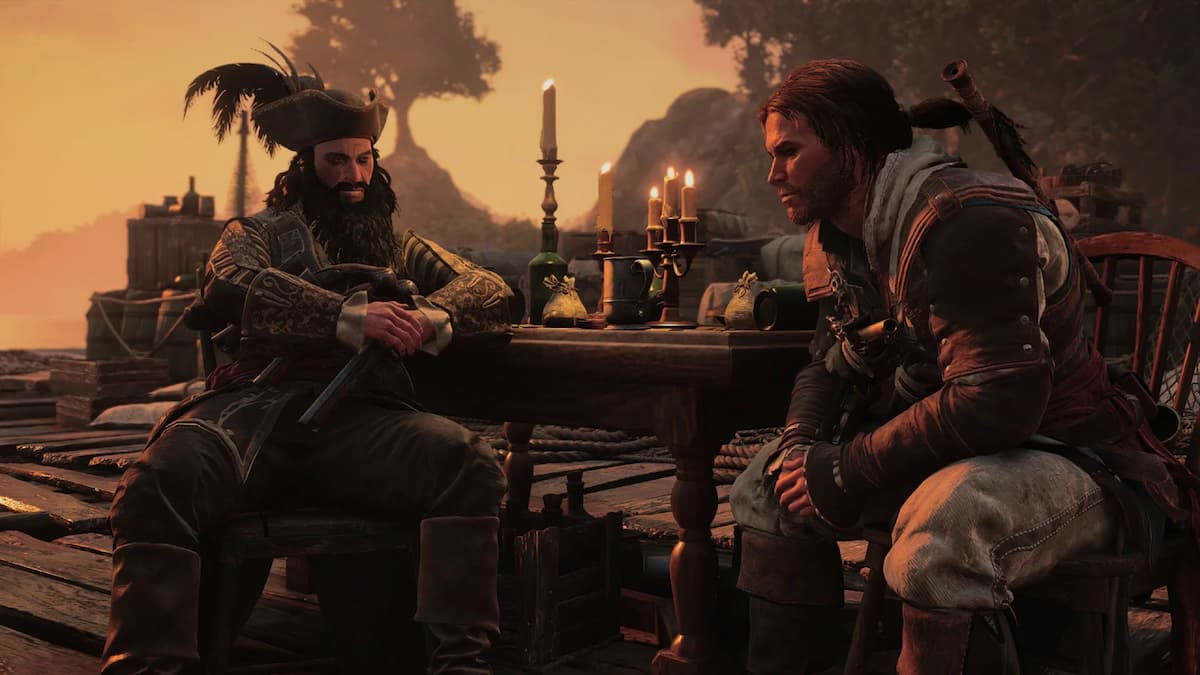
Black Flag Resynced was also an opportunity for Ubisoft Singapore to incorporate some of the ideas they had for the original game that had been left on the cutting room floor back in the day, such as officers. Fu mentioned that they had wanted to add officers in III and Black Flag, but didn’t manage to do so. Underwater diving anywhere in the world was also an idea they explored that didn’t work at the time, so Resynced is essentially the fruition of all these ideas from years ago that Ubisoft Singapore is now able to move forward with.
The addition of new content was tricky as well, Fu tells me. “Different people love different characters,” Fu said, “and we knew we couldn’t do everything, so we had to focus on a few.” He went on to say that there were also set rules that the team had to follow when adding new story content in order to make sure everything felt intentional instead of bolted on.
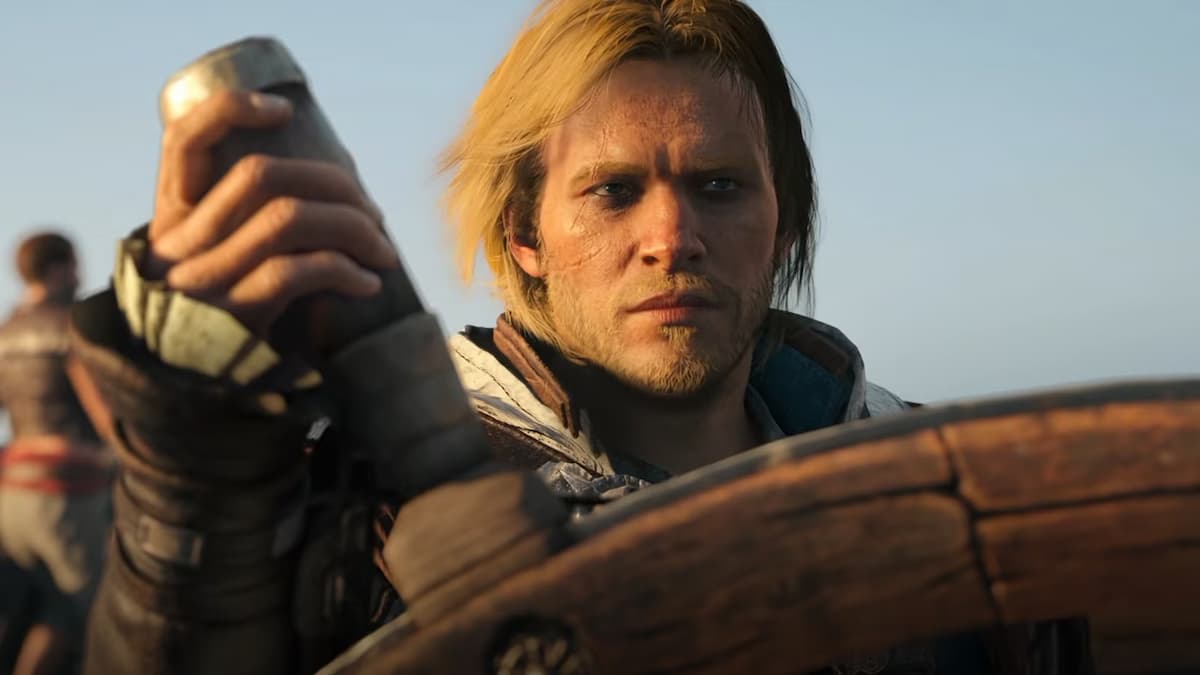
The most important rule that Ubisoft Singapore followed was that all of the characters “needed to feel like they existed in the original story, or that they can exist in the original story.” It was at this point that it started to dawn on me just how much reverence the team had for the source material, as Fu stated: “Edward’s character themes are father, husband, regret, and loss, which is a big thing for him. He’s a pirate too, but that’s actually only a small part of him. A lot of his character has got to do with his loss. So we took all these themes, his greed, and his love of freedom, and made sure that each of the supporting characters echoed one or more of these themes so that they would feel authentic to the original experience.”
The Singaporean Impact on Assassin’s Creed
If you don’t know anything about Singapore, it might be difficult to understand why I came away from this launch event feeling so incredibly impressed and proud. As a island country that’s established itself as the most successful financial hub in Southeast Asia, it’s not a stretch to say that most Singaporeans can be rather single-minded when it comes to career paths. Most folks here generally pursue “safer” career choices like banking, medicine, or law, which means that creative pursuits and endeavors can be a bit of a rare sight. With that in mind, in some ways, Ubisoft Singapore feels like a strong bastion of creativity that proves that success can be found even when you go off the beaten path.
I was curious if the cumulative Singapore experience had any impact on Ubisoft Singapore’s work on Resynced, and Ng reaffirmed that he, too, felt strongly about representing our culture in Resynced, and that’s most clearly seen in little easter eggs like a side quest that involves moving durians around in cargo boxes. For the uninitiated, the durian is a notoriously pungent (to most, but not others) fruit that also happens to be Singapore’s national fruit. We even have a building in town designed to look like a durian and it’s a tourist attraction. It’s a whole thing.
“I think it’s something that the team here feels as well,” Ng said, in regards to representing Singaporean culture in their work, “I personally feel quite strongly about it. It’s a way for us to inject a bit of our culture, a bit of our personality into everything we do. I think being the lead studio, being able to get those things in and get them done, that was pretty special.”
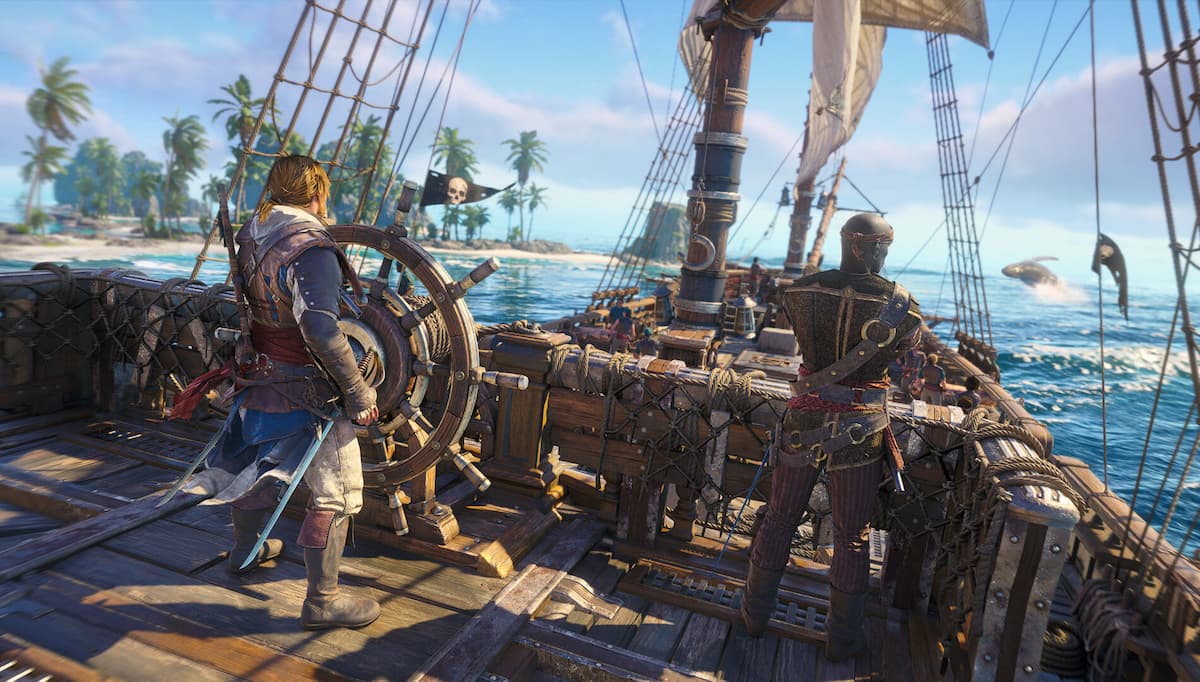
Ng went on to explain that being part of a country that has such a strong multicultural identity has certainly also helped with the team’s role in a global company: “As a Singaporean, I think our upbringing is very much multicultural as a country, and I think that really helped with working with different studios. We get to communicate with a lot of different people, we’re challenged to do that, and that helps us a lot.”
Fu agreed and weighed in: “In my opinion, the ability for Singaporeans and Southeast Asians to be able to connect with each other is very strong. And when you’re trying to ship a game with a few hundred people, almost a thousand sometimes, it’s very important. Singaporeans are generally quite collaborative, y’know, and that really helped us to lead this project.”
Of course, I had to end off the interview by asking Fu and Ng what their favorite Assassin’s Creed games were and who their favorite assassins were, even though I was pretty sure I already knew the answer.
“Black Flag. Edward Kenway,” Fu said, without missing a beat.
Ng hemmed and hawed a little, to be fair: “I mean, my canon answer has always been Eivor in Valhalla because it’s my first ever Assassin’s Creed.” But he ultimately caved, of course. “But now that I’m the lead producer on this one, it’s Black Flag. And Edward Kenway.”
Assassin’s Creed Black Flag Resynced is now available on PC and consoles.