Solo dev stories are not uncommon in the video games industry. What is out of the ordinary, however, are developers who actively go out of their way to avoid the hustle and bustle of modern life in an effort to reconnect with themselves and create something that truly matters to them. These are anecdotes you’d typically hear about art forms like books or art, but rarely in video games, where trends move so quickly. Such is the story of Yoshio Nishimura, a game dev veteran who’s worked at companies like Capcom and Vanillaware for decades, and how Veritas Tales: Witch of the Dark Castle came to be.
Veritas Tales isn’t a game I had on my radar, but it’s quickly become my biggest surprise of 2026. It touts itself as a classic pen-and-paper, game book RPG, but in a digitized format. It was created by Nishimura, who left Vanillaware during the COVID-19 pandemic, and lived just outside the mountains of Nara, Japan to work on his passion project.
I had the opportunity to chat with Nishimura, who shared plenty of details about the development process, his experiences at Capcom and Vanillaware, and the importance of handmade art in this day and age.
The Magic of Reading
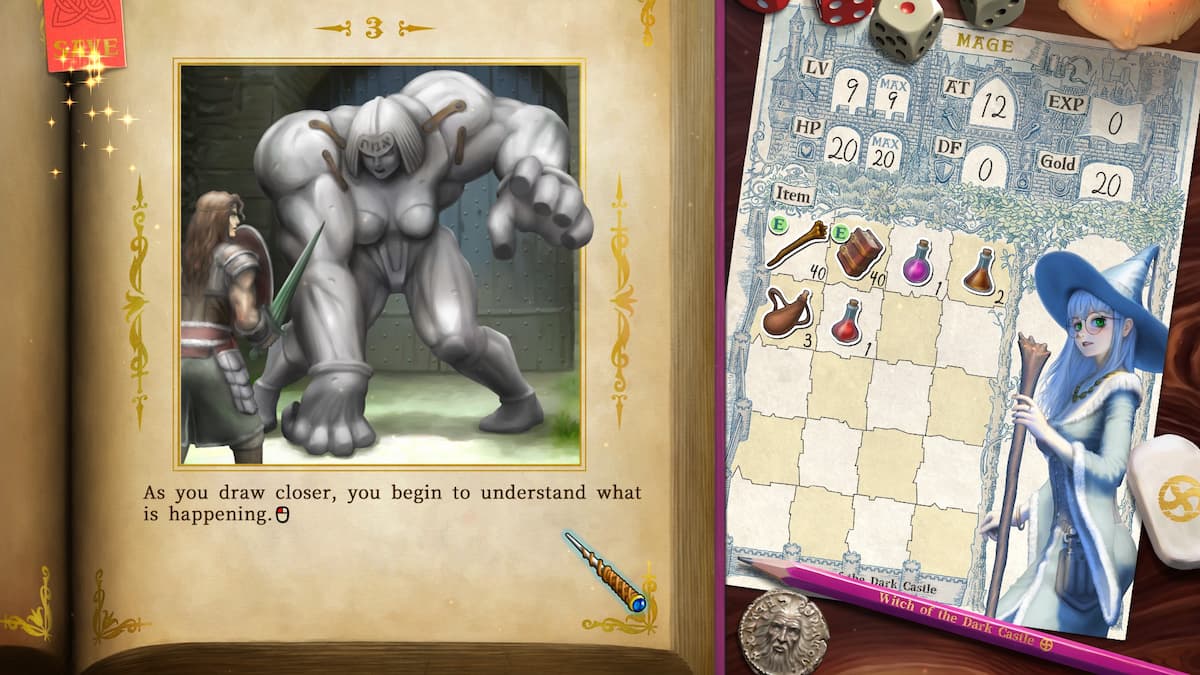
Unlike most other classic RPGs on the market right now, Veritas Tales bucks the trend by making the player profoundly aware that they are actively flipping through a book. In fact, it’d probably be more accurate to describe Veritas Tales as a digital book rather than a video game. From the way Nishimura describes his inspirations, it sounds like that was the intention from the start.
Nishimura cites JH Brennan’s gamebook series GrailQuest and Piers Anthony’s Xanth as sources of inspiration for Veritas Tales, both of which involve the player and protagonist entering the body of a hero to go on an adventure. “I found the imaginative experience of entering someone else’s body to go on an adventure tremendously fun,” Nishimura tells me, “So I incorporated the same conceit into Veritas Tales.”
“I think reading is something special and wonderful. While reading, your eyes intently follow the written words, but your body barely moves. And yet, inside your head, the information you take in connects, takes shape, and begins to move,” Nishimura says, as he describes the book-like nature of Veritas Tales and how he wanted the game to feel, “Your imagination runs at full throttle, projecting all kinds of scenes and letting you guess at what will happen next. I built the systems, scenario, and illustrations such that players could have this kind of experience.”
That being said, Nishimura also acknowledges that reading for long periods of time can be tiring. During the game’s development, he made sure to always keep in mind his goal of not letting the player get bored. To do this, Nishimura made sure that there’s always a comfortable ebb and flow to Veritas Tales. “After the game starts, I ask the player to be patient through a long voiced event,” Nishimura explains, “Then deliberately create a hectic situation to push them along… I explain the world, and then after a reassuring event, a hopeless one strikes… and so on.”
“I also put a lot of thought into things like the placement of mini-games such as the three-minute timer and the chase, the timing of when characters appear, and having the artwork on the character sheet change just when you’ve grown completely used to the UI,” Nishimura tells me, “All sorts of touches to keep the player from getting bored.” Every bit of detail in Veritas Tales was designed to keep these long reading sessions from becoming tiring.
The only bits of Veritas Tales that Nishimura wanted to deliberately modernize were the inclusion of voice acting, the save function, and of course, immersive music to set the tone for the adventure.
Indeed, a great deal of thought went into the music, as Nishimura explains that the music and sound effects did a lot of heavy lifting when it came to bringing the story to life.
“The greatest thing made possible by the digital format is, I think, everything to do with music. Music and sound effects suited to the moment do a great deal to heighten the sense of adventure. When a shocking sound effect plays during a frightening event scene, the fear is doubled. In an ordinary game, these things are taken for granted, but because Veritas Tales leans so heavily on presenting itself as a book, a kind of illusion sets in, and I think that makes those things newly interesting.”
The soundtrack, composed by Hitoshi Sakimoto of Final Fantasy Tactics fame, features music with much slower tempo compared with most other games. Nishimura mentions that his first meeting with Sakimoto lasted several hours, and after that, there wasn’t really much back-and-forth about the music itself. Even so, Nishimura states that Sakimoto was able to produce music that both matched and exceeded his vision. “He made music that surpassed my imagination and yet fit the world perfectly,” Nishimura tells me, “So there was nothing in particular I needed to specify. I essentially left it all to Sakimoto-san.”
Nishimura also mentions that the original commission was just for 10 pieces of music, but Sakimoto himself had proposed bringing the soundtrack to 13 pieces, as “three more would balance it out”. Nishimura told me that the main theme for Veritas Tales was the first track that Sakimoto made, and he recalls crying when he heard it, “partly because the piece was wonderful and partly out of sheer joy”.
“Thanks to those 13 pieces, every scene fell perfectly into place,” Nishimura continues, “I think that comes from his many years of experience and instinct. That’s another reason why I think he’s a truly wonderful person.”
An Emphasis on Soul and Humanmade Art
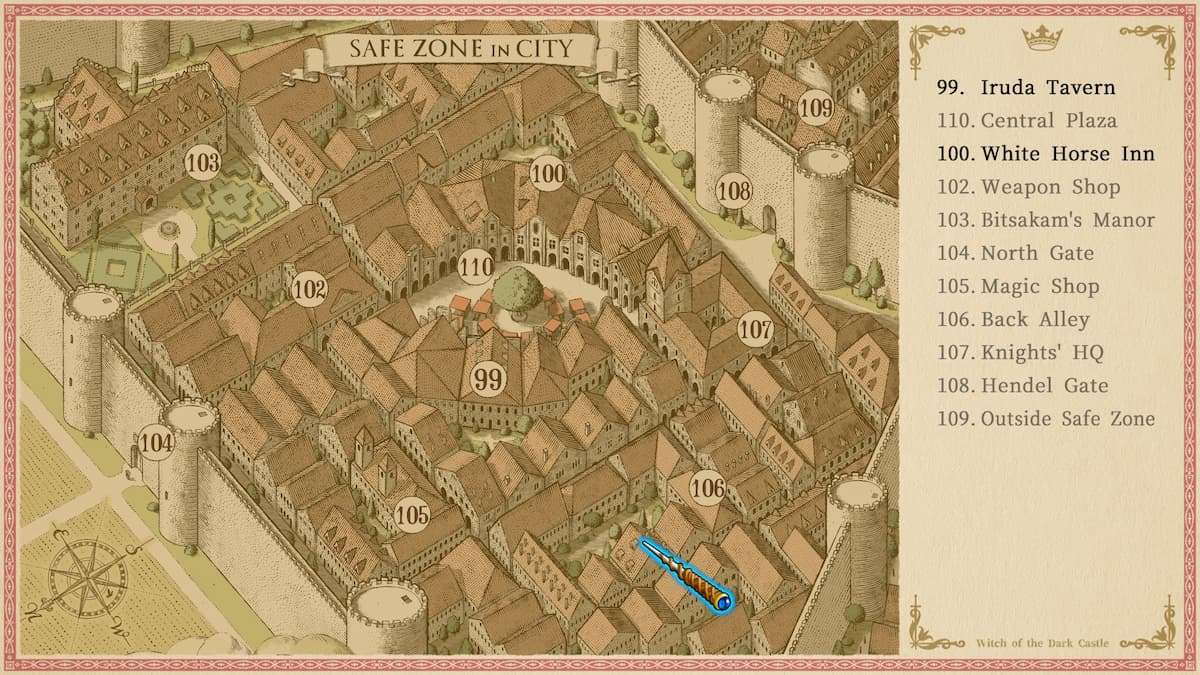
Aside from the fact that Veritas Tales is drawing its inspiration from classic pen-and-paper RPGs, it’s undeniable that this game features an overwhelmingly human touch as well, which comes through most via its art.
Surprisingly, Nishimura tells me that he wasn’t especially conscious of maintaining visual consistency in Veritas Tales, explaining, “The truth is, long ago someone told me my art has no individuality, and there was a period when it troubled me. But once I came to the conclusion that having no individuality is itself a kind of individuality, I stopped thinking too deeply about the direction of my own visuals.”
For Veritas Tales, Nishimura wanted to ensure that the look of the game would never feel stale, and tried to provide some range to the overall presentation. This was done by sometimes drawing without line art, sometimes coloring after drawing in black and white, or even blurring another picture and drawing in a decalcomania-like way.
Nishimura also pointed out that the art of Veritas Tales features quite a few homages to illustrations he’s loved for years, so some of the art was inspired by those, just altered into the style he needed for the game.
One of my initial criticisms of Veritas Tales was that the art itself probably could’ve used more polish, especially when stacked against the undeniably gorgeous illustrations in a Vanillaware game, where Nishimura used to work. Though, in hindsight, that’s probably an unfair comparison. One of the main features Nishimura wanted to highlight in the promo materials for Veritas Tales was that no AI was used in the development of the game.
Being a strong advocate for human-made art myself, I asked Nishimura for his views on AI and why he saw the need to emphasize handmade art and “soul” in his game. He answered: “I believe humans are creatures that need communication. Through communication, we come to know the differences between ourselves and other beings, deepen our understanding, and reach harmony.
You can communicate with AI too, but AI is not human. AI certainly produces wonderful services, but I want everyone to feel — and to realize — that wonderful works can also come from your own hand and your own way of thinking.
What you can’t get from automated production is, I think “attachment”. Love can’t grow without effort. I love Veritas Tales, and it would make me happy if players could feel that love when playing the game.”
Creating Without Compromise
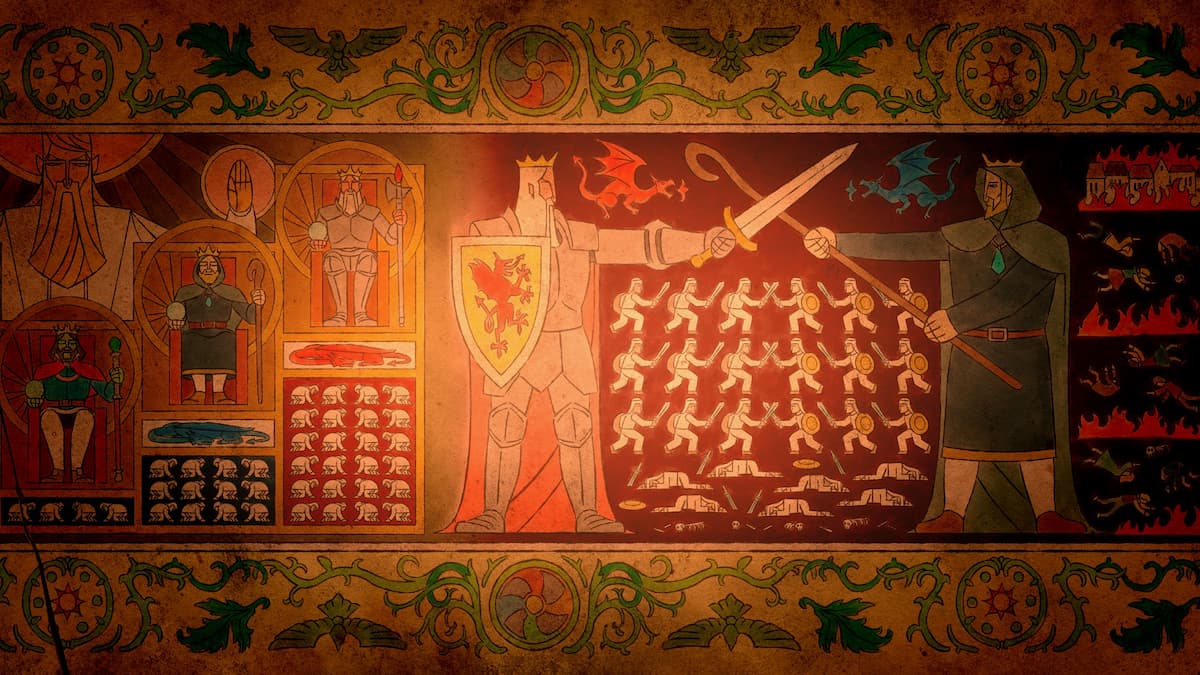
I’d mentioned in my review that Veritas Tales‘ setup felt very similar to Resident Evil 2. A man and woman arrive at a big city for different reasons, only to find that it’s been overrun by zombies. Naturally, I couldn’t resist the urge to ask Nishimura if Resident Evil 2 had played any part in how he shaped the story.
Nishimura answers: “I wasn’t conscious of it! But now that you mention it, I do think they’re quite similar. Development on Resident Evil 2 began after I joined Capcom, so although I was in a different department, I think I was influenced by it in some way. I bought and played Resident Evil 2 myself!”
With his handdrawn art being such a key part of Veritas Tales, I also had to ask Nishimura about his experience at Vanillaware and what it was like working with George Kamitani. Nishimura says that his main takeaway was “making things without compromise”. He describes it as “a way of thinking that extends to everything, though in practice it ends up limited by time and production funds”.
Nishimura goes on to say that drawing is a huge passion of his, and it’s something he does in his leisure time. Similarly, Kamitani loves making games and does it both for work and during his free time. Nishimura is of the belief that living this way is what leads to creating things without compromise.
There’s a difficult balance to strike when your passions bleed into work, however, and when I asked Nishimura how he managed to balance the early development process for Veritas Tales while working, he offered a brief overview of what his schedule looked like.
In his early 20s, Nishimura recalls coming into the office on his days off just as he would on weekdays. On weekdays, he’d work past 1 a.m., sleep in the meeting room, then head home the next day for a change of clothes.
Nishimura doesn’t say it explicitly, but I got the sense that, well, y’know, that was pretty hellish. Especially when he contrasts it with what his schedule looked like once Veritas Tales came into the picture:
“Compared to those days, no matter how tired I am, working on days off now is no problem at all. In the early days of developing Veritas Tales, my weekly schedule was: after coming home on weekdays I’d work on Veritas Tales and go to bed late at night,” Nishimura tells me, “On days off, apart from shopping, eating, sleeping, and running errands, all my time went to working on Veritas Tales. For me making Veritas Tales was a hobby, so it wasn’t much of a hardship.”
Even if Nishimura didn’t see it as work or a hardship, balancing his personal project with work could be seen as his way of creating without compromise as well.
After his departure, Nishimura moved to Soni in the Nara prefecture, and he describes country life as a “wonderful environment” that has helped to improve his concentration and ability to make decisions.
Notably, when Nishimura eventually left Vanillaware, his departure was framed by Kamitani as a graduation of sorts. I asked Nishimura if that framing had any effect on his mindset as an independent creator, and his answer was one of confidence: ” I believe Kamitani-san sent me off as a ‘graduation’ because he trusts me. His eye is never wrong, so I can rest assured that I’m capable of standing on my own. That said, this is the first time I’ve done development work in a position of responsibility, so honestly the anxiety outweighs everything else.”
“I also think my conduct will affect anyone who may ‘graduate’ from Vanillaware in the future, so I feel the responsibility more strongly than the freedom. Even so, I went independent because I wanted to, and now I’ve been able to put the thing I love most out into the world,” Nishimura says, “I still don’t know what the future holds, but for now I’m very satisfied. I think I’ve gained a bit more confidence than when I worked at Vanillaware. Your questions made me realize that. Thank you.”

A very in-depth and enjoyable interview!