About four hours into Silent Hill: Townfall, I was dropped into a surgery room in the St. Amelia Medical Centre, forced to read out a dying patient’s pulse, blood pressure, and other basic metrics from machines that deliberately fed me faulty data. The game was setting me up to fail, and I knew it. I knew it from the instant the doctor over the intercom started audibly sighing at how incompetent I was, how I could not even provide him with the most preliminary info.
I am a trained professional, am I not? Then act like it! The doctor is bitching about me to a colleague on his end while I’m left floundering about, injecting wrong chemical dosages into my patient’s body, taking my time calibrating an x-ray machine, and getting slapped in the face with tentacled injectors and losing bits of health whenever I answer a query wrongly. All of this is in my head, of course. I’m in an internal battle with the cruelest voices in my head telling me I don’t have what it takes, and I’m losing. I think I’m supposed to feel some empathy for my character, but instead, I’m laughing while the patient is slowly but surely bleeding out on the operating table.
I’m laughing because the game wants so desperately for me to take this seriously but it’s all so absurd and heavy-handed that I just can’t. And that, I think, is Silent Hill: Townfall‘s greatest, uh, downfall.
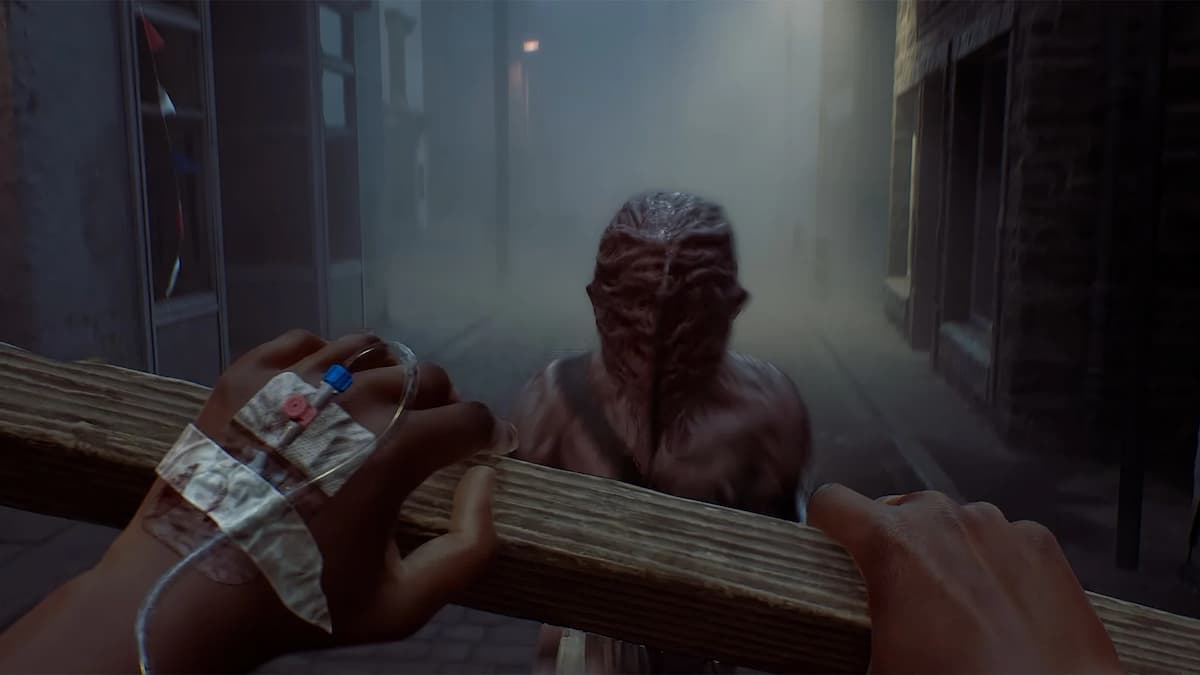
Just like last year’s Silent Hill f, Silent Hill: Townfall does not take place in the iconic, titular town. Instead, it’s set in a quaint Scottish town named St. Amelia. You play as Simon, a man returning to his hometown of St. Amelia after some time, and things are, of course, weird. Notably, Simon has a hospital patient tag on his wrist, and all we have to go on is an audio recording of someone telling him to go back to make things right, for the sake of the town.
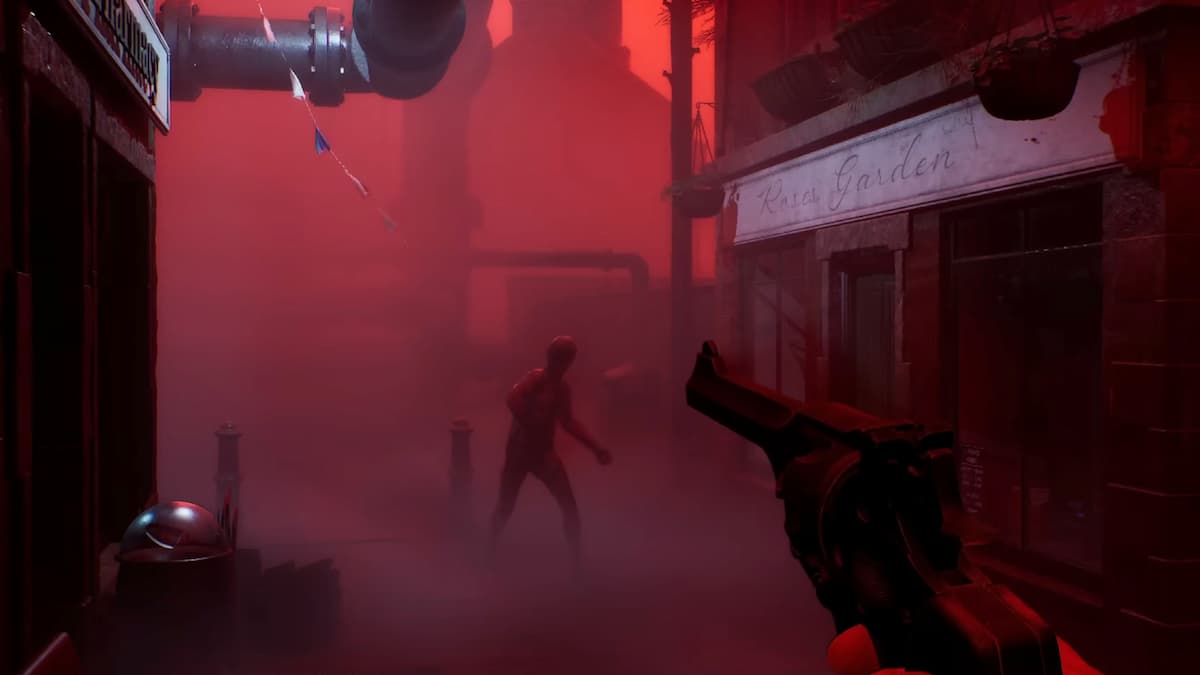
Aesthetically, Silent Hill: Townfall evokes a lot of old-school Silent Hill vibes that I’m sure will take fans right back to the PS1 era, even if you happen to fall into the camp of “this isn’t literally Silent Hill, therefore I hate it”. Compared with last year’s f, however, Townfall felt much more faithful to classic Silent Hill with its foggy streets and quaint western small-town aesthetic. The map layout was delightfully reminiscent of the suburban vibes of Silent Hill 2‘s Toluca neighborhood, with quiet apartment buildings, parks, and lonely storefronts. Tying all of these areas together is a giant town square filled with memorials and cardboard signs hinting towards the town’s darker past.
The game wastes no time in setting up the basic plot and doling out key hints. It’s clear that St. Amelia was afflicted with some sort of strange illness that spread across its residents, resulting in ferries and ships being cut off from the little island town (the next Martha’s Vineyard?) and widespread starvation and death. Silent Hill: Townfall‘s story cuts between Simon, who’s hinted to be a patient, and Zoe, a home visit nurse, in both present-day and flashback sequences.
While the Silent Hill games have always done a fantastic job of linking the town’s happenings to the psyche of the main character, it’s worth noting that the series has always done so in a subtle way. It drops hints at appropriate times, nudging you towards one theory or another, before yanking away everything you thought you knew and presenting you with an alternative point of view. I found that Silent Hill: Townfall lacked much of the series’ nuance, and could often come across as ham-fisted with how the story was presented.
It didn’t take long for me to come up with plausible theories about Simon, Zoe, and their respective struggles, and I was surprised to be proven right about many of them even before the end of my first playthrough. Compared with 2025’s brilliant Silent Hill f, which featured a complex and layered story with endless themes to unpack, Townfall felt much more predictable and straightforward, and even a little clumsy at times. Moments that should be heavy feel unintentionally silly or comedic instead, and while the story does have its bright spots, I found it hard to connect with it or the characters.
For the first time in Silent Hill history — if we’re not counting PT — Townfall also adopts the first-person perspective, which makes the game feel much creepier in some aspects. The game also notably strips away a lot of power from the player at the start, with a strong emphasis on stealth and hiding as evidenced by the myriad closets and abandoned shops that you’re able to hide in while waiting for the monsters to pass. Personally, I’m not a fan of survival horror games that force you to run and hide with no way of fighting back, and this part of the game wore me down. I much prefer the tension that comes with having to manage your resources wisely while deciding which foes to kill and which ones to avoid, though I’m sure some genre fans will prefer Townfall‘s brand of horror.
Notably, Simon’s sections are a bit more combat oriented as he gets his first weapon very early on, while you’re often forced to run and hide as Zoe, which I naturally absolutely hated. To help you out with sneaking around, both characters get cool 90s-appropriate gadgets that alert you when enemies are nearby. Simon gets a CRTV radio that provides a staticky image of a nearby foe, while Zoe gets a nurse’s pager with a border that lights up in the direction of the nearest monster.
As Zoe, you’ll also want to be diligent about picking up bottles and bricks, which can be thrown to distract enemies or stun them temporarily if you get caught. She does also eventually get a weapon, but man, I have to say that these stealth sections really did not do it for me. For one, the stun window is way too short, and I often found myself getting caught and taking damage even after throwing a brick at a monster and running past them. Either the stun window is too short, or my sprinting speed is too slow. Either way, it feels bad. Because of the way some enemies look, it can also be difficult to tell where their line of sight is, and even when I thought I had a good handle on things, I’d get spotted and have to make a run for it.
When Townfall gives you the ability to fight back, that’s when the game becomes much more enjoyable. Again, I love the resource management aspect of survival horror games; it’s why I love Resident Evil and the previous Silent Hill games so much. The tension that comes with managing your ammo, weapon durability, and health items while trying to fight enemies and solve puzzles is exhilarating, as opposed to having to sit around and wait for an enemy to walk past you before you can move on with your life.
Nowhere is this more egregious than in sections with a Nemesis-like, stalker enemy called The Weight. This is a foe that cannot be killed and will patrol areas that you have to explore in order to find puzzle pieces to progress. Two things to know about The Weight: sometimes it moves slowly and predictably along its patrol path, and sometimes it turns around and zooms across a hallway for no explicable reason. If it catches hold of you, it’s also an instant kill, unless you’re equipped with an item that gives you a second lease on life.
The sections with The Weight were unbearable. Even though the game tells you you’re able to stun it with weapons, actually readying your weapons in Silent Hill: Townfall is so slow and sluggish that I could barely aim my pistol before The Weight was on top of me. I ended up just brute forcing my way through these sections with trial and error and burning through my second chance items until I made it through to the other side.
It’s frustrating because when Townfall does have the confidence to simply let players explore at will, it shines. I’m in love with the town of St. Amelia itself, and I found it to be the perfect mix of open and claustrophobic, with wide streets that stretched so far out it was impossible to see what lay ahead in the fog, and cramped apartments where anything could be waiting for you right around the corner.
I also loved that Silent Hill: Townfall had a bit of an arthouse horror movie vibe to it, with clever spins on game mechanics that never got old. When you visit your first phonebooth in St. Amelia, the directory on the side tells you to “save yourself” by calling 100 which is, of course, how you save your game. Simon’s CRTV radio can be used to tune into various signals you find on the island, which then give you visual and audio clues to the current puzzle you’re solving, or let you know where you need to go next.
These are all neat little aesthetic twists that add to the overall creepy vibe of the game, and the developers absolutely nailed it on that front. Townfall is at its best when it’s just a classic Silent Hill game. Exploring a level room by room, reading notes and diary entries left behind by citizens, picking up organs and keycards, and trying to figure out how everything fits together. Couple that with the resource management that comes with dealing with the enemies scattered all around, and you get a genuinely solid survival horror experience that fans have come to expect from the series. I just wish there was more of that, and that the story was told in a more elegant way, I suppose.
Silent Hill: Townfall succeeds at invoking the quaint town nostalgia the series has become so well-known for, but its messy story and uneven gameplay ultimately hold it back from being the arthouse survival horror gem it wanted to be.
A review code for the game was provided by the publisher. You can check out our review policy here. Reviewed on PS5.