I have a weird relationship with racing games and media. Despite spending hours on the Daytona and Initial D machines in the arcade as a youth, I never connected with racing movies or shows and often found them uninteresting. Racing is a fun distraction, sure, but that’s all it is. As it turns out, though, I just never knew what I was looking for within the genre. Until Screamer came along.
Developed by Milestone, Screamer is a racing game that also happens to be armed with a fun story and a sick anime aesthetic that will get you invested in its in-game universe in no time. The beginning hour introduces you to the main trio of characters: Hiroshi, Frederic and Roisin. They’re about to join a street racing tournament, and immediately, it’s clear that they’re out for revenge against whoever’s organized this thing. This is personal. There’s a debt to be paid. It’s all very edgy and somewhat familiar to anyone who’s ever watched a Fast and Furious movie, but Screamer owns that edge with its cyberpunk-y aesthetic, and I buy it.
The game is fully voice acted, too, which adds weight to the story. I was delighted to hear that there are characters who speak in their native languages, such as Frederic, who converses in French. Despite the gravity of the plot, Screamer isn’t afraid to introduce more colorful characters, including a mechanic who doesn’t like to get his hands dirty, and his accompanying dog, who sports Kamina-style glasses from Gurren Lagann with the ability to drive a racecar on its own.
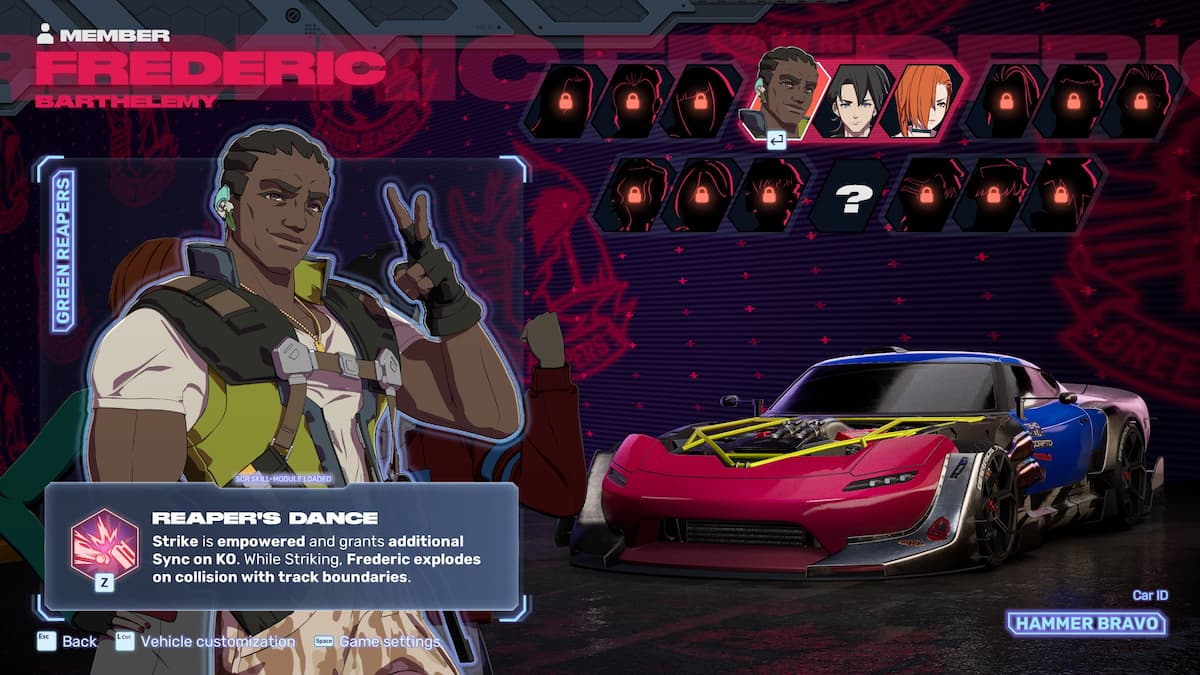
The team names are dope as hell, too. Jupiter Stormers! Kagawa-Kai! Anaconda Corp! Strike Force Romanda! Green Reaper… Okay, maybe not that last one. It’s a little lame, and it’s unfortunate that it’s also the name we get stuck with for our main trio. Still, these team names give “young street punk”, which is exactly the kind of vibe you want in a game like Screamer.
Screamer is broken up into visual novel-like talking segments, animated cutscenes, and of course, racing. Milestone is no stranger to the racing game world, having released games like Hot Wheels 2, MotoGP, and Monster Energy Supercross. From go, Screamer feels incredibly polished and smooth to play. You’ll brake and accelerate with the trigger buttons, tilt the left stick to veer left and right, and use the right stick to drift.
That last bit took me a while to get used to, as I’m more accustomed to pressing and holding down a face button while tilting the left stick to drift. But once it clicked, it really clicked. It made me wonder why more racing games don’t do this. Drifting with the right stick requires more control and finesse, but it also allows for more precision, as you directly control the sharpness of the drift itself.
I don’t think this will be for everyone; even as I’ve somewhat mastered the art of drifting, maneuvering your car on the track can feel like trying to steer a bar of soap on a slick surface. It’s way too easy to spin out of control at times, and this issue is exacerbated by Screamer‘s mandatory story races, which I’ll talk about shortly.
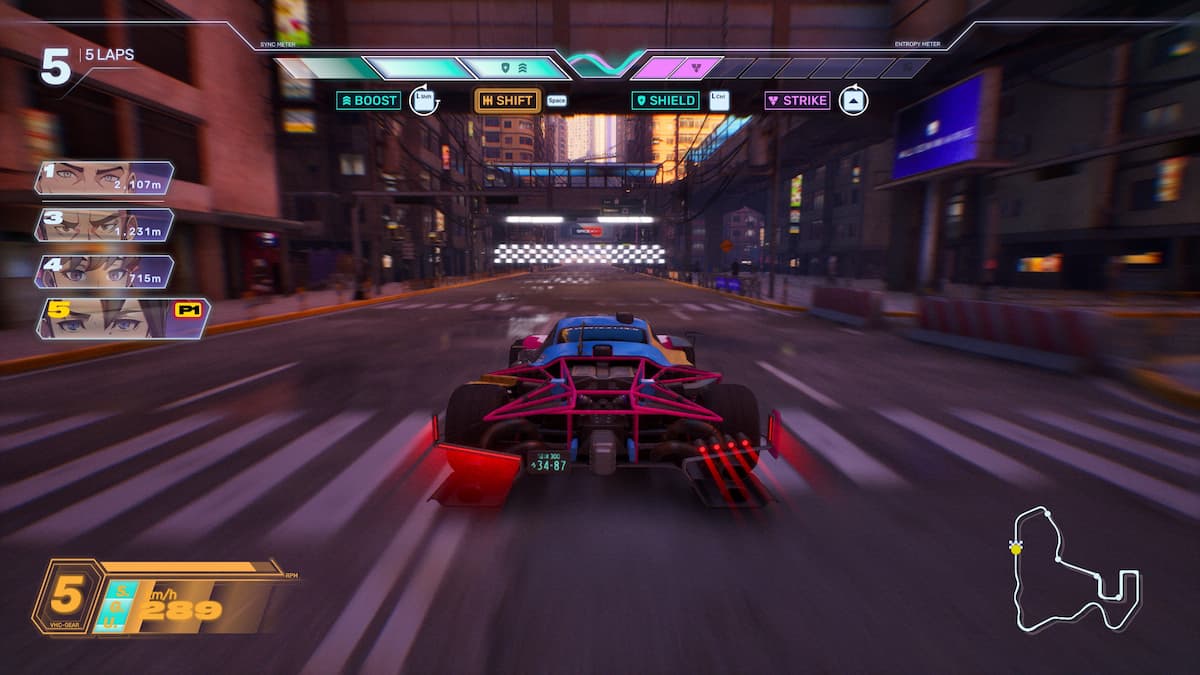
Outside of drifting, there are a few other mechanics to get to grips with, including the shields, boost, and overdrive. You see, the street races in Screamer can be deadly. Get bumped too hard into an obstacle and your car will straight up explode. That’s where the shields come in. You can also activate boost mode to give yourself a speed boost, and as you perform well in a race, your overdrive meter fills up, allowing you to burn even more rubber. The mechanics are all solid as hell, and while they’re pretty easy to understand, they’re also incredibly difficult to master all at once.
Unfortunately, Screamer sometimes feels like it’s held back by weird level design and frustrating AI rubberbanding issues, which are particularly noticeable in the game’s story mode. More than a few times, I’d find myself in story races that felt impossible to win on the game’s Normal difficulty. Even after bumping it down to Easy a couple of times, I was still barely getting through by the skin of my teeth. Call it a skill issue if you want, but when you’re a good lap ahead of the number 2 racer and they somehow catch up to you out of nowhere as you approach the finish line, I’m more inclined to think it’s a rubberbanding issue.
During my time with the story mode, there were a couple of races that felt almost impossible to win if I didn’t make use of a level shortcut that I was somehow supposed to discover with no proper hints from the game. One of these shortcuts, in particular, is hidden behind an extremely sharp turn that makes you feel like you’re about to crash headfirst into a wall, and it’s one I never would’ve found without help from fellow reviewers. Not only is the level design kinda weird, it’s also odd to me that I’m basically forced to use the shortcut if I want to win this story race.
At times, I get the sense that Screamer doesn’t exactly have the highest confidence in its pure racing mechanics — I mean, granted, it’s not perfect but it’s pretty decent — because why else would the game feel the need to introduce these elements of artificial difficulty? The racing mechanics are fun! They’re tight. I love being able to drift with a stick, and I love cruising through the night streets in a tricked out car.
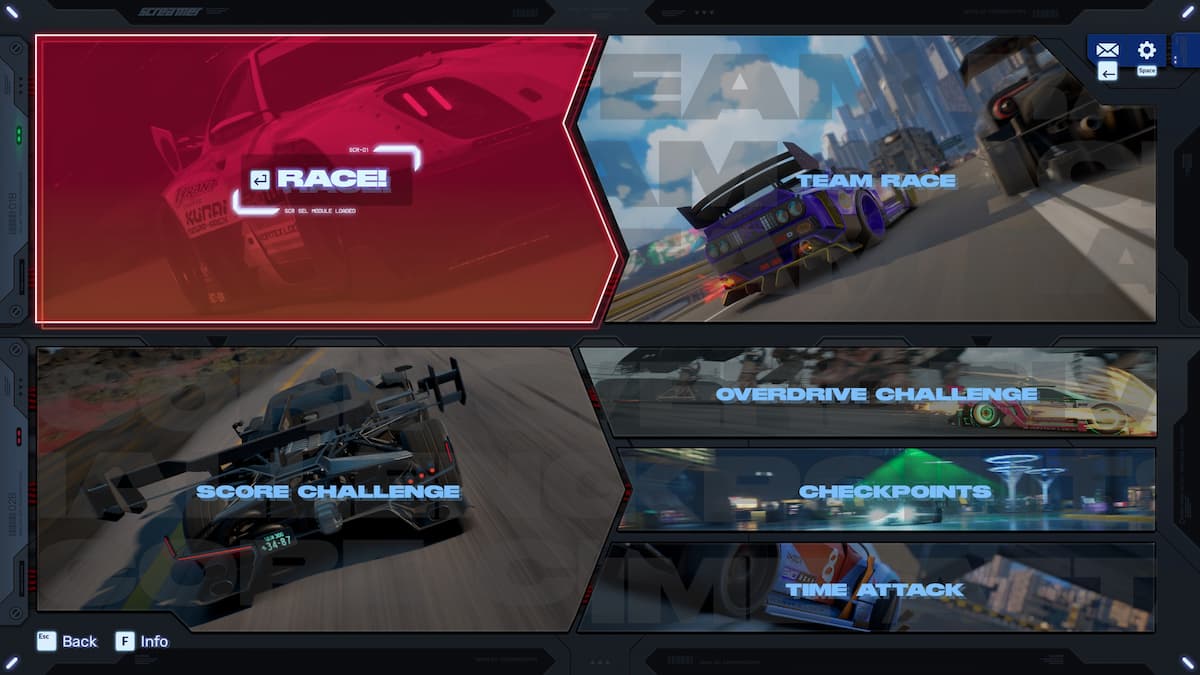
It shouldn’t come as a surprise, then, that I enjoyed myself the most when I dabbled in Screamer‘s arcade modes. Outside of the main story, there are various modes to enjoy solo or multiplayer, and here you’ll get complete freedom in choosing and customizing your car and racer. There are quite a few different game modes on offer here; you can take part in AI races of varying lengths, or partake in Checkpoints, Overdrive, and Time Attack.
Checkpoints is my personal favorite, and simply tasks you with driving through checkpoints within a time limit that gets tighter and tighter the more the race wears on. Your goal is simple: hit as many checkpoints as possible and flex on your friends. It’s a simple skill check mode that tests just how well you’re able to make use of all the mechanics at your disposal, and I’ve spent more than a couple hours obsessed with this mode, trying to beat my high score.
Sadly, unlocking everything Screamer has to offer in these optional modes requires you to slug through the main story, which definitely started to wear out its welcome in the second half. While the characters and the revenge plot are entertaining enough, the races themselves started to feel like a serious drag, which is a shame because I genuinely enjoy these personalities. The story just needed to be a tad shorter or, y’know, maybe the races needed to be a little more balanced.
I eventually dropped the difficulty down permanently, and even then I still had a tough time with some of the story races. Once you’ve beaten it, though, you gain access to most of the available tracks, racers, and customization parts, and that’s when you can really let loose in Screamer‘s other, more superior, modes.
Despite its subpar story mode, Screamer displays moments of genuine excellence when it allows you to simply focus on the one thing it does best: racing. When you cut through the artificial difficulty nonsense, Screamer ends up becoming one of the tightest, stylish racers you’ll play this year. It’s just a shame you have to sit through a poor story mode to get to the good stuff.
A review code for the game was provided by the publisher. You can check out our review policy here. Reviewed on PC.