I always wondered why they bothered calling them the Yotei Six when, really, Ghost of Yotei only lets you properly hunt down five of the six killers who had a hand in killing Atsu’s family. It should be the Yotei Five then, shouldn’t it? This was a minor, inconsequential thought that sat in the back of my mind as I played through Ghost of Yotei for the first time, and I’m glad that Sucker Punch has taken the opportunity to explore the Snake further in Echoes of Sekigahara.
With the release of Ghost of Yotei: Complete Edition, we’re seeing two major additions to the base game: the Most Wanted roguelike mode, and Echoes of Sekigahara, a story expansion that fleshes out the world and characters further. As I alluded to previously, Echoes of Sekigahara gives the Snake a bit more of a spotlight (he’s still dead, don’t worry) and explores the fallout and consequences of his brutal murder by Atsu’s hand.
The expansion features an entirely new region within Ezo for you to explore. After the Snake fell, his Viper crew have thrust the Ashoro Foothills into chaos as a power struggle ensues. As is the case with the rest of Ezo, it’s the people who suffer the most. The Vipers have poisoned the land, literally, while trying to gain Saito’s favor and trampling over everything else. It’s easily the smallest region in the game, yet it’s also the most visually distinct. The moment you set foot in it, everything feels dreary and unpleasant. This is intentional, of course, as the visuals are meant to convey that this is a poisoned region poised to collapse at any moment.
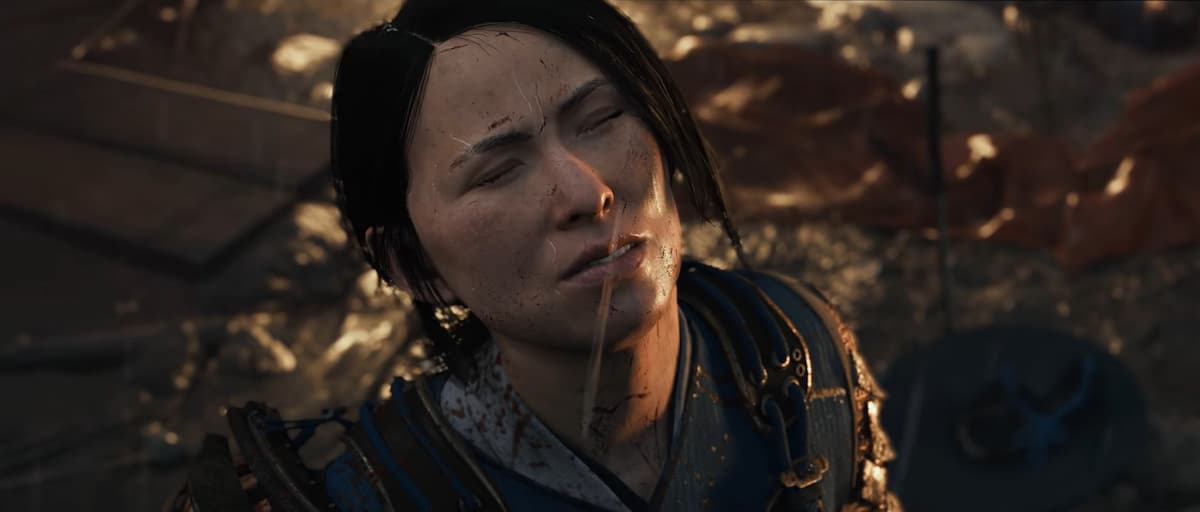
As usual, the star of the show is the side content. Whereas the base game had wolf dens that allowed you to power up Atsu’s wolf-related abilities, Echoes of Sekigahara has fox dens instead, where you must help the foxes evade traps set by the Vipers, and you’ll be rewarded with the location of a fox shrine or new meal recipes to check out at a campsite. The optional quests themselves are, once again, a standout as you won’t find any filler missions here; every new quest and NPC exists to give you more detail about the Ashoro Foothills, the state of the region under the Vipers, and a healthy serving of emotional story beats that both reinforce Echoes of Sekigahara‘s main themes and Atsu’s personal quest for revenge. The game doesn’t shy away from brutality either, as evidenced by some of the more hard-hitting quests that involve a despicable horse thief and other nefarious characters.
As you learn more about the Vipers, you also get more information on the Snake himself, who was relegated to the role of a simple drunkard murderer in the base game. The one thing I loved about Ghost of Yotei was how it humanized every member of the Yotei Five, I mean Six, giving you an in-depth look at why they did the things they did, and what drives them. Yet, it also never lets you forget that what they did was unforgivable. Atsu’s revenge quest is often questioned, but never undermined. That’s a tough balance to strike, but Ghost of Yotei toed the line elegantly with every member, and the same can be said for the Snake too.
It almost makes me wonder why Echoes of Sekigahara wasn’t packed in with the base game in the first place. The answer, of course, is budget and timeline issues, as is usually the case with these big-budget games. Still, I did appreciate how seamless and integrated Echoes of Sekigahara felt in the context of the main story, with its new additions feeling like natural extensions of Atsu’s journey rather than tack-ons.
Without going too deep into spoiler territory, I was pleasantly surprised by the new companion in Echoes of Sekigahara. Here, we’re introduced to Nagato, a man from Atsu’s past and a former lover. I’ll note here that at the time of writing, I’ve yet to finish the main story of Ghost of Yotei, but aside from questioning why the killers weren’t called the Yotei Five, I did also wonder if there’d be an element of romance to Atsu’s story, especially after she reflects on companionship briefly in the hot springs. Well, we get some of it here, though probably not in the way most players would expect.
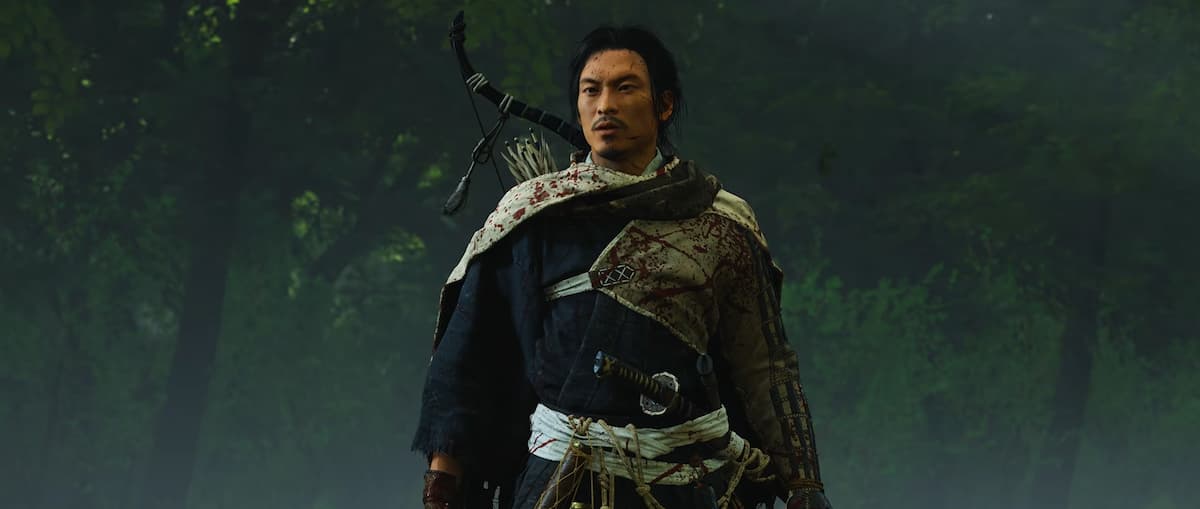
Nagato, simply put, is a badass in the same way that Atsu is a badass. Echoes of Sekigahara doles out their history together in the form of flashbacks and all at once, you see why they worked well together and why things fell apart in the end. Nagato is remarkably complex and nuanced, and I found his interactions with Atsu in the present-day to be utterly engaging. It’s worth pointing out that Nagato getting a bounty on his head is the whole reason Atsu journeys to the Ashoro Foothills in the first place, and when they finally meet up, that interaction is every bit as awkward, tense, and full of unsaid words as you can imagine.
I found Atsu’s relationships with Oyuki and Kitamori to be serviceable in the base game, though I was hardly enthralled by either one. With Nagato, however, both characters felt like great foils for each other, and I was thrilled to watch their dynamic develop and unfold over the course of the story.
I don’t really have any major complaints with Echoes in Sekigahara in particular that don’t also apply to the base game. The combat, I’ve found, can feel pretty rote after a few hours. It follows the same parry/dodge/block, rock paper scissors-style formula that a lot of modern action games also employ. While it’s serviceable and even looks cool when the camera cuts between Atsu and her foe in a standoff, the mechanics themselves really start to wear out their welcome after a while. It’s a good thing, then, that the rest of the game is so strong.
Echoes of Sekigahara will take you around seven to eight hours to complete, with a fair bit of optional content to dive into alongside the main story offerings. I think it’s an excellent extension of the already engaging revenge story present in Ghost of Yotei, and a great reason for fans to return to Ezo once more.
A review code for the game was provided by the publisher. You can check out our review policy here. Reviewed on PS5.