The September-October madness is in full swing as every publisher under the sun rushes their game out in an attempt to avoid the behemoth that is Grand Theft Auto VI. My slate is completely full. I’m still working through Ghost of Yotei which, in hindsight, may have been a poor decision considering everything else I still need to get to, but I simply cannot resist the shamisen. And then there’s Sektori, a late-2025 game that’s been on my radar for ages, but never quite found the time to get to.
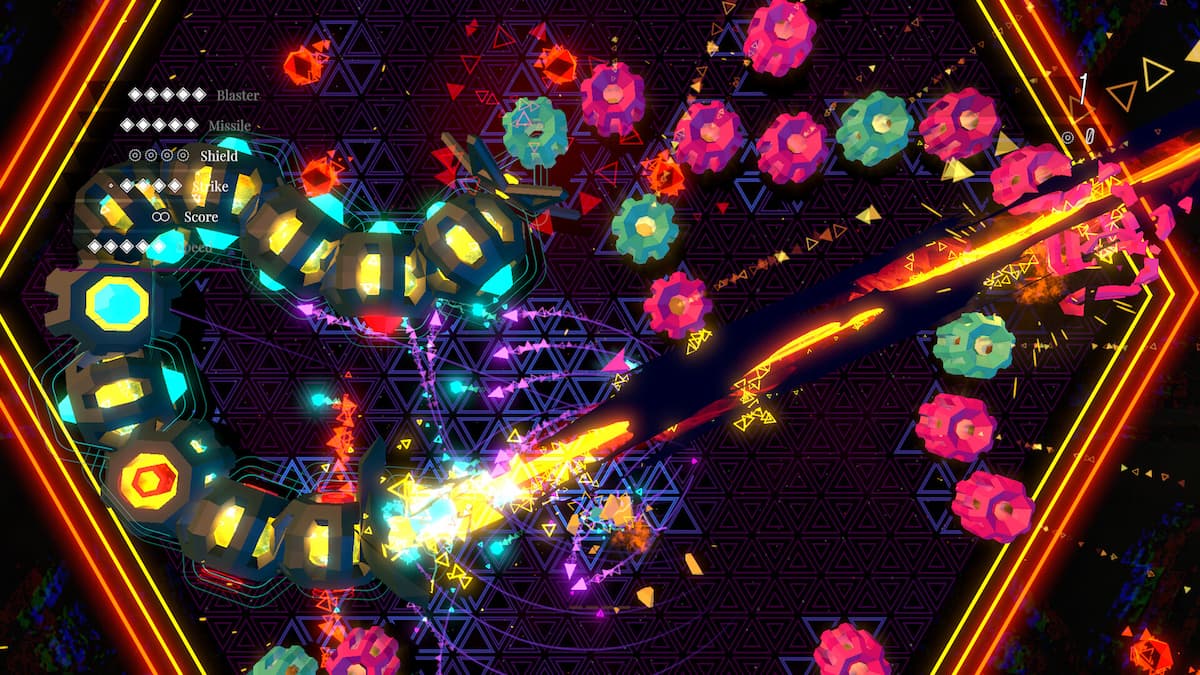
Sektori is a twin-stick shooter that will feel instantly familiar to anyone who’s ever played games like Geometry Wars or Resogun. You move your triangular ship around with left stick, and you shoot by tilting the right stick in any direction. As you destroy enemy ships and collect a currency called Glimmer, you can upgrade various abilities like your Speed, Strike, Missile, Blaster, or Shields.
The Strike is what really sets Sektori apart from its contemporaries. Functioning as a dodge of sorts, the Strike can be used to slam into a group of enemy ships to deal massive, explosive damage, or you can also use it defensively and get yourself out of sticky situations. The first ship you take control of, the Redeemer, has only one Strike charge, though if you Strike into a token, it resets immediately. For instance, if you Strike into a level up token or a skill token that shows up on the map, you get to Strike again right after that. The second ship, the Defier, does not give you the benefit of a token reset, but instead lets you Strike up to three times in succession. Learning how to Strike effectively is the key to success in Sektori, as I would soon realize.
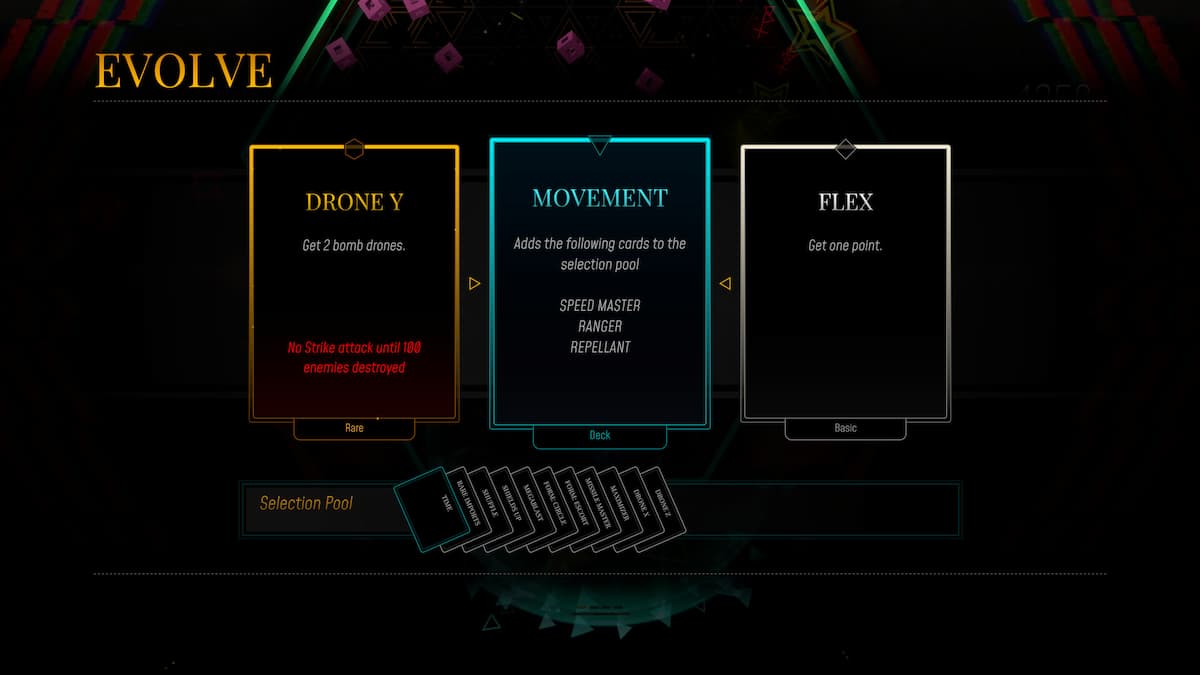
Another cool design decision that makes Sektori so challenging is the fact that your upgrade tokens have to be hoarded and spent wisely. For instance, for the Redeemer, unlocking and upgrading Missiles requires you to hoard five tokens each time. You’d be forgoing Strike, Speed, and Shield upgrades in the meantime, which can be a pain as enemies get progressively tougher. The Defier ship’s upgrade order is a little different, with Blaster much lower down the list, while Missiles are all the way at the top. It’s a cool risk-reward dynamic that’s been baked into Sektori‘s upgrade system, which makes each run feel incredibly tense.
Before long, though, I started to work out different strategies for each ship. I’d always grab a point of Speed first, then go straight for a point in Blaster or Missile, depending on which ship I was playing. Sektori also features some roguelike elements where you get to unlock some sort of perk by destroying yellow artifacts over the course of a level. You get to determine what goes into the pool perk by selecting different card decks from the main menu. For instance, the Movement deck gives you a shot at picking movement-based perks that help with evasion, while other decks could give you additional drones or trigger a laser show whenever you upgrade something.
Determining the best decks for each ship plays a huge part in your Sektori strategy too of course, and you’ll unlock more decks the further you progress in the game. Speaking of progression, I spent the bulk of my time in the Campaign mode, at the lowest difficulty because I’m still a scrub, but there are quite a few challenge modes to get into as well. This includes a Boss Rush mode where you get to hone your skills against Sektori‘s geometric bosses, and a Classic mode where you just play with the Redeemer with no upgrades. This is where you start to really drill down the basics, and I’d actually recommend checking out some of these optional modes once you unlock them as they can really help with the Campaign.
What really impressed me, however, is just how thoughtfully designed this game is. Don’t get me wrong; Sektori is an extremely brutal game. Its steep learning curve will likely hurt player retention and turn away folks who may not have the patience to learn its intricacies. It doesn’t help that the start of each run can feel sluggish too, as your ships usually start off really slow. This is all by design, though. There’s a reason why Speed is always the easiest upgrade to get across ships; without Speed, you literally wouldn’t be able to keep up with the bosses’ movements at the end of each level. The game wants you to feel slow. It’s designed this way to teach you that Speed is a stat you can’t afford to ignore.
That being said, I’m not totally impervious to the sluggishness of the start of each run either. After dying for the umpteenth time because I upgraded the wrong thing by accident, I did start to find new runs to be a drag, especially since I’d already gotten the strategy down pat for that particular ship. At some point, after sinking about 50 hours into the game, starting new runs became drastically less interesting as I’d began to feel like I had seen most of the perk combinations with not that many surprises left to keep me on my feet.
Still, this is a small price to pay for what Sektori does get right, and it gets a lot right. Sektori is the epitome of the flow state game. It demands a tremendous level of concentration and focus from the player, but also delivers a satisfying payoff that feels earned once you’ve painstakingly figured out each of its obtuse systems by trial and error.
A review code for the game was provided by the publisher. You can check out our review policy here. Reviewed on Switch 2.