Before Final Fantasy transformed the entire JRPG landscape forever, we had Dragon Quest. Enix’s popular role-playing series set the foundation for the quintessential JRPG template, and even to this day, it endures as one of Japan’s most beloved JRPG franchise. While I’ve only ever played Dragon Quest XI to completion (and dabbled a little in Dragon Quest VIII), I was excited to see where everything started. Enter the Dragon Quest I & II HD-2D Remake.
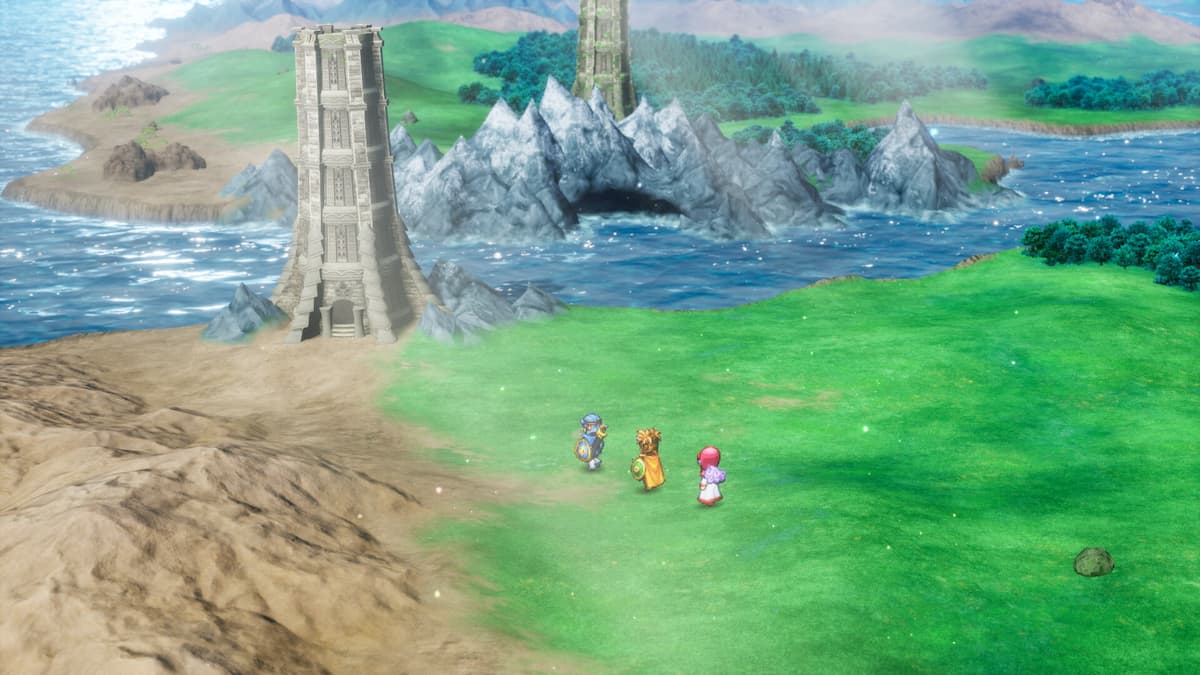
Clunky titles notwithstanding, these are full-on remakes of the first two Dragon Quest games, complete with some quality-of-life changes to make them even more accessible than ever. For starters, Dragon Quest I & II have received Square Enix’s iconic HD-2D graphical facelift, making them look even more striking and stunning than the original NES and SNES versions. If you’ve played the Dragon Quest III remake, you’ll know exactly what to expect here. Don’t go in looking for Octopath Traveler-level graphics, but I expect most players will be pleased with how crisp everything looks.
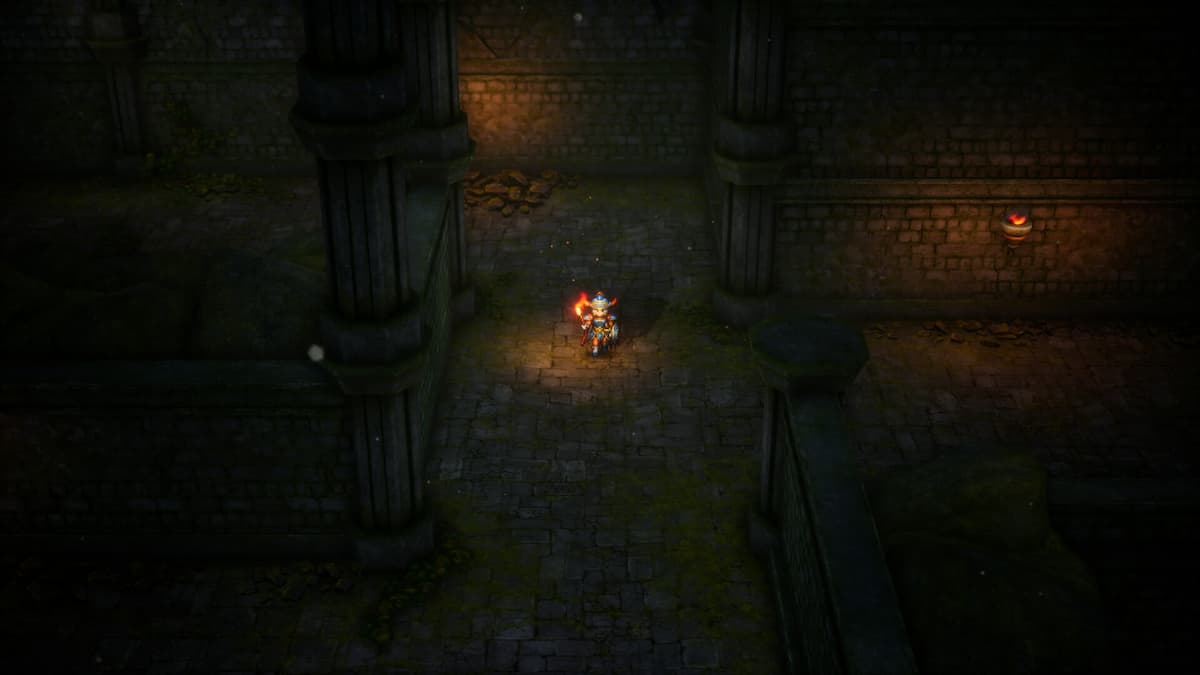
As far as the story goes, things are as cookie-cutter as they come. The world of Alefgard has enjoyed an era of peace thanks to the efforts of the hero Erdrick, but the forces of darkness are rising again. As such, the descendants of Erdrick must travel across the continent to find clues and other hidden weapons left behind by Erdrick and use them against their enemies.
The plot twists are as predictable as they come, though it’s worth mentioning that Square Enix has added full English and Japanese voice acting for both games, and there are also new cutscenes to help flesh out the story further. Whereas certain major plot events may have felt relatively weightless or simple in the original versions, they now carry more weight, especially with voice acting, which really changes how you experience the story.
Exploration is also a much bigger part of the experience now, with new islands and areas introduced in the remakes. Aside from just exploring these areas for new loot, there are also new events and cutscenes to unearth.
Battles are conducted as turn-based affairs, where enemies and party members alike all get a turn to take an action. You know the drill by this point: hit a thing until it dies, gain experience points to level up and learn new skills. As you travel from town to town, or as you explore dungeons, you’ll also find new armor and weapons to strengthen your character even further.
What made the original games feel so inaccessible was the fact that level grinding was an absolute necessity. For the most part, that hasn’t really changed in Dragon Quest I & II HD-2D Remake, but Square Enix has taken steps to make sure that grinding feels less painful. For instance, you can now speed up battles, and new spells have also been introduced that allow you to attack a group of enemies at once — something that only got introduced in the more modern Dragon Quest games. I greatly welcomed these improvements, though I still found both games to be a bit too grindy and repetitive for my liking, and I’m saying that as someone who typically finds the grinding process to be pretty therapeutic.
For all these new accessibility features, however, Square Enix has also made the baffling decision to introduce new collectible medals, which are required in order to progress through the main story. Don’t confuse these with Mini Medals, which are also present in both games and are an optional collectible. The new story medals are directly tied to story progression, and I have to say I’m not a fan of this design decision. Most of the story medals can be found pretty easily just by playing through the game naturally, but you just know there’s always gonna be a handful that are a bitch to find. That is, sadly, the case in Dragon Quest I & II HD-2D Remake, and I found myself getting frustrated with the game more than once as I played.
Thankfully, both games are short enough that the story medals issue probably won’t annoy you for too long, but it is still something to be aware of.
At the end of the day, revisiting Dragon Quest I & II HD-2D Remake was a fun little romp through the 80s JRPG landscape. It’s fascinating to see how the grandfather of JRPGs got its start and observe how the genre has evolved over the past four decades since then. Does that make these two games worth their entry price, though? That will ultimately depend on how much of a JRPG sicko you are. Dragon Quest I & II HD-2D Remake is undoubtedly the best way to experience these games, but while I appreciated its new accessibility features, there are still some archaic elements and new design decisions that keep me from coming back for more.
A review code for the game was provided by the publisher. You can check out our review policy here. Reviewed on Switch 2.