Like many others, I was first introduced to Supermassive Games with the release of 2015’s Until Dawn. And, like many others, I’m also of the belief that the studio had unfortunately hit its peak with Until Dawn. Since then, the studio has launched multiple games in the Dark Pictures anthology, along with a spiritual successor in the form of The Quarry, though none of these subsequent efforts ever quite hit the mark for me.
Enter Directive 8020, the latest entry in the Dark Pictures anthology. This is Supermassive’s attempt at a sci-fi horror story set in space, filled with all the usual fun space thrills you’d expect: Space mission gone wrong, alien shenanigans, abrasive crewmates doing asinine things that could get them killed. I love a good space horror and while Directive 8020 does manage to be more entertaining than most of its uninspired predecessors, it still left me feeling empty and indifferent by the time the credits rolled.
Directive 8020 puts you in control of a space crew en route to Tau Ceti f. The idea is to survey the planet and determine if it’s fit for colonization. The crew hasn’t been provided enough fuel to land on the planet and make the journey home though, so this is a pure surveying mission from orbit to pave the way for future crews and missions.
After spending four years in cryo sleep, the crew is finally approaching Tau Ceti f, and just a couple days before they’re set to wake up, you take control of sleep technicians Parker and Simms as they make their preparations. As you might expect, things do not go as planned. The ship gets damaged, Parker and Simms scramble to make repairs, but something weird and alien has invaded the ship, and our poor sleep technicians are now compromised. 48 hours later, the rest of the crew wakes up, still under the impression that Parker and Simms are on their side.
It takes a while for Directive 8020 to reveal the full scope of this alien invasion, but its early hours are the most tense. The game evokes Body Snatcher vibes with Simms, in particular, who has a known history of mental struggles, begins to stalk the crew. Supermassive expertly ramps up the tension with creepy, voyeuristic camera angles that always make you feel like you’re being watched. For the first half, the tension holds up, keeping me on edge most of the time.
There’s a reason why most horror movies tend to land around the two-hour mark or less, though. You can only maintain that tension for so long before your audience becomes desensitized. In the case of a video game, that tension usually gives way to more action-oriented sequences that work (see: Resident Evil, Until Dawn), or fall flat (see: Directive 8020).
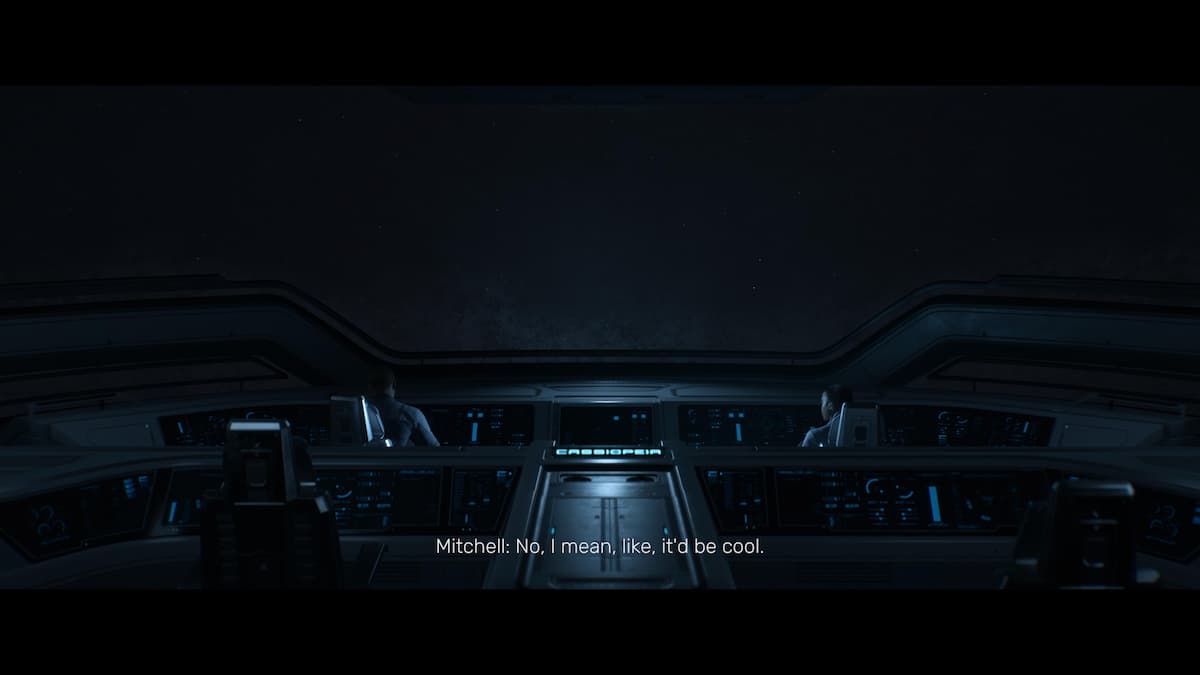
What really holds Directive 8020 back is the game’s insistence on inserting arbitrary gameplay segments that serve little purpose other than to pad out the game’s runtime. The most egregious of them all are these forced stealth sections where you have to avoid the stalker or follow them without being spotted. To put it kindly, these are an absolute pain. They’re often long and drawn out, forcing you to hit arbitrary switches to open up pathways while painstakingly waiting for the enemy AI to waltz along its preset patrol path so you can progress.
These stealth sections have no business being in a game like Directive 8020, and I wish Supermassive had opted to turn these into interactive cutscenes with quick-time events instead, like in the studio’s previous games. It’s the rare instance where less gameplay would’ve actually made this a much better experience by improving the pacing of the story, which is what we’re all here for anyway.
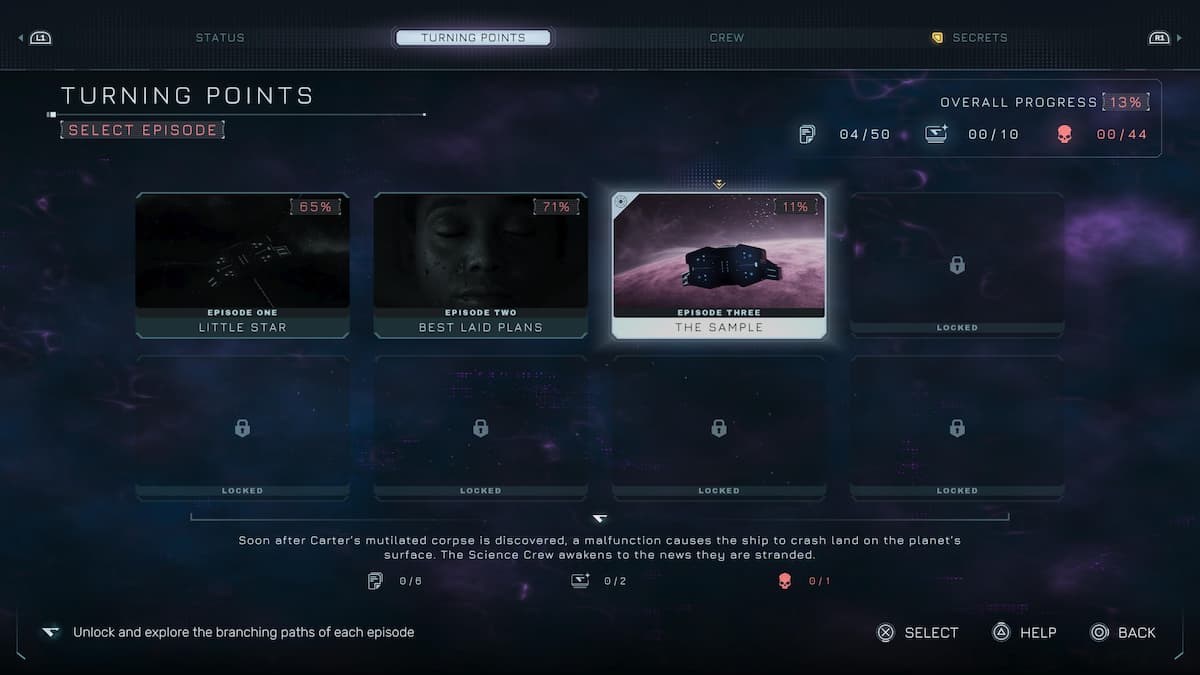
The real star of the show is the choices you get to make throughout the story, which opens up branching paths, or Turning Poins as the game calls them. There are two “difficulty” modes available in Directive 8020 — one that lets you rewind whenever you want to explore a different route, and one that locks you into all of your decisions until the end of the game. I opted for the latter because I woke up and decided to choose chaos, and I wanted to feel like my choices had real consequences.
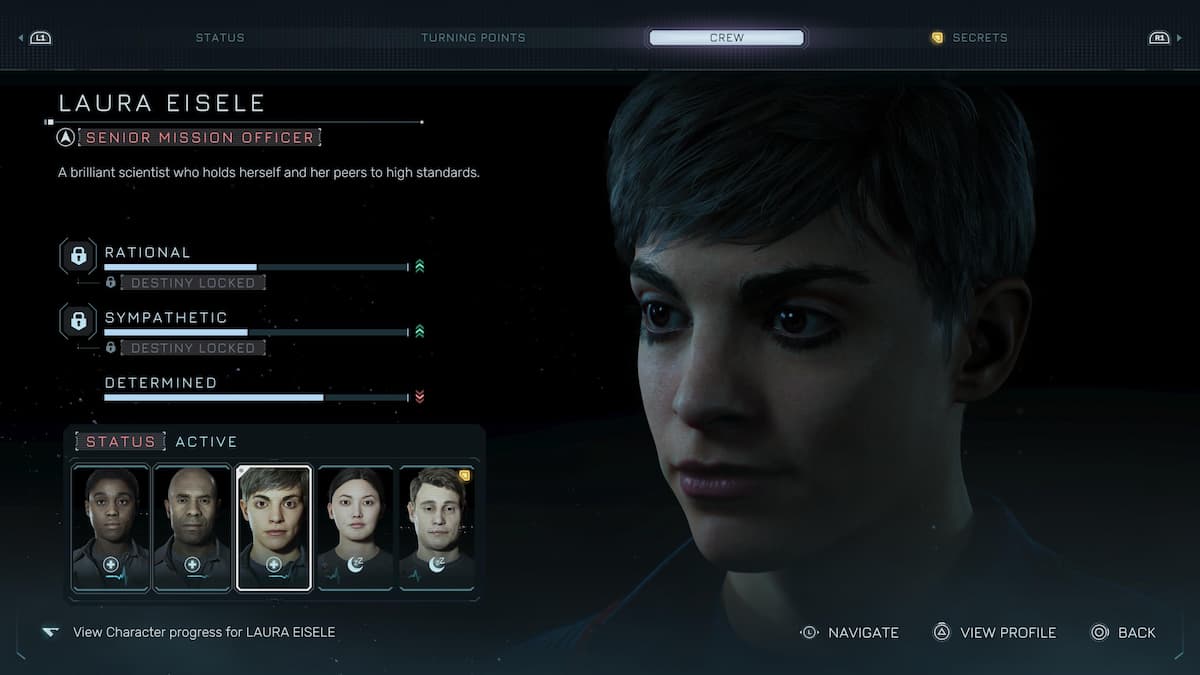
I’d recommend playing this way and following your gut, as it helped me get more emotionally invested in the story and its characters, who are generally fairly well-written. Now, most of them are tropes, don’t get me wrong (see: Mitchell, the meathead pilot who’s constantly asking for trouble) but some are genuinely interesting (see: Eisele, the sharp but emotionally insensitive senior officer).
Directive 8020‘s story has you jumping between the perspectives of all these different characters, and while it can be tempting to try to push everyone towards the same goal or conclusion, I found that the game became significantly more interesting by trying to play them as genuinely as possible. For instance, an early-game conflict arises when Eisele correctly identifies that something is off with the sleep technicians, and she brings this up with her commander, Strafford.
You’re then given the choice to either agree with Eisele as Strafford, or tell her to have faith in her crewmates. Logically, you’d want to agree with Eisele, because you already know something’s weird with the sleep technicians, but would Strafford really do that? He’s a commander who’s worked with his crew for years, he trusts every crew member implicitly, and with that in mind, I highly doubt he’d be so quick to acquiesce to Eisele’s demands, especially when she can’t prove anything just yet.
These conflicts and decisions will affect the personality traits of each character, and may also open up more interesting narrative possibilities going forward while closing the door to others. I thought Directive 8020 did a wonderful job balancing the perspectives of each character, and there’s a lot of replay value to enjoy here if you want to see all the different ways this story can unfold.
Unfortunately, it’s unlikely I’ll ever revisit Directive 8020, having already experienced it once. I don’t think I could stomach going through those forced stealth sections again, and to put things bluntly, the overall story just isn’t compelling enough to warrant a second playthrough in my view, nor are the characters themselves interesting enough to carry the entire experience.
Directive 8020 is a generally fun romp through a sci-fi horror flick with predictable jump scares and familiar plot beats, though it’s often bogged down by utterly torturous gameplay segments that can ruin the pacing of the story. Sometimes, less gameplay really is better.
A review code for the game was provided by the publisher. You can check out our review policy here. Reviewed on PS5.