You’re cruising down the road on your skateboard, rocking out to DEVO’s That’s Good on your headphones hooked up to the walkman clipped to your belt. You’re clapping to the beat, shouting “Car!” to your friends to warn them as vehicles speed towards you. The wind’s in your hair, beating against your face relentlessly. Your eyes probably start to water and hurt but you’re smiling through it all. The music plays on. It feels good to be a teenager, with the whole world ahead of you.
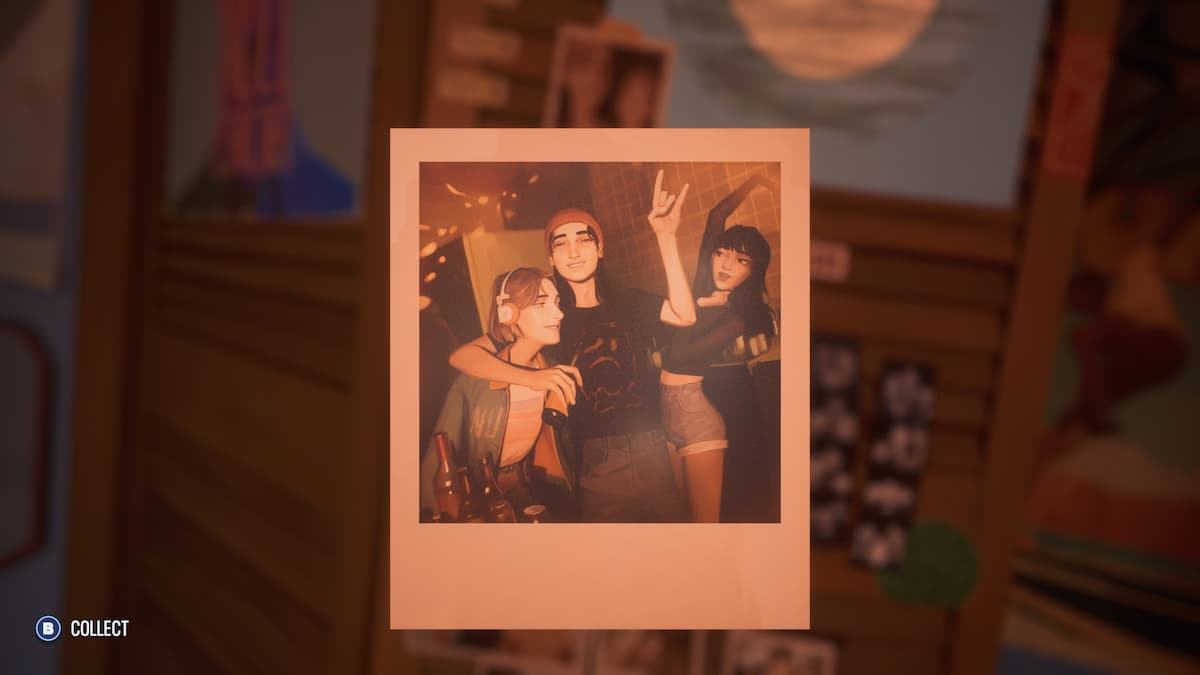
Developed by Beethoven & Dinosaur, Mixtape is a John Hughes-inspired, coming-of-age narrative game that centers around three friends: Stacey Rockford, Cassandra Morino, and Van Slater. It’s their last day of high school and, more pertinently, Stacey’s last day in their small town before she heads off to New York City in pursuit of her dream job as a music supervisor. With all that in mind, the trio of friends are set to have the night of their lives — one of their greatest hits, if you will.
The plan is simple: find booze, have pre-drinks at the secret hideout, then head to a beach party hosted by one of the most popular girls in town. Everyone who’s anyone is gonna be there. What better way to end an era and usher in the start of a new one?
As you flit from one area to the next, you get to examine various items like casette tapes and photos that will take you into a flashback sequence, showing you what the three friends got up to at that point in time. This is where Mixtape shines, as the game succeeds in capturing the carefree nature of youth and nostalgic aimlessness, even if Cass insists that being a teenager feels heavy and like the end of the world all the time.
Maybe she’s right. As adults, we have a tendency to look back on our teenage years with fondness. Those are the years when we still had our youth and the freedom to do whatever we wanted. Yet, as teenagers living those same years, it’s hard to feel as optimistic. Things were simpler, sure, but every little conflict also feels incredibly heavy.
While Stacey, Cass, and Van all get along well for the most part, it’s clear that they’ve had their ups and downs. The primary conflict in Mixtape centers around Stacey’s decision to leave for New York, throwing their road trip plans into disarray — a road trip that, mind you, had been in the books since their freshman year. The trio deals with this wrench in their plans in different ways, but you can always feel the tension bubbling just beneath the surface. It’s a great way of reminding us how even the smallest things can hurt, especially when they come from the people you’ve always regarded as your best friends.
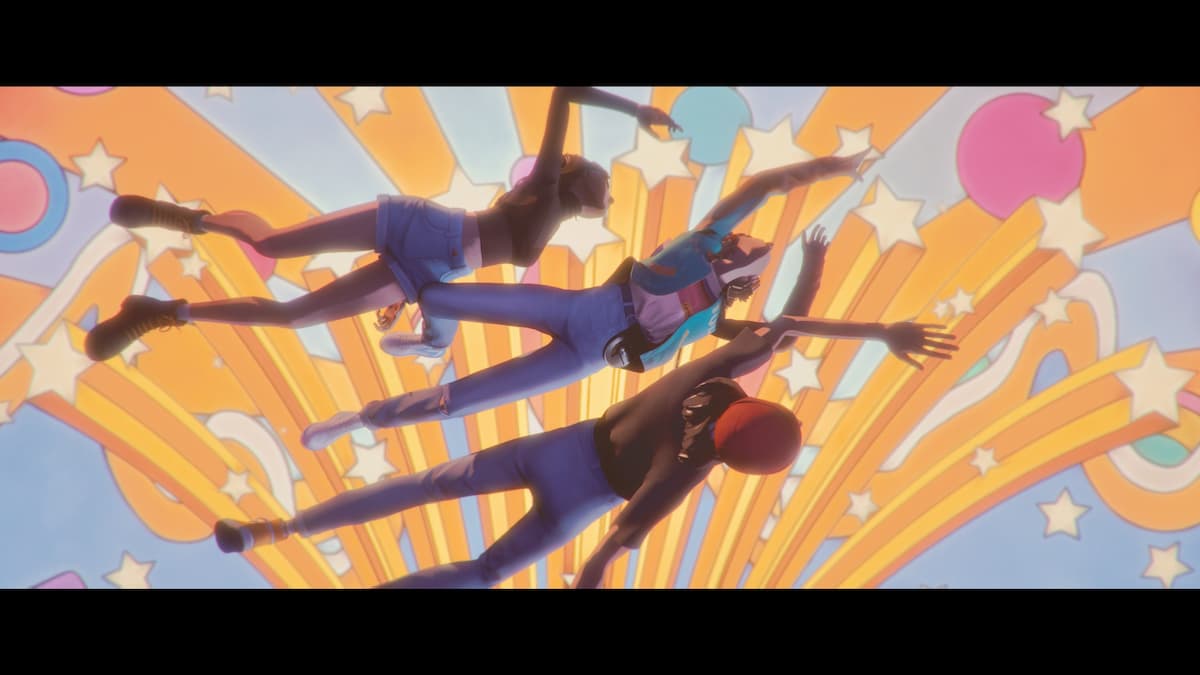
The mood never gets dour, though, as Mixtape expertly blends fantasy with reality all throughout its three-hour runtime. A fun, aimless romp through a meadow transforms into bouncy jumps and fantastical leaps into the air. Lifting your arms in the back of the car — Perks of Being a Wallflower-style — conjures up exploding fireworks. Flipping off a car or a dumpster on the side of the road causes them to explode. The kids have wonderfully active imaginations — Stacey, especially — and Mixtape brings all of their fantasies to life in a charming manner, making the game feel that much more wistful and special as a result.
For a game so brazenly titled “Mixtape”, I’d be remiss not to at least talk about its immaculately curated soundtrack. Featuring tracks from the likes of The Smashing Pumpkins and The Cure, just to name a couple, every song fits perfectly with the mood and vibe of the game. It makes sense from a narrative standpoint too, as Stacey is utterly obsessed with music. She reveres the art of making a good mixtape. To that end, she’s curated a great playlist for this very day, where every song is purposeful and serves to elevate each moment she spends with her friends.
It’s made abundantly clear that Stacey suffers from a bit of anxiety too, as Mixtape makes sure to point out that she’s never seen without her headphones. In fact, in times of conflict, she’s often seen retreating back to her music, deftly picking a song that best reflects her mood at that point in time. What surprised me the most was Mixtape‘s use of archival footage to complement Stacey’s explanations of what a music supervisor is, and how various music-related things — pre-concert playlists, unused raw movie soundtracks — work in the real world.
Stacey often breaks the fourth wall to explain to the player the meaning behind the song that’s currently playing, offering up a bit of history and background in the process, too. Mixtape has such fervent reverence for music that it’s difficult not to be completely taken in by its charms.
I do wish the game had spent a bit more time diving into Stacey’s tangles with anxiety and why she is the way she is, but given its very short runtime, that aspect feels just a tad undercooked. Still, maybe that’s the point.
The short runtime allows players to enjoy the game as a John Hughes-style, coming-of-age story that you can blow through in the afternoon. In some ways, I suppose Mixtape‘s short length is reflective of its thesis, too. Life moves pretty fast. If you don’t stop and look around once in a while, you could miss it.
A review code for the game was provided by the publisher. You can check out our review policy here. Reviewed on PC.