For the longest time, I believed that I was destined to live a life filled with hatred and resentment. I made some bad choices in my youth, and growing up in a city that only rewarded efficiency, success, and staying on the straight and narrow didn’t help either. It was bad enough that I had my first “I don’t wanna live anymore!” thought at the age of 11. It was even worse when I realized that and immediately concluded that I could never be healed.
The clients you meet in Vampire Therapist are similar in that vein (ha!): Each of the four immortals has a warped perception of who they are and who they’re meant to be after centuries of living the same way.
Now, I know I’m two years late to the party: Vampire Therapist first released for PC in 2024 and featured a star-studded cast, including the likes of Sarah Grayson (Hades 2, Dragon Age: Inquisition) and Matthew Mercer (Dispatch, Baldur’s Gate 3). Vampire Therapist was also nominated for a BAFTA and received overwhelming praise on Steam for its creative approach to mental health. This February, it finally arrived on PS4, PS5, and Nintendo Switch.
If you’re just as late as I am, Vampire Therapist is a visual novel developed by Little Bat Games. You play as Sam Walls, a gunslinging vampire from the Wild West, who realizes there must be more to his unlife after centuries of violence and bloodshed. Hoping to find a new purpose, he travels to Leipzig, Germany to meet Andromachos, a 3,000-year-old vampire who has trained in the art of therapy. With Andromachos as a mentor, Sam learns cognitive behavioral therapy techniques and begins working with vampire clients with his signature horse-lovin’ charm.
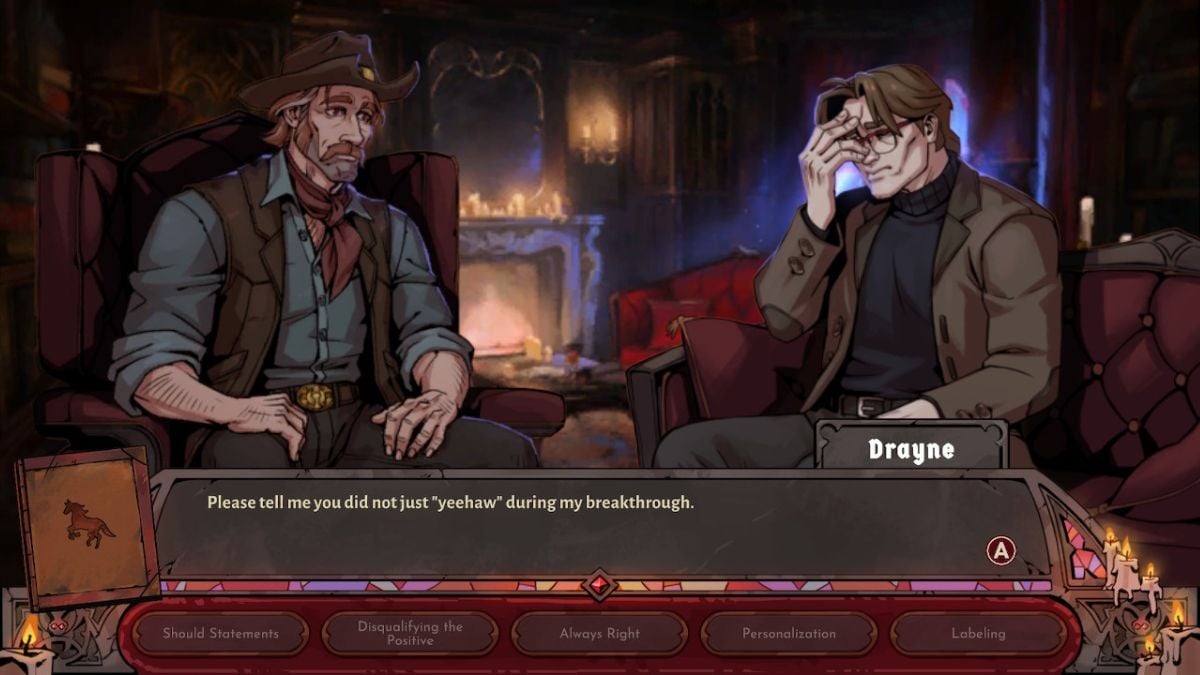
Throughout the game, you study various cognitive distortions — real concepts that the developers integrated with guidance from licensed therapists. From Labeling to Polarised Thinking (or as the game calls it, Nosferatu Thinking), I started noticing these distortions not only in the clients but also within myself.
Being vampires, your clients hail from different eras — Tudor England, the Bronze Age, and beyond. Each one of them brings their own baggage, but they all share a common struggle: they’re deeply resistant to change after centuries of living the same way. And who can blame them? They’ve seen humanity repeat its mistakes again and again. It’s no wonder they question whether change is even possible.
“We’re vampires. We have all the time in the world!”
There’s something satisfying about convincing a 500-year-old vampire that she can still evolve. Watching Isabella d’Este (an actual figure from the Italian Renaissance, by the way) learn to be kinder to herself and accept that not everything was her fault felt genuinely heartwarming.
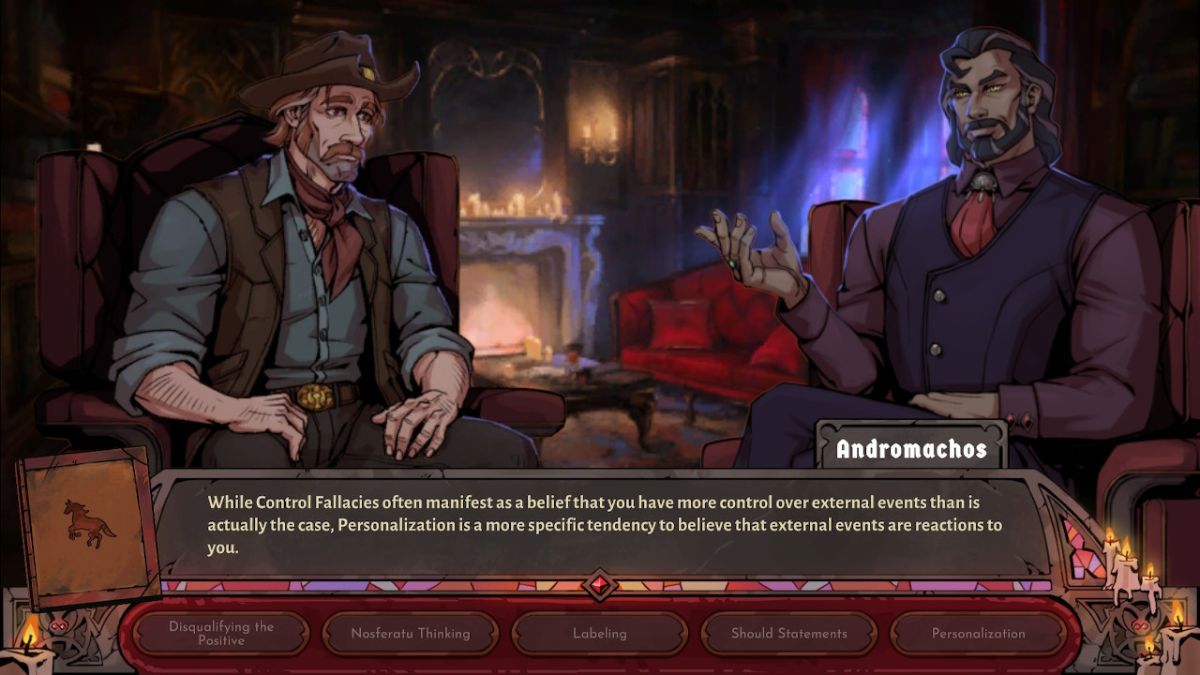
I may not be a vampire (and I never wish to be — immortality sounds like torture), but Vampire Therapist left me with a comforting feeling: I still have time to change. If these ancient vampires can grow and heal, why can’t I? Since finishing the main story, I’ve even started catching my own cognitive distortions, reminding myself that there’s always a way through the fog.
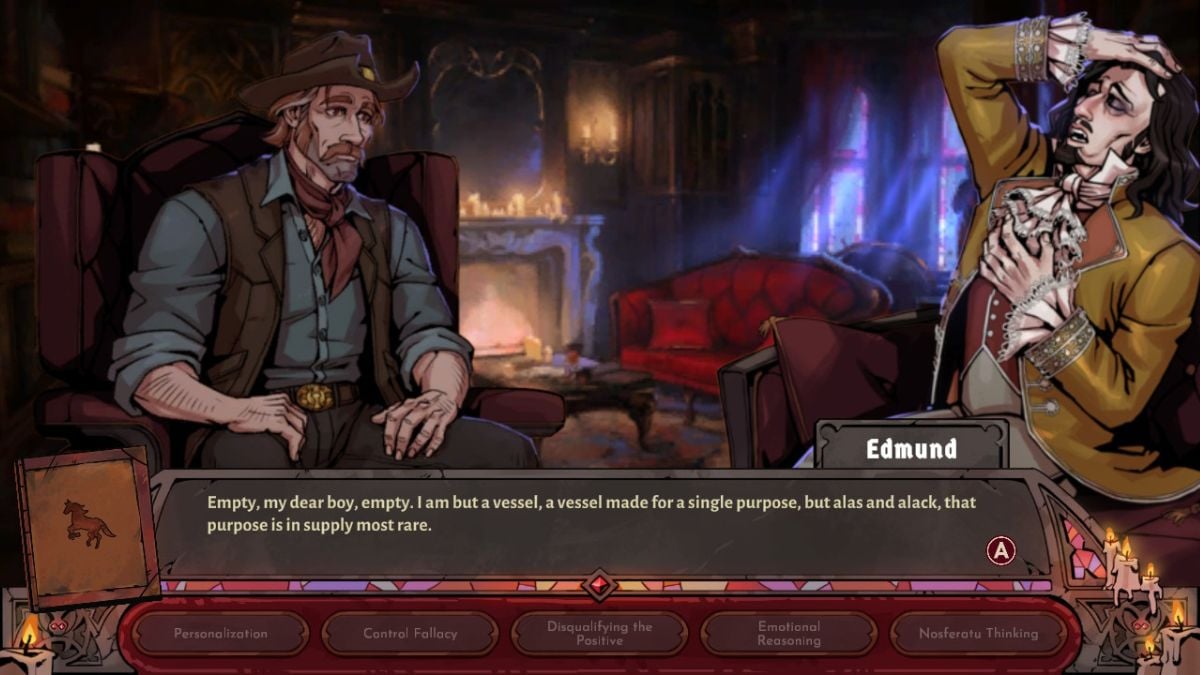
At its core, Vampire Therapist shines because of its characters. The clients and friends you encounter may seem one-dimensional at first, but their stories unfold naturally over time. I especially loved Edmund Kean, the melodramatic theatremaker whose flair for exaggeration makes him both frustrating and endearing. Even Sam evolves through his own therapy sessions with Andromachos, growing into a more self-aware — and effective — therapist.
With such a strong storyline and incredible characters, it’s unfortunate that the Switch port is riddled with bugs.
As a visual novel, Vampire Therapist breaks up reading chunks of text with two mini-games: one at the nightclub where you can sink your fangs into the neck of a willing mortal, and another during Sam’s therapy sessions, where you help him release troubling thoughts. Sadly, these mini-games didn’t work for me — each time I tried to engage in the new mechanics, the game skipped straight to the next section.
Other technical hiccups include stuttered transitions between scenes, loading screens that briefly glitch before advancing, and occasional game crashes. Identifying cognitive distortions also feels clunky at times: dialogue can skip ahead before you’ve made your choice, and selecting options sometimes triggers another unwanted text skip.
The game also features beautifully hand drawn backgrounds that set each scene perfectly, but the resolution on the Switch port is noticeably low, causing a loss of fine detail. Still, these are minor bugs that can be fixed easily with time (I hope).
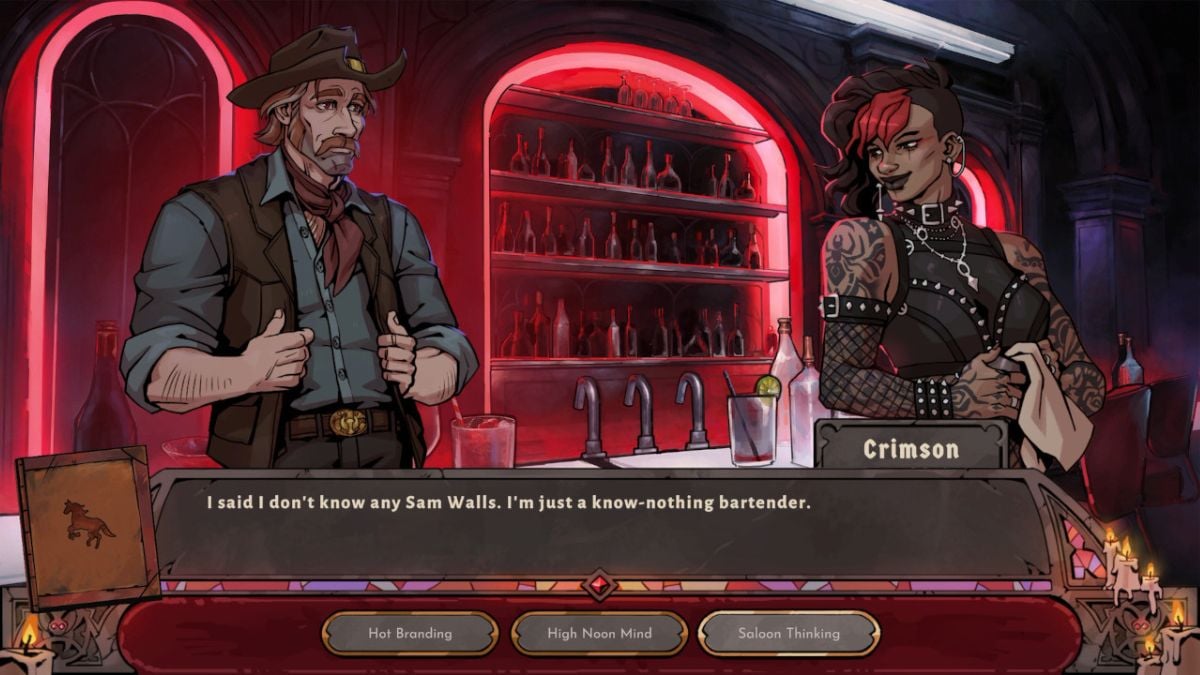
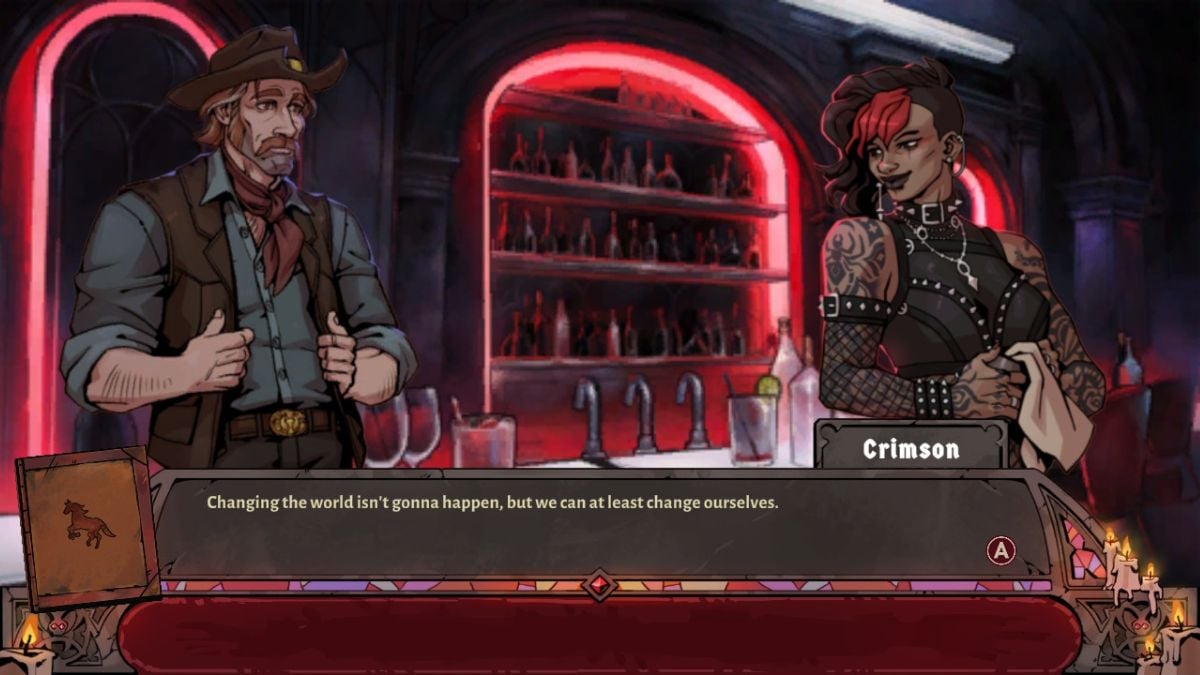
Bugs aside, Vampire Therapist held my attention from start to finish, with the main story taking around 12 hours to complete. It’s a poignant exploration of what it means to truly live and a gentle reminder to keep our hearts and minds open to change — even when it feels scary. So curl up on the couch with a cup of hot chocolate and get to therapisin’, pardner.
A review code for the game was provided by the publisher. You can check out our review policy here. Reviewed on Switch.



Well written and makes me read till the end.