This article contains major spoilers for the endings of Grand Theft Auto VI and Red Dead Redemption 2.
As I closed out Chapter 2 of Grand Theft Auto VI, watching Jason perform the striptease of a lifetime while Lucia enjoyed the show, it hit me that this was completely unlike any GTA game I’d played before. As fans bemoan the absence of prostitutes and I praise the game for taking care of its female audience, it’s become quite clear that GTA VI wants to break the mold and redefine what the series is about, and can be about. So you can imagine how validated I felt when I heard this exact sentiment from Rob Nelson, who serves as Rockstar North’s Head of Development.
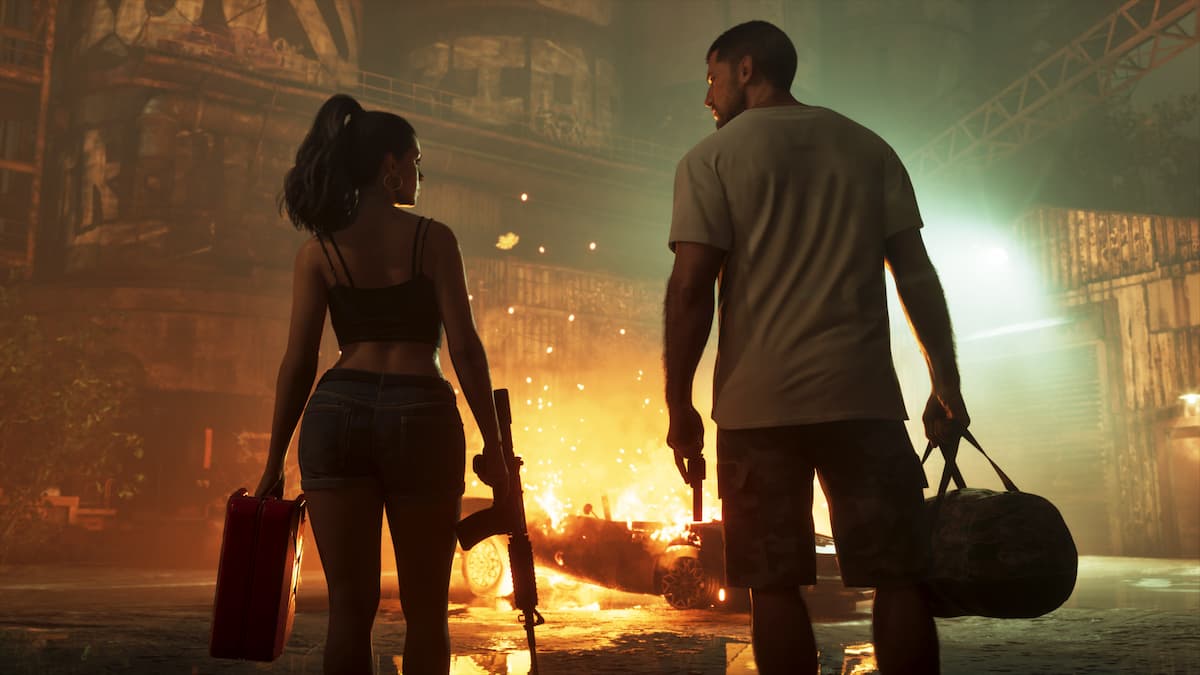
I had the opportunity to sit down with Rob Nelson and chat about GTA VI as a whole, including the game’s multiple endings and how it shapes itself around the way you play. The most striking thing about this game, though, was the fact that it was easily the kindest and most empathetic GTA game I’d ever played. For a series that typically rewards selfishness and violence, this surprised me. And it all comes down to the relationship between Jason and Lucia which, as Nelson has stated multiple times, is an optional part of the game and you can choose to engage with it as much or as little as you want.
As someone who was all in on the romance between Jason and Lucia, the first thing I asked Nelson was, what value could there possibly be in playing in a way where Jason and Lucia aren’t in love? What could anyone possibly enjoy about playing through the game in that way?
“I don’t know because I share your feelings,” Nelson says. “But I’m also aware that this is a completely new thing. Like, this is a series that’s normally about looking after yourself and amassing as much money as you can for yourself or your character. So, the fact that people are engaging with this completely new way of playing is amazing. But the fact that [investing in the relationship] is a choice, I think, is everything. And so, not choosing to do it is just playing the game the way it’s always been played: selfishly.”
“The relationship changes what [Grand Theft Auto] can be,” Nelson continues. “It doesn’t change what it is. It’s still what it was. You can still be as psychotic as you want, as violent as you want, and pretty selfish.” While the first two Chapters of GTA VI force both characters to be together and take care of each other, by the time you reach Vice City in Chapter 3, you pretty much have free reign over their fates. Nelson acknowledges that it can feel weird to just have Jason and Lucia neglect each other by this point, but you can certainly do it.
Indeed, in the rare moments where I was doing missions alone, I found that neither Lucia nor Jason ever nagged me all that much. There’d be check-in text messages that I could choose to respond to or ignore, but they’d never call. In fact, I was always the one initiating the calls and meetups because I was that invested in their relationship. Nelson says that’s kind of the point, though. “No one is saying there’s a right or wrong way to play it, but the very fact that the [relationship aspect] is there makes the act of choosing it more meaningful.”

Nelson recalls the development of 2018’s Red Dead Redemption 2, where Rockstar implemented the Honor system that tracked Arthur’s morality based on his actions. Red Dead Redemption 2 has a similar design philosophy where nothing is ever really forced onto the player. “[Arthur] was always going on this redemption arc through the narrative,” Nelson says, “but we found that forcing the player to do any of these good deeds felt wrong. It’s like, I don’t want to help this nun, or I don’t want to help this lady, or this guy hanging off a cliff. Why should I do it?”
Why, indeed? The basest answer would be that you get some sort of reward for doing a good thing, but that isn’t always the case. Oftentimes, doing the good thing means helping someone without expecting a reward. That happens in Red Dead Redemption 2, and in GTA VI as well, where you have the option of settling for a lower amount of money when helping someone, or bribing them for more. You can guess which option makes you a “good person”.
So why would you ever help someone? I can only speak to my own experience, and the simple answer is that I just can’t bring myself to do anything unsavoury in these games, even if I know they were once meant to be power fantasies that would let me live out my wildest desires with no consequences. I just don’t have it in me to watch someone fall off a cliff and die when I can do something about it.
Or maybe that’s what my real fantasy is. Maybe how I play is a reflection of what I wish I could be in real life. I play these games with as much morality and integrity as I can because I’m not sure I’d have the gumption that Arthur does to always settle for less in the name of the greater good.
Regardless of why you do these things though, Nelson reiterates the fact that all of these choices contribute to your honor. “[Making these decisions] often requires some degree of sacrifice, either of the player’s time, or convenience, or money, and that hopefully made the redemption story more meaningful for players.”
Nelson tells me he’s so used to the honorable ending of Red Dead Redemption 2 — where Arthur watches the sunrise and sees the buck before he dies — that he’d completely forgotten that this game had a dishonorable ending too, where Arthur dies when Micah shoots him in the face. As you can guess, you get the romantic sunrise ending if you reach this point with high honor, and you get the unceremonious bullet to the head if you’ve been playing as a scoundrel this entire time.
“I was watching [someone] play, and it happened, and they were sort of shocked,” Nelson laughs as he tells me. “And I always sort of love when people have played it a certain way, and then they’re surprised that they get, like, the rough ending. They reap what they’ve sown, you know? So that that’s the reason for making [Jason and Lucia’s relationship] a choice. For the people that work for it, it means more to them, and for the people that don’t want it, fine.”
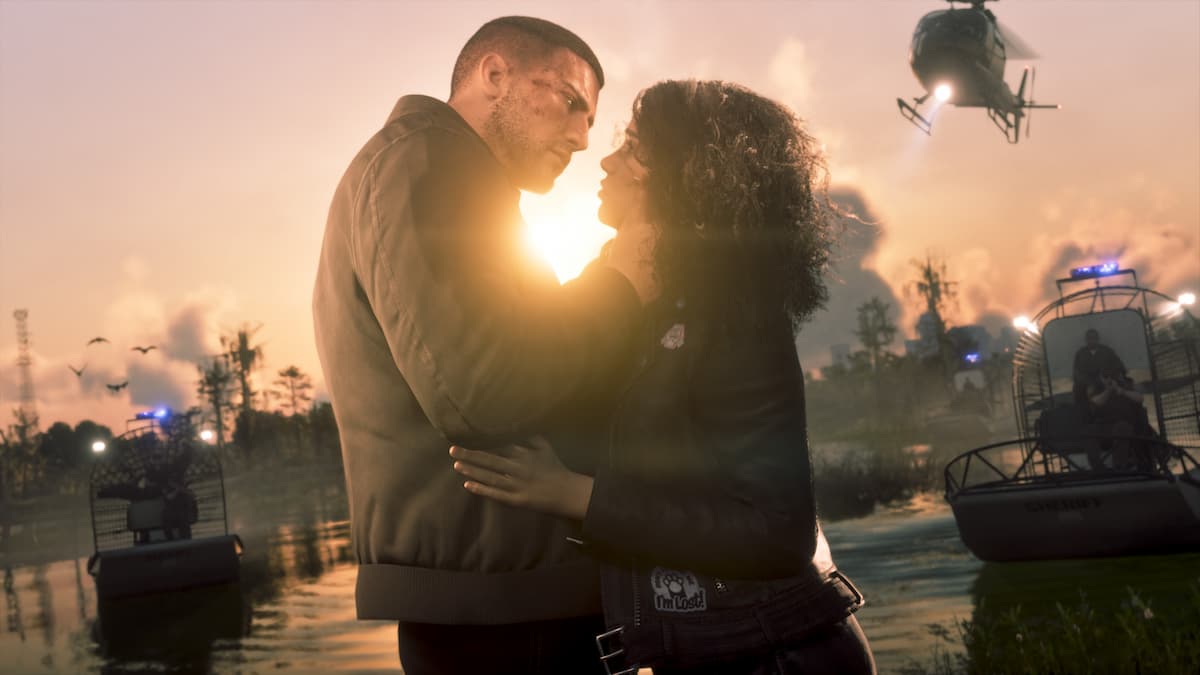
GTA VI was a game I’d played non-stop for three weeks, and one that I finally finished at 3 in the morning as I watched Jason go to prison for Lucia and Tommy, before finally meeting his son for the first time behind a prison glass divider. I did my best to play Jason and Lucia as good people who only did what they had to do. Sure, there was a bit of killing here and there, but I spared folks where I could. Still, I was happy with my ending. No matter how morally upright I tried to make them, Jason and Lucia were still criminals at the end of the day, and I found it apropos for one of them to have to pay for the choices they made. In fact, I loved this ending. I loved how Jason was so willing to sacrifice himself so his girl and son could still have a life together.
I told Nelson all of this, to which he immediately responded: “You should get that two million.”
For those who might be unaware, Jason and Lucia have a joint savings account in GTA VI, with savings goals that you can hit as you progress through the story. The final goal is set at $2 million, and at the time of the interview, I hadn’t hit that goal. Again, I was happy with my ending, especially as someone who’s a bit of a sucker for bittersweet endings. But Nelson had other ideas.
“Just go earn that money!” Nelson implores. “That last Chapter is called Top of the World, right? And you are on top of the world, right? You have everything that a traditional GTA player would want. You’ve got the amazing penthouse fleet of supercars, helicopter pad, helicopter, parachutes to jump off of it. You could stay there indefinitely.”
Nelson barely skips a beat before continuing: “But you don’t have Tommy, and you don’t have your freedom, and you don’t have the end of the game. And so you go see Abe, and he’s like, ‘You should get this money because I can’t invest it for you unless you get that.’ But now we’re playing on the player’s desire to see that ending. And you think, maybe I should stay and spend a few more hours making this money even if I don’t know why. So if you get the two mil, you’ll see the sacrifice possibly be repaid, and it will all be because of the work and the sacrifice you made as a player. Not spending that $2 million on car mods, but putting it into a little bank account that you don’t know what it’s for.”
I respond, somewhat sheepishly: “I did spend it all on car mods and clothes and protein shakes.”
Nelson laughs again and looks at me with a smug “I told you so!” kind of look. “See?! And you got the ending you deserve!”
The ending you get in GTA VI is shaped by the way you play, and it takes into consideration a number of factors: how close Jason and Lucia are, your Criminal Profile, and how much money you’ve set aside for your family. With so many variables and wildly different endings, I was curious how Rockstar was able to keep their main leads feeling consistent. Was there some sort of emotional or narrative throughline that persisted through all the endings? What were the core characteristics of Jason and Lucia that would stay the same no matter which versions of them you ended up with?

Nelson ponders my question for a few seconds before responding: “That’s tough for me to answer. I’m very keen to see what people take away from it.” Admittedly, I wondered if Nelson would dodge the question as he went back and forth on the game’s systems once again and the optionality of the relationship simulator aspect. But ultimately, it came back to what I suspected would be GTA VI‘s central theme all this time.
“I like the notion that there’s elements of sacrifice and selflessness in a series that people think has been more self-centered in the past,” he finally says, “And so, if it’s a response in any way to the cynical, chaotic, sometimes nasty nature of the world today… I don’t know. If it makes people think, if it makes them feel something, feel anything, feel something more than they’ve felt in a GTA game, then I’m happy. That’s cool.”
Parts of this interview were lightly edited for clarity.