Nearly 20 years after the release of its 1998 survival horror hit, Capcom remade Resident Evil 2 and proved they knew exactly what their audience wanted from this franchise. A well-designed puzzle box environment with the push and pull tension of exploration, resource management, and the fear of not knowing what’s around the corner. Now, in 2026, the mainline series takes a confident step forward with Resident Evil Requiem by reinventing the old formula to great success.
Resident Evil Requiem puts us in the shoes of newcomer Grace Ashcroft, an FBI analyst who also happens to be the daughter of Outbreak’s Alyssa Ashcroft. After investigating the latest in a series of mysterious deaths involving Raccoon City survivors, Grace finds herself whisked away to the Rhodes Hill Chronic Care Center by Requiem’s big bad, Victor Gideon. RE2 alum Leon Kennedy arrives on the scene as well, kicking off the latest chapter in Resident Evil’s complicated, twisted lore.
In many ways, the Rhodes Hill Chronic Care Center feels like an homage to Resident Evil 2‘s RPD. From the reception desk in the center of the main hall to the east and west wing layout, Rhodes Hill may just be one half of the Requiem experience, but it’s the culmination of everything the series has been building up to since the 90s.
Resident Evil veterans will be familiar with what’s on offer here. Playing as Grace, you’re tasked with finding three key items to open a door in the main hall that will let you escape. Doing so requires you to explore the east and west wings, both of which house unimaginable horrors and creepy hallways you have to steel yourself to walk through. As you peel back the layers of mysteries of the Care Center, even more doors begin to open up to you, and you may even start to feel a little more confident.
Confidence is good, but complacency is not, as Resident Evil Requiem inherently understands what the ebb and flow of this game feels like, and it knows just when and how to throw a nasty curveball at you to keep you on your toes. It could be a zombie wandering off its usual patrol area, or a previously killed zombie transforming into a Blister Head (Requiem‘s version of Crimson Heads, but way more aggressive).
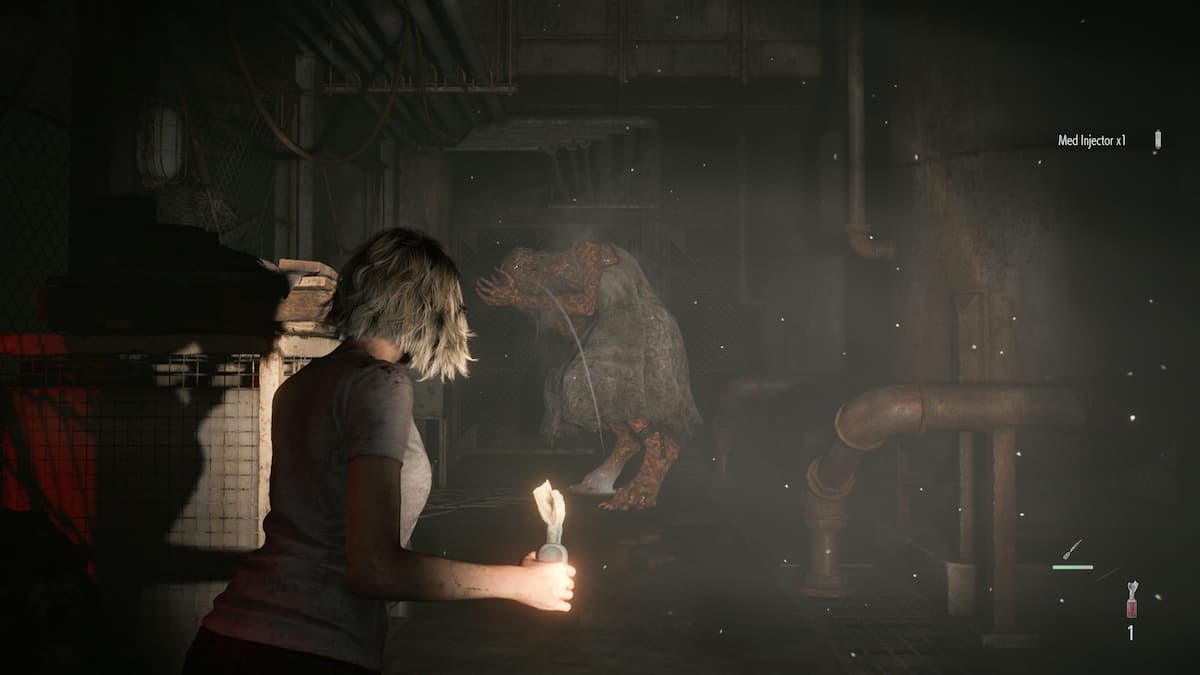
It’s all stuff we’ve seen before, but Resident Evil Requiem spices things up just a little by turning the zombies themselves into actual characters. While we’re largely still dealing with the T-Virus here — just a mutated version of it — the zombies hold on to remnants of who they were as a human being. The housemaid zombie, for instance, is obsessed with cleaning up. If you kill a Blister Head and get blood everywhere, the housemaid zombie will deviate from her preset path to clean the blood. Poorly, of course.

The chef zombie will walk around with a giant butcher knife looking for things to chop up, while the opera singer zombies can stun you with powerful sound blasts as they wander around the lounge, singing eerily. Adding that little bit of personality to the zombies immediately makes them a lot creepier (and funnier, in some cases), and I appreciated that I now had to treat the zombies as larger parts of the environmental puzzle box, rather than braindead obstacles to stun and shoot as I ran around the place.
Like, okay, here’s a Blister Head I can explode with a Hemolytic Injector and that will get the housemaid to move here so I can go over there. And here’s a light switch I can flick on, so the zombie obsessed with turning off the lights will get distracted and clear a path for me to walk through. And here’s a box I can break, so the zombie who gets triggered by noise runs out here and starts smashing things, and he could also potentially kill the other unsuspecting zombies hanging around.
I really enjoyed getting to know each of these zombie types and learning how to work around them. Even if the actual puzzles themselves felt a bit too easy in Requiem, I quickly realized that most of the puzzle-solving lay in figuring out the entire Care Center and finding the best and most efficient way to get around without wasting resources.
As Requiem builds up the tension and fear with Grace, it also provides you with a release valve in Leon’s gameplay sections. Which brings me to Capcom’s method of reinventing yet another series staple: the dual protagonist setup.

By switching between Grace and Leon at key points in the story, the pacing feels good. When you’ve gotten to the point of exhaustion from sneaking around with Grace and being careful all the time, the story lets you take control of Leon, who’s just an absolute monster. Whereas Grace has to make do with her tiny little hip pouches and be mindful of resource management, Leon’s just carrying his RE4 attache case around with a full arsenal of weapons and a hatchet he uses to decapitate his foes.
Blister Heads giving you trouble as Grace? Well, Leon can take care of that with one good thwack on the noggin’. Even going past that, playing as Leon in Rhodes Hill just gives you an immediate perspective shift on the whole area. Previously inaccessible cupboards and rooms can now be cracked open by Leon, and your familiarity with the area as Grace also lends itself well to Leon’s sections, as you know exactly where everything is and it’s the perfect opportunity to exact revenge on all the monsters who gave you so much trouble just before.
It’s only when the game enters its second act that it starts to falter. Here, Leon takes center stage as Grace becomes more of a supporting character. It’s also here where Resident Evil Requiem turns into a completely different game, as Capcom leans into the whole idea of Leon being an action hero. Don’t get me wrong, hacking and slashing my way through hordes of zombies is fun, but there’s a reason why I’ve always preferred RE2 to RE4. I’m here for the survival horror and I love watching the protagonist eventually evolve into a rocket launcher-toting superhero, but that’s the kind of thing I only wanna see in the final act.
If you’re an RE4 lover, you’ll find plenty to enjoy here as there’s certainly no shortage of Leon badassery. That being said, despite the game’s second act taking us back to Raccoon City where it all began, I found this section to be somewhat disappointing. The gunplay itself is fun enough, but the environments and level design definitely felt much weaker and half-baked compared with Rhodes Hill. Once I got over the nostalgia of going back to Raccoon City, I found myself missing Rhodes Hill and the intricacies of its level design.

It’s good, then, that Resident Evil Requiem absolutely delivers when it comes to its story and characters. Grace is easily the strongest of the new-generation protagonists Capcom has introduced so far, while still retaining the qualities of what made the early protagonists so likable. Unlike Claire or Jill, Grace is a constant ball of nerves who literally gives me anxiety whenever she talks or reacts to something horrific happening. She’s like this for a good reason, of course; she has plenty of trauma she needs to work through. But just like the earlier protagonists, she’s pure-hearted and brave when she needs to be, which automatically endears her to me.
Leon, on the other hand, is a grizzled veteran at this point, but still the snarky quippy hero we all know and love. He’s clearly a lot more tired and jaded, but at his core, Leon’s still the same good guy. He still just wants to help people, even if he’s got his own struggles to work through.
Resident Evil Requiem ends up being one of the boldest games in the series, and I found myself constantly surprised and impressed with how the story developed. It subverted many of the expectations I had built up for the series over the years, in ways that I often found somewhat cheesy but also earnest and thoughtful. And hey, every Resident Evil game needs a little bit of cheese. Requiem is no different, even if it wants you to think it’s all grown up and scary now.
As a bit of a Resident Evil challenge run enjoyer myself, I’d be remiss not to mention that the game does feel a bit lacking in post-game content, at least at launch. New game plus functions similarly to RE2 Remake, where you can unlock bonus weapons and infinite ammo with CP and get them through the item box, but you do still have to upgrade your inventory and weapons manually. There are no bonus modes like Mercenaries, and even the unlockable Insanity difficulty feels like it’s two steps above Standard, like there’s a Hardcore or Professional mode that should be in there somewhere but it’s missing.
I’m sure some of this will come in the form of DLC, as is the case with most Resident Evil games, and it certainly didn’t detract from my overall experience, but it’s worth mentioning nonetheless.
Resident Evil Requiem is the culmination of everything Capcom has been working towards since the release of RE7 in 2017, and the team’s efforts have paid off in dividends. This is the most confident mainline entry the series has seen in the past decade, and with the tragedy of Raccoon City finally behind us, I’m looking forward to seeing what the dawn of the new age will bring.
A review code for the game was provided by the publisher. You can check out our review policy here. Reviewed on PS5.