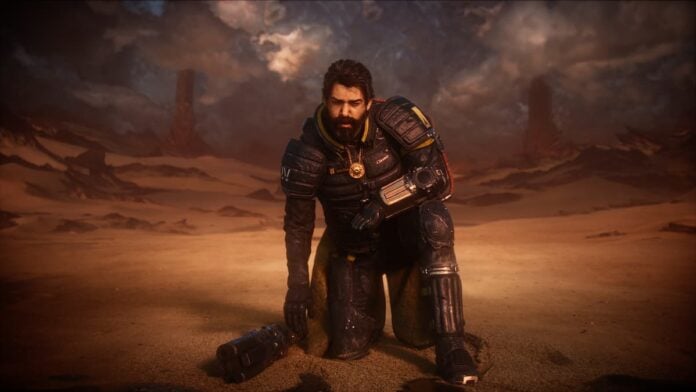
The “older guy takes care of young child” trope has been overdone in media, there’s no way around that. I don’t know about you, but I’m certainly tired of it, which meant that Pragmata was already starting off on the backfoot as soon as I booted it up.
Maybe it’s because video games don’t really surprise me anymore. Or maybe it’s because I consume so much media that I’ve started to really believe that I’ve seen it all, and there are no more original stories left to tell, and no more feelings left for me to feel. I always love being proven completely wrong though, because Pragmata ends up being more than just an overused trope.
Pragmata takes place in the far-flung future. You play as Hugh, who’s part of a squad tasked with going to a lunar colony called Cradle and assisting them with some trouble they’re having. As soon as you land, it’s clear that things have gone terribly wrong. There are no humans to be found. The man-made androids have turned against you, and everything seems to be controlled by an AI called IDUS. Technology, eh?
Hugh’s entire crew gets wiped out, but thankfully, he’s rescued by a little girl android whom he names Diana. Who’s Diana? Why is she helping you when all of the other androids have gone haywire? Who created her in the first place, and why?
Pragmata is largely carried by the interactions between Hugh and Diana, which never failed to put a smile on my face for the whole of its runtime. Despite the fact that I was effectively able to predict and call out almost every story beat I knew it would hit, it was difficult not to feel endeared to Diana.
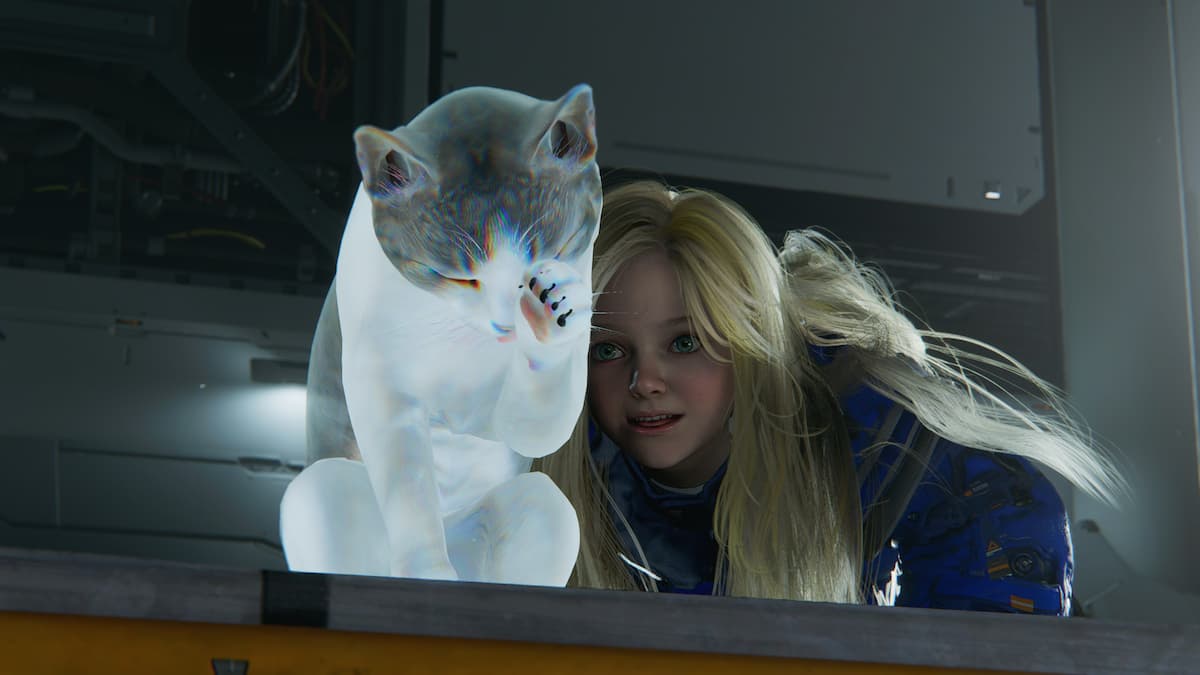
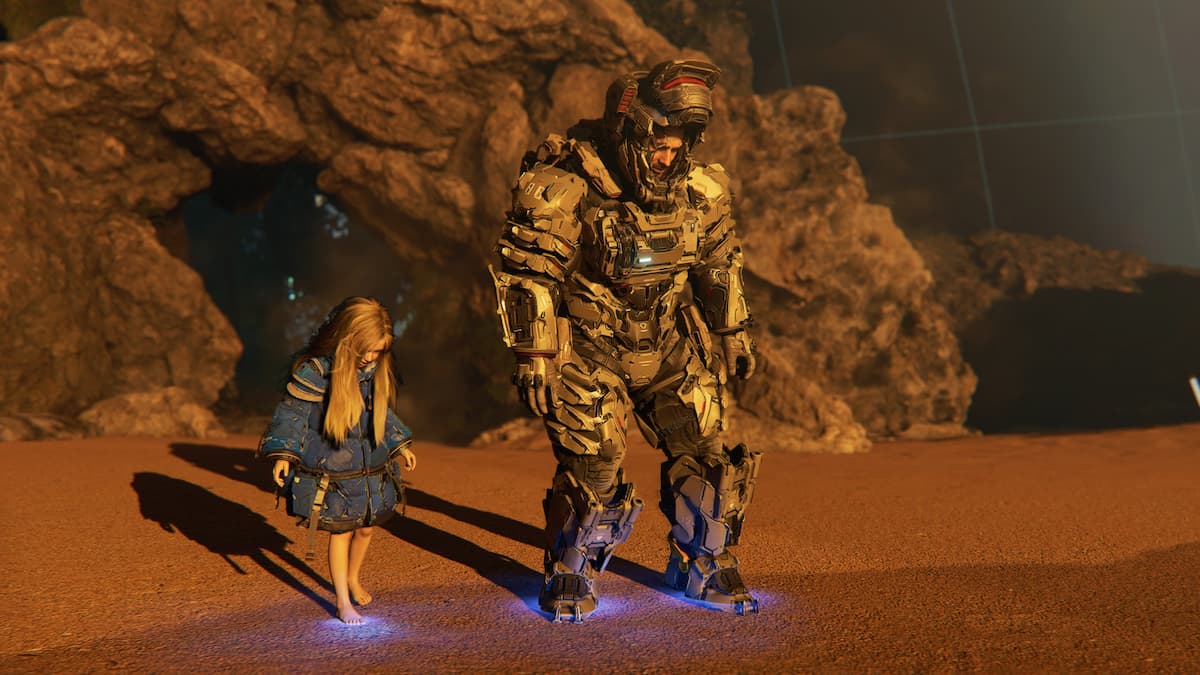
It’s nothing you haven’t seen before. Bit of a cynical older man explains the workings of the world to a young girl with endless curiosity. It’s Joel and Ellie, except Hugh is much quicker to soften up and warm up to Diana. As you explore Cradle and its various aesthetically distinct biomes — a New York City-inspired metropolitan and a forested area overtaken by digital flora and fauna come to mind — Diana pelts Hugh with never-ending questions about Earth, humans, and how everything works.
You’ll even find collectible holograms of Earthly artifacts like a bug net, or balloon, or a campfire, all of which can be gifted to Diana and used as displays in your Shelter, which you go back to in between exploration and combat. Diana always has a myriad questions to ask about whatever silly trinket you’ve just gifted her, and Hugh will always have a kindly, thoughtful explanation to help Diana understand why human beings can be so damn strange and inefficient.
The best part about all of this is that Diana loves it! Her boundless curiosity is what underscores Pragmata‘s throughline: that humans are messy, yet that’s also what makes us so beautiful. Set against a dystopian AI backdrop, Pragmata highlights the contrast between the soulless perfectionism of machines and the miraculous flaws of humanity.
But this is a video game, which means I can’t be spending all of my time just raving about how much I’m connecting with its story and message, especially as someone who’s staunchly anti-AI.
Pragmata is a third-person shooter at its core, but with a twist. In order for your bullets to be effective, you need to have Diana hack them to leave them OPEN first, and then you’ll do some actual damage. For the most part, you’ll be shooting humanoid androids, but the enemy types get pretty weird pretty quickly. There are giant baby-looking androids, spiders, and other bug-like machines with new mechanics and tricks to try to trip you up.
When aiming at an enemy with L2, you’ll use the face buttons to move a cursor around a grid of nodes to complete the hacking mini-game. It’s simple at first; all you need to do is move the cursor to a green node, and bing bang boom, the enemy’s OPEN. Before too long, you’ll start encountering red nodes that block your progress, purple nodes that slow down your cursor speed, as well as various types of yellow nodes that allow you to deal more damage or lower an enemy’s defenses.
Very quickly, you’ll learn that there’s a balance to be struck between focusing on hacking and actively dodging enemy attacks. Together, these mechanics form a very intense shooting experience as you’re constantly monitoring multiple things at once. Eventually, you’ll unlock an upgrade for Hugh that allows you to press a button to complete the hack automatically, but where’s the fun in that?
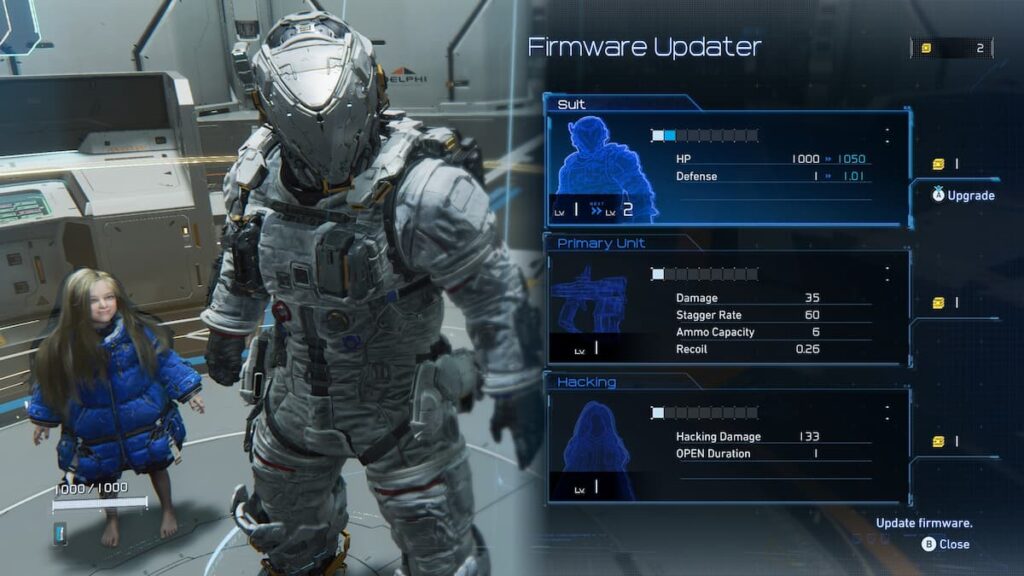
There are plenty of weapons to unlock too. You can play around with some shotgun and auto rifle-adjacent guns, but Pragmata also offers up some pretty unique weaponry, like the Decoy Generator that deploys a hologram of Hugh on the battlefield which distracts enemies. Or the Impact Barrier, which creates a bubble forcefield around you, protecting you from damage. There are also plenty of hacking nodes and mods for Hugh to unlock, and don’t even get me started on the optional Training Sim missions in the Shelter, which let you unlock even more goodies to make the game a bit easier.
I’d be remiss not to mention the excellent level design of Pragmata too, which houses many hidden corners and puzzles, some of which can’t be accessed till much later in the game when you’ve acquired the necessary skills. This just means that Pragmata offers up a lot of replay value though, especially when you consider its relatively short runtime too. I clocked in at around 10 hours for a full playthrough on Standard difficulty, after which I unlocked Lunatic difficulty, which I’m sure will totally kick my ass.
I came away from Pragmata with a lot of feelings, which always surprises me especially when I think I’ve got a game figured out before even touching it. Pragmata is a beautiful reminder of the little things that we take for granted, of the precious moments on Earth that we must cherish. And it’s a reminder that will stick with me for a long time to come.
A review code for the game was provided by the publisher. You can check out our review policy here. Reviewed on PC.