I’ve always liked to think of Dragon Quest as the video game equivalent of a bedtime story. From the comforting music to the helpful recaps that the game offers up each time you boot it back up, if you looked up the definition of “cozy RPG” in the dictionary, you’d find Dragon Quest right there. With Dragon Quest VII Reimagined, those comfy cozy feelings get amped up to 100 with the way Square Enix has opted to redo its graphics and aesthetics, and those efforts have paid off in dividends.
Dragon Quest VII Reimagined is a remake of Enix’s 2000 RPG, Dragon Quest: Fragments of the Forgotten Past. Now, I’ve never played the original game myself but from what I know of it, that game was lengthy as hell and could even feel draggy at some points. To that end, Square Enix has attempted to streamline the remake in an effort to make it more digestible for a modern audience. As someone who’s gone into the game completely fresh, I’ll say that these efforts have paid off for the most part, though there are some aspects of Reimagined that still probably could’ve used a bit of tweaking.
But first, as always, the preamble. Dragon Quest VII Reimagined starts you off on the island of Estard. Notably, there is only one island in this entire world — an odd characteristic for a JRPG setting. The lore soon tells you, though, that there used to be plenty of other surrounding islands; they’ve just disappeared due to cataclysmic events, but it’s possible to poof them back into existence by collecting fragments and visiting these islands in the past.
That, dear reader, is your mission. As a silent JRPG protagonist that’s as classic as they come, your job is to gather a small band of ragtag heroes, find these fragments of the forgotten past, vanquish ancient evils, and bring those islands back! It’s a simple enough premise, complete with a simple enough turn-based battle system, and it all comes together to create a comforting RPG experience that you’ll want to check out wrapped up in a blanket with a cup of hot cocoa on your desk.
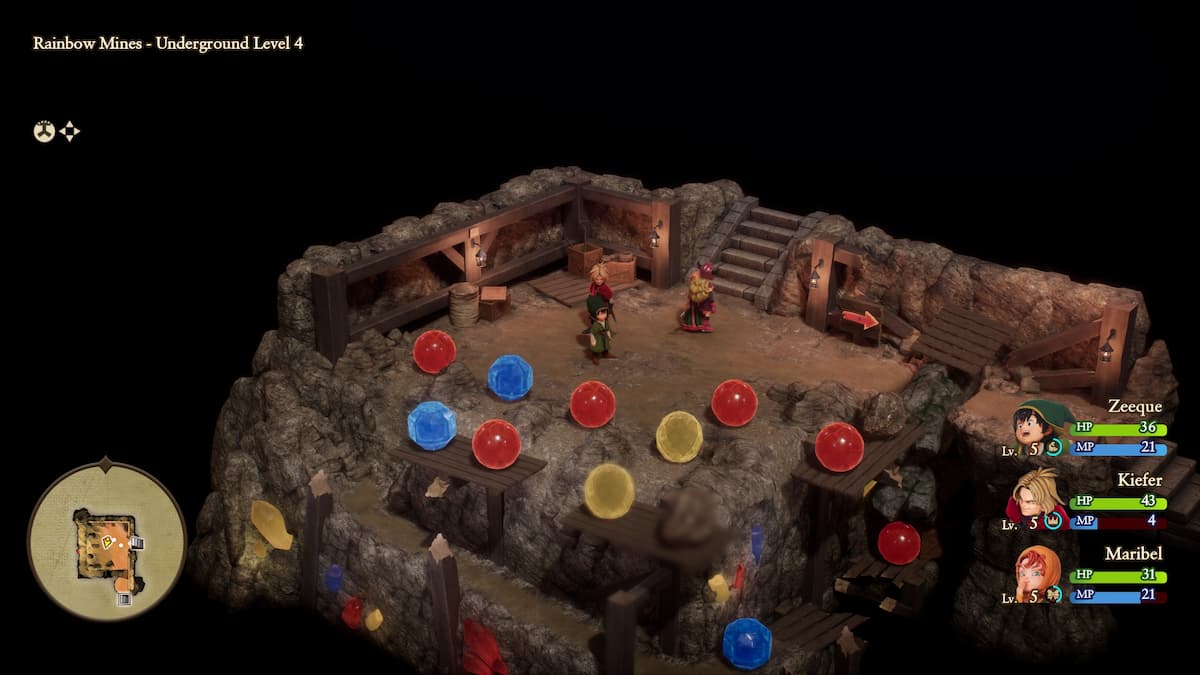
Dragon Quest VII Reimagined wastes no time at all in getting you started on your mission. Within the first 30 minutes, you’re introduced to Prince Kiefer and Maribel, childhood friends of the protagonist who quickly join your quest. Then, it’s off to the forgotten islands and collecting whatever fragments you can get your hands on. As you progress, you’ll recruit other characters such as Ruff the wolf boy, Mervyn the paladin, and Aishe the dancer. Aside from possibly Kiefer, I wouldn’t expect too much in the way of character development from the cast. For the most part, they’re all pretty one-note and mostly serve to point you in the right direction and offer up plot exposition where necessary.
When you put that together with the simple story and combat system, Dragon Quest VII Reimagined does run the risk of venturing into boring territory at times, but I kinda think that’s the whole point. Dragon Quest VII wants to be as frictionless and effortless as possible in order to ease players in and allow them to be immersed in this fairytale world. You’re meant to be charmed by the genuine, eager natures of your companions, and buy into the cliched but still heartwrenching stories about a village cursed with petrification, or a town doomed to burn despite its people’s dedication to a fire god. If you’re looking for something with a more stimulating story, this ain’t it.
Despite my self-proclaimed reputation as an RPG sicko, I found myself oddly charmed by Dragon Quest VII Reimagined‘s simplicity and carefree nature. I often feel this way while playing Dragon Quest games, though, and I was more than content to let the game take the lead while I enjoyed the jaunty music along the way.
There are times where the game can get a little overwhelming, and occasionally I found myself at a loss as to what to do next. Every now and then, you may find yourself at a standstill as you’re suddenly out of new islands to explore and haven’t got the first clue as to the whereabouts of the next fragment. Thankfully, there is an NPC at the Shrine of Mysteries who can direct you to the general location of the next one, but by and large, you’re expected to keep checking your map for fragment icons as you explore.
Not knowing that you’re supposed to keep an eye out for fragments that aren’t story-related can lead to moments of frustration. It would’ve been nice for the game to give some sort of heads up, but the good news is that the fragments aren’t usually difficult to find. They’re often just laying around in towns or in a corner of a dungeon; it’s just a matter of being diligent about checking your map.
If there’s one complaint to be had with Dragon Quest VII Reimagined, it’s that it takes way too long for the game’s combat system to finally open up and let loose. Dragon Quest VII features a vocation system (read: classes or jobs), and every character starts off with a basic, but unique, vocation that gives them access to various abilities in combat. For instance, the protagonist gets to use a bunch of buffing spells with a few AoE moves here and there, making him a great all-rounder, while Maribel focuses on magic and Kiefer specializes in melee attacks.
There are even more vocations to unlock and experiment with, but guess what? You don’t get to play around with any of them until about 10 to 11 hours into the story, which is, quite frankly, ridiculous. My vocations on my first four party members were maxed out long before I unlocked the rest of them, which, in turn, made combat feel even more stale. The fact that you don’t unlock the full roster of party members until later in the game doesn’t help things either.
I appreciated that the plot didn’t take long at all to get moving, but the first 10 or so hours can feel like a real slog as you wait for the game to finally take the training wheels off and let you have some real fun.
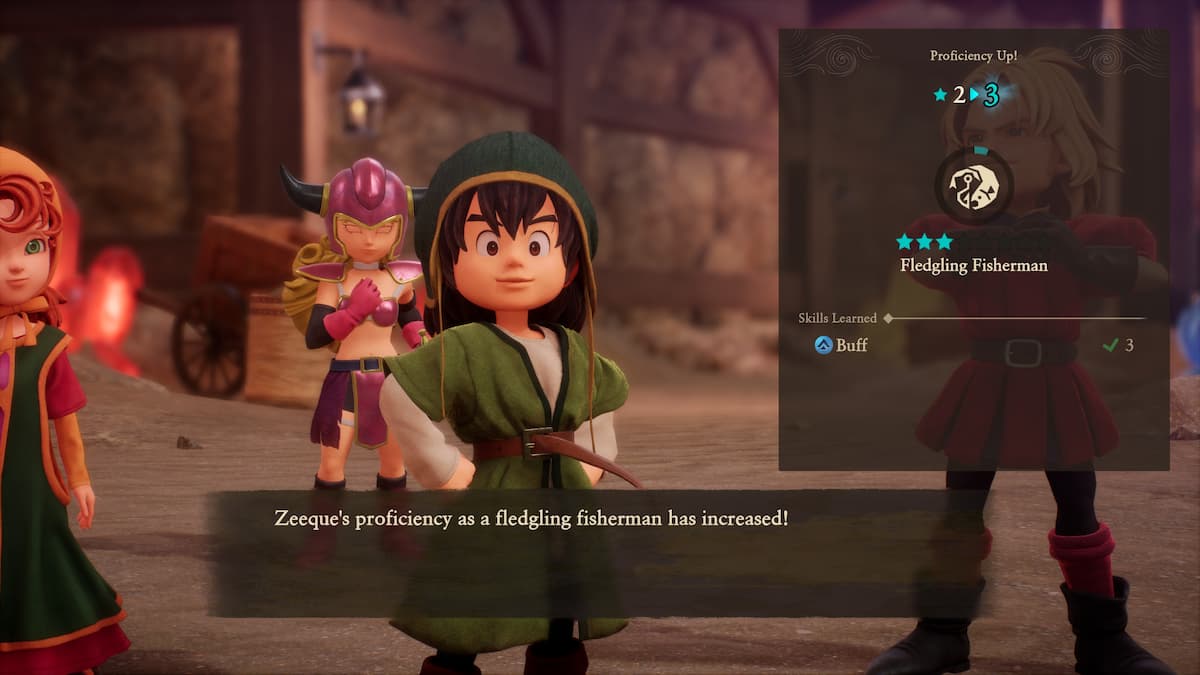
Once it does get going, though, Dragon Quest VII Reimagined soars. Every character can ‘moonlight’ and equip two vocations at once. Since every vocation gives you a unique Let Loose! ability, having two vocations can be a real game-changer. All of a sudden, the protagonist isn’t just an all-rounder whose Let Loose! ability protects the party from one instance of damage; he can also be a proper mage or melee powerhouse. Later on, you’ll get access to more advanced vocations with even more powerful abilities, making you feel like an RPG god.
The dual-classing aspect can help to add some serious depth to the combat, which I appreciated as an avid fan of games like Octopath Traveler and Final Fantasy XII. It’s just a shame that the combat is generally so easy that it doesn’t really encourage thoughtful experimentation, at least on the game’s default difficulty setting which I played on.
I’ve since come to terms with the fact that Dragon Quest VII just isn’t that sort of game, and that’s perfectly fine. The Dragon Quest series has always excelled at cultivating a cozy vibe, and Dragon Quest VII Reimagined is no different. With a striking diorama aesthetic and a genuine desire to be as warm and inviting as possible, this is an RPG that achieves exactly what it’s going for with aplomb.
A review code for the game was provided by the publisher. You can check out our review policy here. Reviewed on PS5.