This article contains major spoilers for 28 Years Later and 28 Years Later: The Bone Temple.
In any other zombie horror movie, you’d laugh at him. The silly eccentric scientist or doctor character who believes there is merit in studying the zombies and trying to learn more about them. In any other movie, they’d either meet their demise due to their own hubris, or be shut down by the grizzled main character who does whatever needs to be done in order to survive. It’s always all about survival, after all. Not so in 28 Years Later: The Bone Temple.
In The Bone Temple, we are taught to never forget our kindness, and to remember that’s what separates us from the undead.
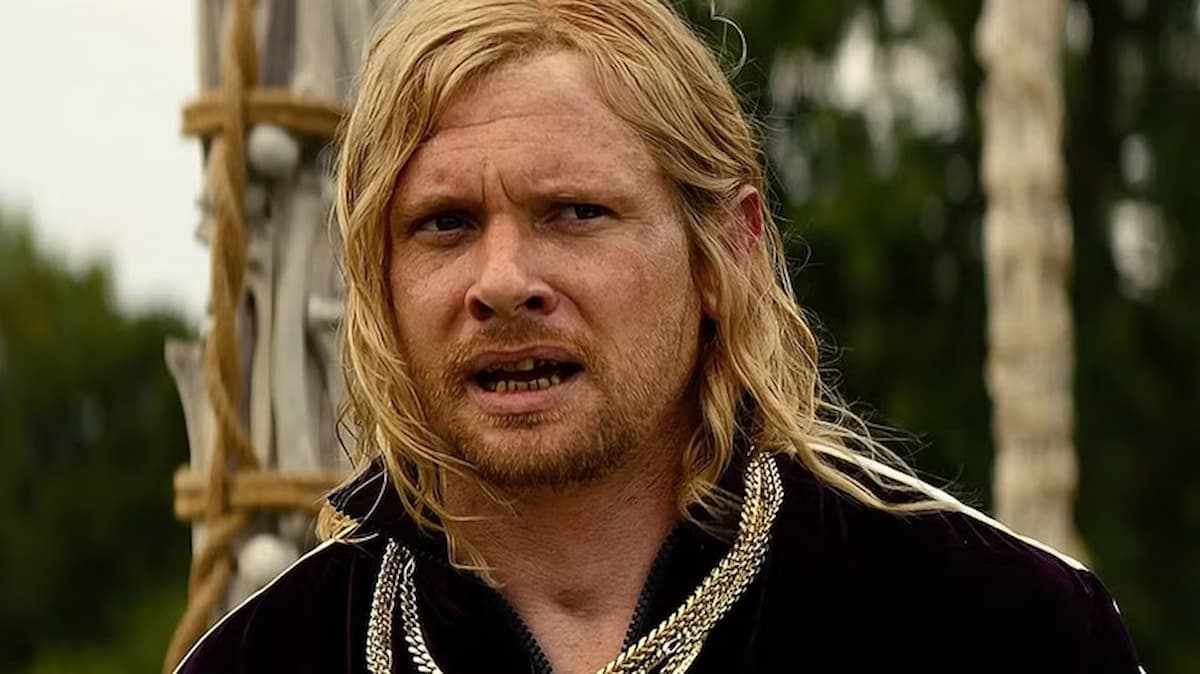
The Bone Temple is the second entry in Danny Boyle and Alex Garland’s new 28 Years Later trilogy, and it serves as the fourth film in the series that kicked off with 2003’s 28 Days Later. In it, we bear witness to the second part of Spike’s story, where he falls in with a cult led by Sir Lord Jimmy Crystal, played to perfection by Skins UK‘s very own Jack O’Connell.

Like most other movie cults, Jimmy’s little group is a terrifying one. You see, Jimmy was raised religious, but when his eight year-old self sees his own priest father invite the infected into his church and claims that judgment is here, that kind of thing tends to scar and irrevocably warp a kid for life. Now 36 years old, Jimmy is clearly still emotionally stunted and underdeveloped, as he leads a group of similarly stunted kids and teens into believing that he is the son of Satan. It is, as Jimmy says, their duty to travel the lands and offer charity to survivors, all in the name of Old Nick. And by “charity”, Jimmy really means torturing them to the point of being past recognition in blood-curdling scenes where flesh is ripped through like a knife slicing butter.
There’s a palpable sense of dread and horror in seeing Spike get himself involved with the Jimmies. Good, kind Spike who, despite failing to hit the chasing infected with his arrows multiple times during his first outing to the mainland, chose to brave those horrors with his cancerous mother for a chance to cure whatever’s ailing her. Being the embodiment of purity and goodness, watching Spike follow the Jimmies around as a henchman (out of survival and necessity) is somehow even more horrific than whatever the bloody-eyed infected are capable of.
On the other end of the spectrum, we also see the return of Kelson, ironically identified by the Jimmies as Old Nick by virtue of his reddened skin from the iodine and prancing around with Samson the alpha after drugging him up with morphine. In 28 Years Later, he’s portrayed as a kindly doctor with a deep respect for all life, even the infected. We see him actively choose not to kill Samson, despite having him at his mercy multiple times thanks to the morphine. Not only does Kelson care about life, he wants to study the infection and see if there’s some way to reverse it.
As I said, in any other movie, Kelson would be portrayed as the eccentric doctor that no one takes seriously. 28 Years Later: The Bone Temple takes a different tack with it, though, and even convinces us that perhaps Kelson’s way is the only way. With all the medication and equipment at his disposal, Kelson is able to chip away at Samson’s cloud rage bit by bit. Eventually, we start to notice the little touches that make him seem just a little bit more human. His eyes are a little less red, he starts wearing a loincloth, he subconsciously wipes his fingers on the loincloth after eating a berry, he finds himself washing his hands in the river.
It all culminates in an incredible moment when — while completely high and drug-addled — he mutters a single word underneath the night sky: “Moon.”
It’s one of the most poignant and moving moments in all of the 28 series, and it’s a gratifying one too, as it drives home the film’s thesis. That despite our circumstances, perhaps the way back to our humanity in such a dire, post-apocalyptic setting is patience and kindness. Make no mistake; I don’t believe this is a realistic path. I mean, as realistic as a post-apocalyptic zombie world can get, at least. But I have a hard time believing the film’s thesis would ever hold up in the real world, should a tragedy like this ever befall us.
Still, that’s what art is all about, right? Contrasted with Jimmy Crystal’s penchant for brutal torture and violence, ultimately it is Kelson’s kindness that wins out in the end, even if both characters are doomed to meet their ends in The Bone Temple. Whereas Jimmy cries and becomes an eight year-old again, crying for his mother and asking why his father has forsaken him, Kelson is at peace with his death, knowing that he was able to bring just a little bit of goodness back into the world.
28 Years Later: The Bone Temple is a film unlike any of the other entries we’ve seen in the series so far, but the throughline is always the same. Survival alone isn’t as good as it gets. There are other things worth trying to preserve, too.

Very well written.